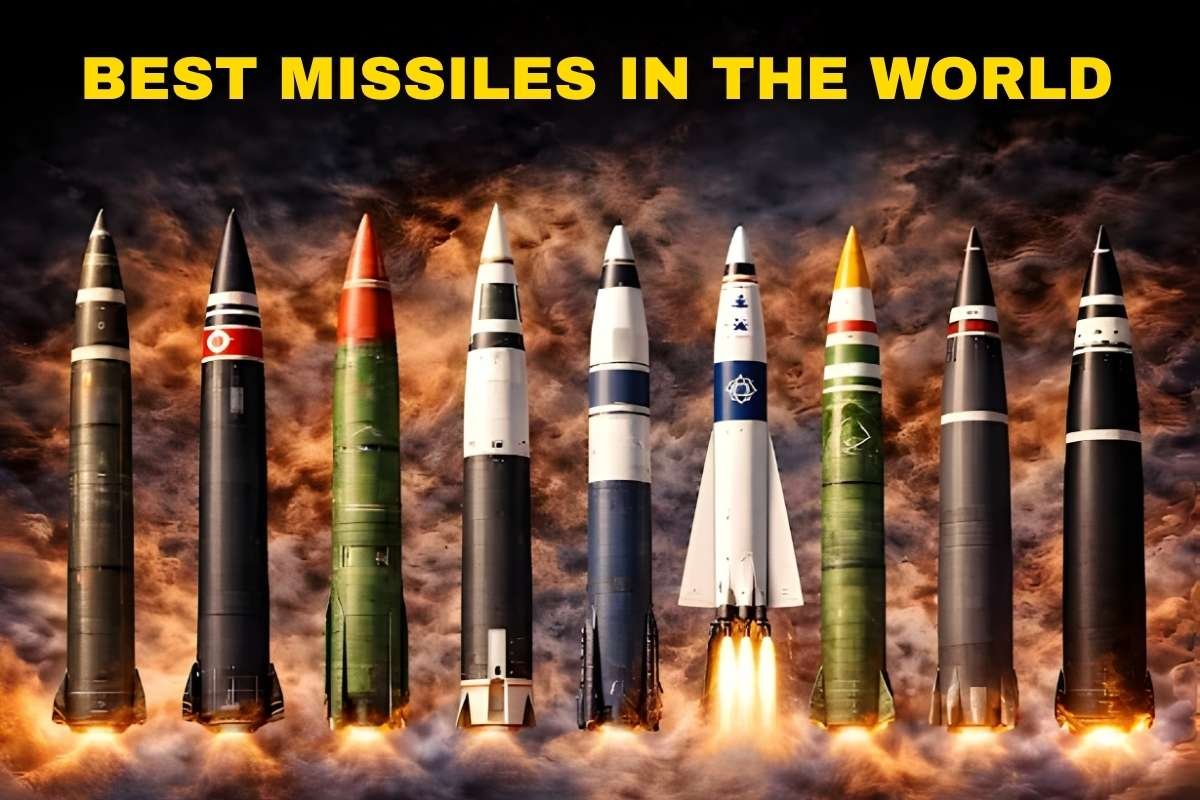



What if a weapon could travel across an entire country before you finish reading this paragraph?
Sounds Dramatic, right?
But that is the real speed of modern missile technology. Some missiles travel faster than 10 times the speed of sound. Think during flight, and strike targets with shocking accuracy. It almost feels like science fiction. Yet this technology exists right now, hidden behind military research labs and defense programs around the world.
Countries compete quietly to build faster, smarter, and more precise weapons. Engineers test extreme physics. Scientists push the limits of materials and propulsion. Military planners study how these systems shape global power. All this effort leads to one fascinating question: Which weapons truly deserve the title of the best missiles in the world?
Some stand out because of their incredible speed. Others dominate because of their long range or advanced guidance systems. A few combine speed, precision, and power in ways that completely change modern warfare.
This guide breaks down and explains how they work, why they matter, and how they influence global military balance.
By the end, you will see why the race to build the world’s best missiles continues to push technology to extraordinary limits.
Brief History of Missile Development
Human fascination with long-range weapons began many centuries ago. The earliest rocket weapons appeared in China around the 1200s, during the 13th century. These early rockets used simple gunpowder packed inside bamboo or metal tubes. Soldiers launched them toward enemy troops during battles. Their accuracy remained poor, but the idea of sending a weapon across a distance without direct contact fascinated military leaders.
Missile technology evolved slowly for several centuries. A breakthrough came during World War II (1939-1945). In 1944, Germany introduced the V-2 rocket, the first long-range guided ballistic missile. Designed by rocket scientist Wernher von Braun, the V-2 could travel at supersonic speed and strike targets over 300 kilometers away. This weapon marked the beginning of modern missile technology and changed the future of warfare.
After the war ended in 1945, both the United States and the Soviet Union captured German rocket technology and scientists. During the Cold War period (1947-1991), both nations invested heavily in missile research. By the 1950s and 1960s, they successfully developed Intercontinental Ballistic Missiles (ICBMs) capable of traveling thousands of kilometers and carrying nuclear warheads. These weapons became the backbone of nuclear deterrence and global military strategy.
Missile technology continued to improve in the 1980s and 1990s with the arrival of advanced computers and satellite navigation systems. Guidance technology allowed missiles to adjust their path during flight and strike targets with far greater accuracy. Engineers also improved propulsion systems, aerodynamic design, and radar-evading capabilities.
In the 21st century, missile technology entered a new era. Hypersonic weapons, advanced cruise missiles, and highly accurate ballistic systems now dominate military research. The best missiles in the world combine extreme speed, intelligent guidance, and long-range capability. Many of these weapons can travel several times the speed of sound, change direction mid-flight, and hit targets with remarkable precision.
Today, countries treat the best missiles in the world as critical strategic tools. These systems influence military balance, global security policies, and international defense planning.
➤ Categories of Missiles

Missiles are not all built for the same purpose. Engineers design them based on where they launch from, how they travel, and what type of target they attack. Some missiles strike targets thousands of kilometers away, while others protect fighter jets during aerial combat. Because of these different missions, defense experts classify missiles into several major categories.
Understanding these categories helps explain how the world’s best missiles function in real military operations. Each type plays a specific role in modern warfare, from long-range deterrence to precision battlefield strikes. When analysts talk about the best missiles in the world, they usually compare systems within these categories because each class serves a different strategic purpose.
Below are the most important missile categories used by modern armed forces.
1. Ballistic Missiles
Ballistic missiles are among the most powerful and longest-range weapons ever developed. Their flight path follows a ballistic trajectory, which means they travel in a curved arc similar to a ball thrown into the air.
The journey of a ballistic missile usually happens in three stages.
➣ First comes the launch phase. Powerful rocket engines push the missile upward at incredible speed. Within minutes, it leaves the atmosphere and enters space.
➣ Second is the midcourse phase. During this stage, the missile travels through space along a curved path. Gravity slowly pulls it back toward Earth. This stage often covers thousands of kilometers.
➣ The final stage is the reentry phase. The warhead separates from the main missile body and falls toward the target at extremely high speeds. During reentry, the warhead experiences intense heat due to friction with the atmosphere.
Ballistic missiles can travel very long distances. Some systems, called intercontinental ballistic missiles (ICBMs), can cross entire continents in less than an hour. Because of this capability, they form the backbone of many countries’ nuclear deterrence strategies.
Many defense experts consider several ballistic systems among the best missiles in the world because of their range, speed, and destructive power. Their ability to strike distant targets quickly makes them one of the most influential weapons in global military strategy.
2. Cruise Missiles
Cruise missiles operate very differently from ballistic missiles. Instead of flying high into space, they travel within the atmosphere and maintain a controlled flight path similar to an aircraft.
These missiles use jet engines or turbofan engines, which allow them to fly long distances at steady speeds. Unlike ballistic missiles, cruise missiles stay relatively low in the sky. Many of them fly close to the ground or sea surface to avoid radar detection.
Modern cruise missiles rely heavily on advanced navigation systems. These systems may include:
- Satellite navigation
- Terrain mapping
- Radar guidance
- Digital mapping technology
These guidance systems allow cruise missiles to follow extremely precise paths. They can even adjust their course during flight to avoid obstacles or defenses.
One of the biggest advantages of cruise missiles is accuracy. Many modern cruise missiles can strike targets with remarkable precision. This capability allows militaries to destroy specific buildings, infrastructure, or military installations without causing large surrounding damage.
Because of their precision and versatility, cruise missiles frequently appear in discussions about the world’s best missiles. Many countries rely on them for precision strike missions during conflicts.
3. Hypersonic Missiles
Hypersonic missiles represent one of the most advanced developments in modern military technology. These weapons travel at speeds greater than Mach 5, which means they move at least five times faster than the speed of sound.
To understand how fast this is, consider that a hypersonic missile could cross several thousand kilometers in a very short time. This extreme speed drastically reduces the reaction time available for defense systems.
Hypersonic weapons come in two main forms.
- The first type is the hypersonic glide vehicle. In this design, a rocket launches the vehicle high into the atmosphere. After reaching high altitude, the vehicle separates and glides toward its target at hypersonic speed while performing maneuvering movements.
- The second type is the hypersonic cruise missile. These missiles use special engines called scramjets that allow them to maintain hypersonic speed throughout their flight.
A key feature of hypersonic missiles is their maneuverability. Traditional ballistic missiles follow predictable paths, which makes interception possible with advanced defense systems.
Hypersonic weapons, however, can change direction while traveling at extremely high speeds.
Because of this combination of speed and maneuverability, many analysts believe hypersonic weapons will dominate future lists of the world’s best missiles. Countries around the globe are investing heavily in this technology.
4. Submarine Launched Missiles
Submarine-launched missiles form one of the most important components of modern military deterrence systems. These missiles launch from submarines operating deep underwater.
Submarines are extremely difficult to detect because they can travel silently beneath the ocean surface for long periods. This hidden nature gives submarine-launched missiles a major strategic advantage.
There are two major types of submarine-launched missiles:
- Submarine Launched Ballistic Missiles (SLBMs)
- Submarine-Launched Cruise Missiles
Ballistic versions follow the same arc trajectory as land-based ballistic missiles. Cruise versions behave like standard cruise missiles but launch from underwater platforms.
The primary strategic purpose of these weapons is known as second-strike capability. This concept means that even if a country suffers a surprise attack, its hidden submarines can still launch powerful retaliatory strikes.
Because of this role, submarine-launched systems are often counted among the best missiles in the world in terms of strategic importance. Their ability to remain hidden while carrying powerful weapons makes them a key part of global nuclear deterrence.
5. Air-to-Air Missiles
Air-to-air missiles are designed specifically for aerial combat. Fighter aircraft carry these missiles to destroy enemy aircraft during dogfights or long-range engagements.
Modern air-to-air missiles rely on advanced radar guidance or infrared tracking systems. These systems allow the missile to track enemy aircraft even if the pilot cannot see the target directly.
There are two main categories of air-to-air missiles.
- The first type is short-range missiles. These weapons are used during close-range dogfights. They rely heavily on infrared sensors that detect heat emitted by aircraft engines.
- The second type is beyond-visual-range missiles. These missiles use radar guidance and can hit targets located many kilometers away.
Air-to-air missiles must also be extremely maneuverable. Fighter aircraft move quickly and change direction rapidly during combat. The missile must respond instantly to follow the target.
Because air superiority plays a critical role in modern warfare, many advanced aerial weapons are included in discussions about the best missiles in the world. Their speed, accuracy, and guidance technology allow modern fighter jets to dominate airspace during military operations.
Top 25 Best Missiles in the World: The Definitive Guide by Category
Modern defense experts often group the best missiles in the world by their operational role. Each category serves a different military purpose. Some focus on long-range deterrence, while others provide tactical precision during combat.
Below are the most advanced and widely discussed systems in each category.
➤ Ballistic Missiles
Ballistic missiles travel in a high arc before descending toward their target at extremely high speed. These weapons form the backbone of strategic deterrence in many countries. Below are five important ballistic missile systems that play a major role in modern global defense strategies.

1. RS-28 Sarmat
- Type: Intercontinental Ballistic Missile
- Country of Origin: Russia
- Max Verified Speed: Mach 20+
- Operational Status: Entering Service
The RS-28 Sarmat is one of the most powerful heavy intercontinental ballistic missiles ever built. Russia developed this system to replace older Soviet-era missiles and strengthen its strategic deterrence capability. The missile is extremely large and can carry a very heavy payload compared to many other systems.
One of the key features of the Sarmat missile is its ability to carry multiple nuclear warheads. These warheads are known as MIRVs, which stands for Multiple Independently Targetable Reentry Vehicles. Each warhead can travel toward a different target after separation from the main missile body. This capability increases the missile’s effectiveness and makes interception much more difficult.
The Sarmat also includes advanced penetration systems designed to bypass missile defense shields. These systems may include decoys and maneuvering warheads that confuse radar tracking systems. Because of these advanced technologies, defense analysts frequently rank this missile among the best missiles in the world.
Another reason for its reputation is its massive range. The missile can reportedly travel more than 18,000 kilometers, which means it can reach almost any location on Earth. Its high speed, payload capacity, and global reach make it one of the most powerful strategic weapons in modern military arsenals.
2. LGM-30G Minuteman III
- Type: Intercontinental Ballistic Missile
- Country of Origin: United States
- Max Verified Speed: Mach 23
- Operational Status: Active
The LGM-30G Minuteman III has served as a key part of the United States nuclear deterrence system for more than fifty years. It was first introduced during the Cold War, when the United States and the Soviet Union competed to build advanced missile technologies.
Unlike mobile missile systems, Minuteman III missiles are stored in underground launch silos. These silos protect the missiles from enemy attacks and allow them to remain ready for immediate launch. If necessary, the missile can be launched within minutes.
Over the decades, the United States has upgraded the Minuteman III system several times. Engineers improved their guidance systems, electronics, and reliability. These upgrades allowed the missile to remain effective despite its long operational history.
Another important feature of the Minuteman III is its accuracy. Advanced inertial navigation systems help guide the missile toward its target even when external signals are unavailable. This reliability plays a major role in its continued importance within the U.S. strategic defense structure.
Because of its proven performance and decades of operational success, the Minuteman III continues to appear on lists of the world’s best missiles.
3. DF-41
- Type: Intercontinental Ballistic Missile
- Country of Origin: China
- Max Verified Speed: Mach 25
- Operational Status: Active
The DF-41 is one of China’s most advanced intercontinental ballistic missiles. It represents a significant step forward in China’s strategic missile development program. This missile combines long range, high speed, and advanced targeting capability.
One of the most notable features of the DF-41 is its ability to carry multiple independently targetable warheads. Each warhead can strike a different target, which increases the missile’s overall strategic impact.
Another important feature is its mobility. The DF-41 can be launched from mobile transporter vehicles rather than fixed silos. This mobility makes the missile harder to detect and destroy before launch. Some reports also suggest that it can be launched from rail platforms, which further increases its survivability.
The missile is capable of reaching targets across continents, which strengthens China’s long-range deterrence capabilities. Because of its advanced design and operational flexibility, many defense experts include it in discussions about the best missiles in the world.
4. Agni-V
- Type: Intercontinental Ballistic Missile
- Country of Origin: India
- Max Verified Speed: Mach 24
- Operational Status: Active
Agni-V represents one of the most significant achievements in India’s missile development program. Developed by the Defence Research and Development Organisation (DRDO), the missile is designed to strengthen India’s strategic deterrence capability.
The missile has a range of more than 5,000 kilometers, which allows it to reach distant targets with high accuracy. It uses advanced guidance systems that improve targeting precision during long-distance flights.
Agni-V also uses a three-stage solid fuel propulsion system. This design helps the missile achieve extremely high speeds while maintaining stability during flight.
Another important advantage of the Agni-V missile is its mobility. It can be launched from road-mobile platforms, which makes it more difficult for enemy forces to detect or destroy before launch.
The missile’s combination of long range, high speed, and advanced navigation systems places it among the world’s best missiles in the ballistic missile category.
5. Hwasong-17
- Type: Intercontinental Ballistic Missile
- Country of Origin: North Korea
- Max Verified Speed: Mach 20+
- Operational Status: Tested
The Hwasong-17 is one of the largest road-mobile intercontinental ballistic missiles ever displayed publicly. North Korea revealed this missile during military parades and later conducted several test launches.
Its large size suggests that it may carry multiple nuclear warheads or heavy payloads. The missile is transported on a massive mobile launcher vehicle, which allows it to move between locations before launch.
Mobility is an important strategic advantage because it makes it harder for adversaries to track and destroy the missile system before launch. If deployed successfully, this missile could provide North Korea with a stronger long-range strike capability.
Although the system is still undergoing testing and evaluation, its potential range and payload capacity have attracted global attention. Analysts often mention the Hwasong-17 when discussing emerging systems among the world’s best missiles.
➤ Cruise Missiles
Cruise missiles fly at low altitude and follow terrain contours. Their aircraft-like flight path makes them extremely precise. Below are some of the most well-known cruise missiles currently used by major military powers.

1. Tomahawk
- Type: Long Range Cruise Missile
- Country: United States
- Maximum Speed: About 880 km per hour
- Operational Status: Active
The Tomahawk cruise missile is one of the most widely used precision strike weapons in modern military history. The United States first introduced it in the 1980s, and since then, it has become a key component of American naval strike capability.
The missile launches primarily from naval ships and submarines. After launch, it flies at low altitude over the sea or land while following a carefully planned route toward its target.
Advanced guidance systems combine satellite navigation, digital maps, and onboard sensors. These systems help the missile stay on course even over long distances.
Tomahawk missiles can travel more than 1,500 kilometers before reaching their target. This long range allows military forces to strike strategic locations without putting aircraft or pilots in danger.
Another important feature of the Tomahawk is its precision. The missile can strike specific buildings or facilities with minimal deviation. Because of this accuracy and reliability, many defense experts consider it one of the best missiles in the world in the cruise missile category.
Over the years, engineers have upgraded the Tomahawk system several times. Newer versions include improved targeting systems, better communication links, and greater flexibility during flight. These improvements help the missile remain relevant in modern warfare.
2. Kalibr
- Type: Cruise Missile
- Country: Russia
- Maximum Speed: Mach 0.8 to Mach 2.9
- Operational Status: Active
The Kalibr missile system is one of Russia’s most advanced cruise missile platforms. It includes several versions designed for different missions. Some variants focus on attacking ships at sea, while others target land-based facilities.
One of the unique features of the Kalibr missile is its ability to launch from different platforms. Naval ships, submarines, and certain land-based systems can all deploy this missile. This flexibility makes it an important part of Russia’s long-range strike capability.
During flight, the missile travels at subsonic speeds for most of its journey. As it approaches the target, some versions accelerate to supersonic speed. This sudden speed increase reduces the reaction time available to air defense systems.
Kalibr missiles also rely on advanced navigation systems that combine satellite guidance with terrain-following technology. These systems allow the missile to move close to the ground and avoid detection from radar networks.
Because of its long range, flexible deployment options, and improved targeting capability, the Kalibr missile often appears in discussions about the world’s best missiles designed for precision strikes.
3. BrahMos
- Type: Supersonic Cruise Missile
- Country: India and Russia joint development
- Maximum Speed: Mach 2.8 to Mach 3
- Operational Status: Active
The BrahMos missile stands out as one of the fastest cruise missiles currently in operational service. It is the result of a joint development program between India and Russia. The name “BrahMos” comes from two rivers: the Brahmaputra in India and the Moskva in Russia.
Speed is the biggest advantage of the BrahMos system. While many cruise missiles travel at subsonic speeds, BrahMos can reach nearly three times the speed of sound. This extreme velocity significantly reduces the time available for enemy defense systems to respond.
The missile also offers exceptional versatility. It can launch from multiple platforms, including land vehicles, naval ships, submarines, and fighter aircraft. This flexibility allows armed forces to deploy it in a wide range of combat situations.
BrahMos uses advanced navigation systems that combine satellite guidance with onboard sensors. These technologies allow the missile to maintain accurate flight paths and strike targets with high precision.
Its combination of speed, accuracy, and multi-platform launch capability makes BrahMos one of the best missiles in the world among supersonic cruise missile systems.
4. Storm Shadow
- Type: Air Launched Cruise Missile
- Country: United Kingdom and France
- Maximum Speed: Subsonic
- Operational Status: Active
Storm Shadow is a long-range air-launched cruise missile designed specifically for deep strike missions. Fighter aircraft carry and release the missile at a safe distance from heavily defended enemy territory.
After launch, the missile travels at low altitude while following terrain features to avoid detection. It uses advanced navigation technology that combines satellite guidance with terrain mapping systems. This method allows it to navigate complex landscapes with high accuracy.
Storm Shadow is particularly effective against hardened targets such as bunkers, command centers, and military infrastructure. The missile carries a specialized warhead designed to penetrate strong structures before detonation.
One of the most impressive aspects of Storm Shadow is its ability to operate in heavily defended airspace. Its stealthy design and precise navigation allow it to bypass many traditional air defense systems.
Because of its reliability and deep strike capability, Storm Shadow remains an important weapon in modern military operations.
5. CJ-10
- Type: Land Attack Cruise Missile
- Country: China
- Maximum Speed: Subsonic
- Operational Status: Active
The CJ-10 cruise missile is part of China’s growing long-range precision strike capability. It focuses primarily on attacking land-based targets such as military bases, radar installations, and command facilities.
This missile uses a turbofan engine that allows it to maintain stable flight for long distances. Like many modern cruise missiles, it travels close to the ground to reduce the chances of radar detection.
Guidance systems play a major role in the CJ-10’s performance. The missile combines satellite navigation, inertial guidance systems, and terrain mapping technology. These tools allow it to stay on course even when traveling hundreds or thousands of kilometers.
The CJ-10 can launch from mobile ground platforms and possibly from air or sea platforms as well. This mobility increases its strategic value during military operations.
Because of its precision strike capability and growing role in China’s defense strategy, the CJ-10 often appears in discussions about modern long-range cruise weapons.
➤ Hypersonic Missiles
Hypersonic weapons travel faster than Mach 5 and can maneuver during flight. Hypersonic systems are often discussed when analysts talk about the best missiles in the world. Below are five important hypersonic missile systems developed by major military powers.

1. Avangard
- Type: Hypersonic Glide Vehicle
- Country: Russia
- Maximum Speed: Mach 20+
- Operational Status: Operational
Avangard is one of the most advanced hypersonic weapons currently in service. Russia developed this system to travel at extremely high speeds while maintaining the ability to maneuver in the atmosphere. Instead of functioning like a traditional missile, Avangard works as a hypersonic glide vehicle mounted on top of an intercontinental ballistic missile.
The missile launches first and carries the glide vehicle into space. Once it reaches a certain altitude, the glide vehicle separates and begins its descent toward the target. During this phase, it glides through the atmosphere at speeds exceeding Mach 20, which is roughly twenty times faster than the speed of sound.
What makes Avangard unique is its ability to change direction during flight. This maneuverability allows it to avoid missile defense systems that rely on predicting the path of incoming weapons. Because it travels so quickly and unpredictably, interception becomes extremely difficult.
Avangard plays an important role in Russia’s strategic deterrence strategy. Its design focuses on penetrating modern missile defense shields. Military analysts often mention Avangard when discussing the best missiles in the world, mainly because it combines extreme speed with advanced maneuvering capability.
2. DF-17
- Type: Hypersonic Glide Vehicle
- Country: China
- Maximum Speed: Mach 5+
- Operational Status: Operational
The DF-17 is China’s dedicated hypersonic missile system. It uses a launch rocket to carry a hypersonic glide vehicle into the upper atmosphere. Once released, the glide vehicle travels toward its target at speeds above Mach 5.
Unlike traditional ballistic missiles, the DF-17 follows a lower and more flexible flight path. This makes detection and interception much harder for enemy radar systems. Its maneuvering capability also allows it to approach targets from unexpected directions.
China introduced the DF-17 publicly during a military parade, signaling its progress in hypersonic technology. The system demonstrates China’s growing ability to develop advanced missile systems that can challenge existing defense networks.
The DF-17 focuses mainly on regional strike capability, meaning it can target high-value military assets such as command centers, air bases, or aircraft carriers. Because of these capabilities, defense experts frequently include it in discussions about the world’s best missiles in the hypersonic category.
3. Zircon
- Type: Hypersonic Cruise Missile
- Country: Russia
- Maximum Speed: Mach 8 to Mach 9
- Operational Status: Testing and limited deployment
The Zircon missile represents a new generation of hypersonic cruise missiles designed for naval warfare. Unlike glide vehicles, Zircon uses a scramjet engine to maintain hypersonic speed throughout most of its flight.
This missile can launch from naval warships and submarines, making it an important tool for maritime combat operations. Its top speed reaches around Mach 8 to Mach 9, which allows it to close the distance to its target extremely quickly.
The main advantage of Zircon lies in its combination of speed and sea-based launch capability. When launched from a ship or submarine, the missile can strike enemy vessels or coastal targets before defensive systems have enough time to react.
Modern naval fleets rely heavily on missile defense systems to intercept incoming threats. However, the extreme speed of Zircon dramatically reduces reaction time. This makes it difficult for defensive radars and interceptors to respond effectively.
Because of these characteristics, many military analysts regard Zircon as one of the world’s best missiles for naval combat operations.
4. AGM-183 ARRW
- Type: Hypersonic Boost-Glide Missile
- Country: United States
- Maximum Speed: Estimated Mach 20
- Operational Status: Development and testing
The AGM-183 ARRW, also known as the Air-launched Rapid Response Weapon, represents the United States’ effort to develop an operational hypersonic missile system.
This weapon launches from a military aircraft such as the B-52 bomber. After launch, a rocket booster accelerates the missile to hypersonic speed. Once it reaches the correct altitude and velocity, the glide vehicle separates and continues toward its target at extremely high speed.
The main goal of the ARRW program is to provide the US Air Force with a rapid long-range strike capability. Aircraft can launch the missile from a safe distance outside enemy defenses, while the glide vehicle travels toward the target at speeds estimated to reach Mach 20.
This combination of air launch flexibility and hypersonic speed allows the missile to strike targets quickly and precisely. It also gives military planners more options during high-intensity conflict scenarios.
Although the program continues to undergo testing and improvements, the ARRW project demonstrates how major military powers are competing to develop the best missiles in the world in the hypersonic category.
5. HSTDV Hypersonic Missile
- Type: Hypersonic Technology Demonstrator Vehicle
- Country: India
- Maximum Speed: Mach 6
- Operational Status: Technology testing stage
India’s HSTDV, or Hypersonic Technology Demonstrator Vehicle, is an experimental program designed to develop indigenous hypersonic capabilities. The project focuses on testing advanced scramjet propulsion systems that allow sustained hypersonic flight.
During testing, the vehicle launches using a rocket booster. Once it reaches the required speed and altitude, the scramjet engine activates and allows the vehicle to maintain speeds around Mach 6.
The primary purpose of the HSTDV program is technological development rather than immediate deployment. Researchers use it to study aerodynamics, high-temperature materials, and guidance systems required for hypersonic travel.
These experiments help engineers design future missiles capable of traveling at even greater speeds while maintaining control and accuracy. India’s long-term goal is to build operational hypersonic weapons based on the technologies developed through this program.
Although the HSTDV is still in the testing phase, it represents an important step toward future systems that may eventually join the list of the world’s best missiles.
➤ Submarine Launched Ballistic Missiles
Submarine-based missiles ensure second-strike capability. Several countries have developed highly advanced SLBMs. These systems strengthen naval forces and maintain strategic balance across the world.
Below are some of the most well-known submarine-launched ballistic missiles currently in service.

1. Trident II D5
- Country: United States
- Type: Submarine Launched Ballistic Missile
- Range: Around 12,000 kilometers
- Status: Active service
The Trident II D5 is one of the most reliable submarine-launched missiles ever developed. The United States deploys it on nuclear-powered ballistic missile submarines that patrol oceans quietly for months at a time. These submarines operate in secrecy, which makes their missiles extremely difficult for enemies to detect or destroy.
The missile can carry multiple nuclear warheads that strike different targets during a single launch. Its advanced navigation system uses inertial guidance combined with satellite updates to maintain very high accuracy.
The Trident II D5 has served for decades and continues to receive upgrades. Because of its reliability, range, and accuracy, military analysts frequently include it among the Best Missiles in the World.
2. Bulava
- Country: Russia
- Type: Submarine Launched Ballistic Missile
- Range: Around 8,000 to 9,000 kilometers
- Status: Active service
Russia developed the Bulava missile specifically for its modern Borei class submarines. The system replaced older submarine-launched weapons and introduced new technology designed to defeat missile defense systems.
Bulava carries multiple nuclear warheads and uses maneuvering capabilities during its final flight stage. These maneuvers make interception more difficult for enemy defense systems.
The missile also uses advanced countermeasures such as decoys to confuse radar tracking systems. This combination of range, speed, and defensive technology places Bulava among the world’s best missiles used by naval forces.
3. JL-3
- Country: China
- Type: Submarine Launched Ballistic Missile
- Range: Estimated above 10,000 kilometers
- Status: Development and testing phase
The JL-3 represents China’s next-generation submarine-launched missile. It is designed to equip modern Chinese ballistic missile submarines that operate in the Pacific Ocean.
The missile reportedly has a much longer range compared to earlier Chinese SLBMs. This extended reach allows submarines to remain far from enemy shores while still maintaining the ability to strike distant targets.
Although details remain limited due to military secrecy, defense analysts believe the JL-3 will significantly strengthen China’s nuclear deterrence capabilities. Because of its advanced design and long-range potential, experts often discuss it as a future candidate among the best missiles in the world.
4. K-4
- Country: India
- Type: Submarine Launched Ballistic Missile
- Range: Around 3,500 kilometers
- Status: Under development and testing
India’s K-4 missile forms part of its growing sea-based nuclear deterrent. The missile is designed to launch from India’s nuclear-powered submarines, especially those in the Arihant class.
Compared with earlier Indian submarine missiles, the K-4 offers improved range and payload capability. Its advanced guidance systems increase accuracy and reliability.
This missile supports India’s nuclear triad strategy, which includes land-based missiles, aircraft-delivered weapons, and submarine-launched missiles. Such a strategy ensures survivability and response capability during conflict. Because of these features, defense experts sometimes list the K-4 among emerging systems competing for a place among the world’s best missiles.
5. M51
- Country: France
- Type: Submarine Launched Ballistic Missile
- Range: Around 8,000 to 10,000 kilometers
- Status: Active service
The M51 missile forms the backbone of France’s sea-based nuclear deterrent. French ballistic missile submarines carry these weapons while patrolling international waters.
The missile can carry multiple independently targeted nuclear warheads. Each warhead can strike a separate target, which increases the missile’s effectiveness during strategic operations.
France designed the M51 with improved propulsion, longer range, and enhanced accuracy compared with older missiles. Continuous upgrades help maintain its effectiveness against modern defense systems.
Because of its performance and reliability, the M51 often appears in global discussions about the world’s best missiles used for strategic deterrence.
➤ Air-to-Air Missiles
These missiles allow fighter aircraft to destroy enemy jets. Fighter aircraft from different countries depend on these systems to maintain air superiority and protect national airspace.
Below are some of the most advanced air-to-air missiles used by modern air forces.

1. AIM-120D AMRAAM
- Country of Origin: United States
- Type: Beyond Visual Range Air-to-Air Missile
- Max Speed: Around Mach 4
- Operational Status: Active
The AIM-120D AMRAAM is one of the most widely used air-to-air missiles in the world. The name AMRAAM stands for Advanced Medium Range Air-to-Air Missile. It equips many modern fighter jets, including the F-15, F-16, F-18, and F-35.
This missile allows pilots to attack enemy aircraft from long distances. It uses active radar guidance. After launch, the missile can track the target on its own without constant guidance from the launching aircraft.
The AIM-120D includes upgraded navigation systems and improved range compared to earlier versions. These improvements allow it to strike targets farther away with greater accuracy. Because of its reliability and combat success, many experts consider it one of the best missiles in the world for beyond-visual-range air combat.
2. R-37M
- Country of Origin: Russia
- Type: Long Range Air-to-Air Missile
- Max Speed: Around Mach 6
- Operational Status: Active
The R-37M is one of the fastest and longest-range air-to-air missiles currently in service. Russian fighter aircraft such as the MiG-31 and Su-35 use this missile to engage targets at very long distances.
The R-37M can travel hundreds of kilometers before hitting its target. Its powerful propulsion system allows it to reach extremely high speeds. This speed gives enemy aircraft very little time to escape or defend themselves.
The missile uses a combination of inertial navigation and radar guidance to track targets during flight. Because of its speed and long engagement range, the R-37M often appears in discussions about the best missiles in the world used for intercepting high-value targets such as surveillance aircraft and bombers.
3. PL-15
- Country of Origin: China
- Type: Long Range Air-to-Air Missile
- Max Speed: Estimated Mach 4+
- Operational Status: Active
China developed the PL-15 as one of its most advanced air combat missiles. It equips modern fighter jets such as the J-20 stealth fighter and the J-16 strike aircraft.
The PL-15 uses active radar guidance and modern electronic systems to track targets over long distances. Many defense analysts believe it features an advanced dual-pulse rocket motor. This design helps the missile maintain speed during the final phase of flight.
The PL-15 plays a major role in China’s effort to strengthen its air combat capability. Its range and advanced electronics place it among the world’s best missiles, designed for long-range aerial engagements.
4. Meteor
- Country of Origin: Europe
- Type: Beyond Visual Range Air-to-Air Missile
- Max Speed: Above Mach 4
- Operational Status: Active
The Meteor missile is a European air-to-air weapon developed by a group of defense companies from several countries. It is used on fighter jets such as the Eurofighter Typhoon, Dassault Rafale, and Saab Gripen.
One of the most unique features of the Meteor is its ramjet propulsion system. Unlike traditional rocket motors that burn fuel quickly, a ramjet allows the missile to maintain high speed for a longer period during flight.
This ability increases the missile’s effectiveness against fast or maneuvering targets. Meteor also includes an advanced radar seeker and data link system that allows updates from the launching aircraft during flight.
These advanced technologies help the Meteor maintain high accuracy and strong interception capability. Because of this design, it is widely regarded as one of the best missiles in the World in modern air combat.
5. Astra Mk-1
Country of Origin: India
Type: Beyond Visual Range Air-to-Air Missile
Max Speed: Around Mach 4.5
Operational Status: Active
Astra Mk-1 is India’s first indigenous beyond-visual-range air-to-air missile. It was developed by the Defence Research and Development Organisation. The missile equips several Indian Air Force fighter aircraft, including the Su-30MKI.
Astra Mk-1 uses advanced radar guidance to track and intercept enemy aircraft. It also includes sophisticated electronic counter-countermeasure systems that help it operate even in environments with heavy electronic interference.
The missile can engage targets at long distances and at high altitudes. Its development represents a major achievement for India’s defense industry. Because of its speed and modern guidance systems, Astra Mk-1 is increasingly recognized as one of the best missiles in the world developed in recent years.
Comparison Table of Top Missiles
This comparison highlights how the best missiles in the world vary in design and mission. Some focus on global deterrence while others support battlefield operations.
| Missile | Country | Type | Max. Speed | Range | Status |
| RS-28 Sarmat | Russia | Intercontinental Ballistic Missile (ICBM) | Mach 20+ | ~18,000 km | Entering Service |
| Trident II D5 | United States | Submarine Launched Ballistic Missile (SLBM) | Mach 24 | ~12,000 km | Active |
| DF-17 | China | Hypersonic Glide Vehicle | Mach 5+ | ~2,500 km | Active |
| Tomahawk | United States | Cruise Missile | Subsonic (~880 km/h) | ~1,600 km | Active |
| AIM-120D AMRAAM | United States | Air-to-Air Missile | Mach 4 | ~160 km | Active |
Defense planners carefully study speed, range, guidance systems, and reliability before deciding which systems truly belong among the world’s best missiles used by modern armed forces.
Key Technologies Behind Modern Missiles
Modern missile systems combine physics, electronics, computing, and advanced materials. Engineers design every component with one goal: to reach the target faster, smarter, and more accurately. These innovations power the best missiles in the world and give them the ability to strike distant targets with precision.
Below are the most important technologies that make modern missiles so effective.
Guidance Systems
Guidance technology acts like the brain of a missile. It tells the weapon where to go and how to reach the target.
Early missiles relied on simple preset flight paths. They could not change direction once launched. Modern systems work very differently. They constantly calculate their position and adjust their course during flight.
One major guidance method uses satellite navigation systems such as GPS or other military satellite networks. Satellites send signals that help the missile determine its exact location in the sky. The onboard computer compares this location with the target coordinates and adjusts its path if needed. This technology allows many of the best missiles in the world to hit targets thousands of kilometers away with high accuracy.
Radar guidance is another powerful method. In this system, radar sensors detect objects in the air or on the ground. Some missiles use radar from the launching platform, while others carry their own radar system. Once the radar locks onto a target, the missile automatically tracks and follows it until impact.
Inertial navigation systems also play a key role. These systems rely on internal sensors called gyroscopes and accelerometers. They measure movement and direction without needing external signals. Even if satellite communication is blocked, the missile can still navigate correctly using these internal sensors.
Modern missiles often combine several guidance methods at once. This layered approach increases reliability and accuracy. As a result, guidance technology remains one of the core reasons why these weapons rank among the world’s best missiles.
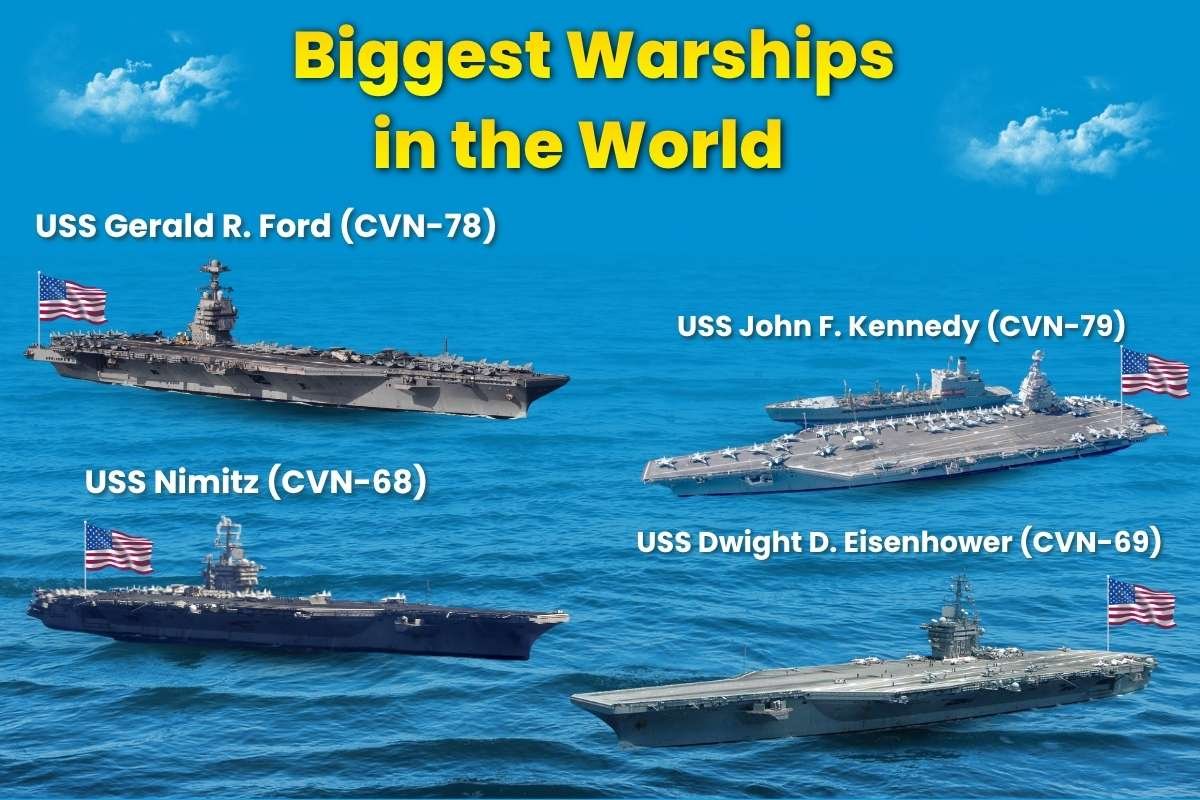
Have You Heard of the 10 Biggest Warships in the World That Rule the Oceans?
Here are the 10 biggest warships in the world you must see: 1. USS Gerald R. Ford 2. USS John F. Kennedy 3. USS Nimitz 4. USS Dwight D. Eisenhower 5. CNS Fujian
Propulsion Technology
Propulsion determines how fast a missile can travel and how far it can reach. The propulsion system acts like the engine that pushes the missile forward.
Many missiles use solid rocket fuel. Solid fuel rockets store the fuel and oxidizer in a stable solid form. Once ignited, the fuel burns rapidly and produces a strong burst of thrust. This design offers reliability, quick launch capability, and minimal maintenance. These advantages help many systems qualify as the best missiles in the world.
Some modern weapons use more advanced propulsion methods. Ramjet engines allow missiles to travel at supersonic speeds by compressing incoming air and mixing it with fuel for combustion. This design works efficiently at very high speeds and allows missiles to maintain long-distance flight.
Scramjet engines push the technology even further. These engines operate at hypersonic speeds, often above Mach 5. Air flows through the engine at extremely high velocity while fuel burns inside the chamber. This process produces enormous thrust while maintaining extreme speed.
Missiles equipped with these advanced engines can travel faster than traditional rockets. Their speed reduces the reaction time for defense systems. That advantage explains why propulsion innovation remains a key factor in developing the world’s best missiles.
Stealth and Maneuverability
Avoiding detection is just as important as speed. Engineers design modern missiles to reduce their visibility to radar and other tracking systems.
Stealth technology plays a major role here. Many missiles feature special shapes that scatter radar waves rather than reflecting them directly back to the radar system. Some also use radar-absorbing materials that reduce the signal even further. These features make the missile harder to detect until it is very close to the target.
Low-altitude flight also improves stealth. Some cruise missiles fly only a few dozen meters above the ground. They follow terrain features such as mountains and valleys. This technique allows them to stay hidden from radar systems that usually scan higher altitudes.
Maneuverability adds another layer of protection. Older ballistic missiles followed predictable paths, which made interception easier. Modern designs include control fins and advanced flight computers that allow the missile to change direction during flight.
Hypersonic glide vehicles take this concept even further. They can maneuver at extremely high speeds while descending toward their targets. These unpredictable movements make interception extremely difficult.
Because of these capabilities, stealth design and maneuverability play a major role in defining the world’s best missiles.
Future of Missiles
Missile technology continues to advance at a rapid pace. Defense researchers focus on speed, accuracy, and automation to create the next generation of weapons.
Hypersonic systems represent one of the most important areas of research. Engineers aim to develop missiles capable of traveling faster than Mach 10. At such speeds, a weapon could cross thousands of kilometers within minutes. This capability would dramatically shorten response times in military operations.
Artificial intelligence will likely become even more important. Future missiles may analyze battlefield conditions and choose the most efficient route to their target. Autonomous navigation could allow them to operate with minimal external guidance.
Space-based tracking systems may also play a larger role. Satellites equipped with advanced sensors could monitor missile launches around the world. These systems would improve early warning capabilities and help guide defensive interceptors.
Another area of research focuses on new propulsion methods. Scientists study advanced scramjet engines and experimental propulsion concepts that could push missile speeds beyond current limits.
These technological developments will determine which systems earn recognition as the best missiles in the world in the coming decades. Nations continue to invest heavily in research and development because missile technology plays a major role in global defense strategies. The competition to build faster, smarter, and more precise weapons ensures that the race to create the world’s best missiles will continue for many years.
Conclusion
At the beginning, we imagined a weapon moving faster than your morning coffee break. Now the reality feels even more intense. Modern missile systems combine speed, precision, and powerful technology in ways that once seemed impossible. Engineers continue to push the limits of science while nations invest heavily to strengthen their defense capabilities.
From long-range ballistic weapons to fast hypersonic systems, each innovation changes how countries plan security and deterrence. These advancements show that the best missiles in the world are not just machines built for speed. They represent technological progress, strategic thinking, and global power balance.
Understanding the world’s best missiles also reveals how modern warfare continues to evolve. As technology improves, future systems will likely become even faster, smarter, and more precise, shaping the next chapter of global defense strategy.