


Key Points:
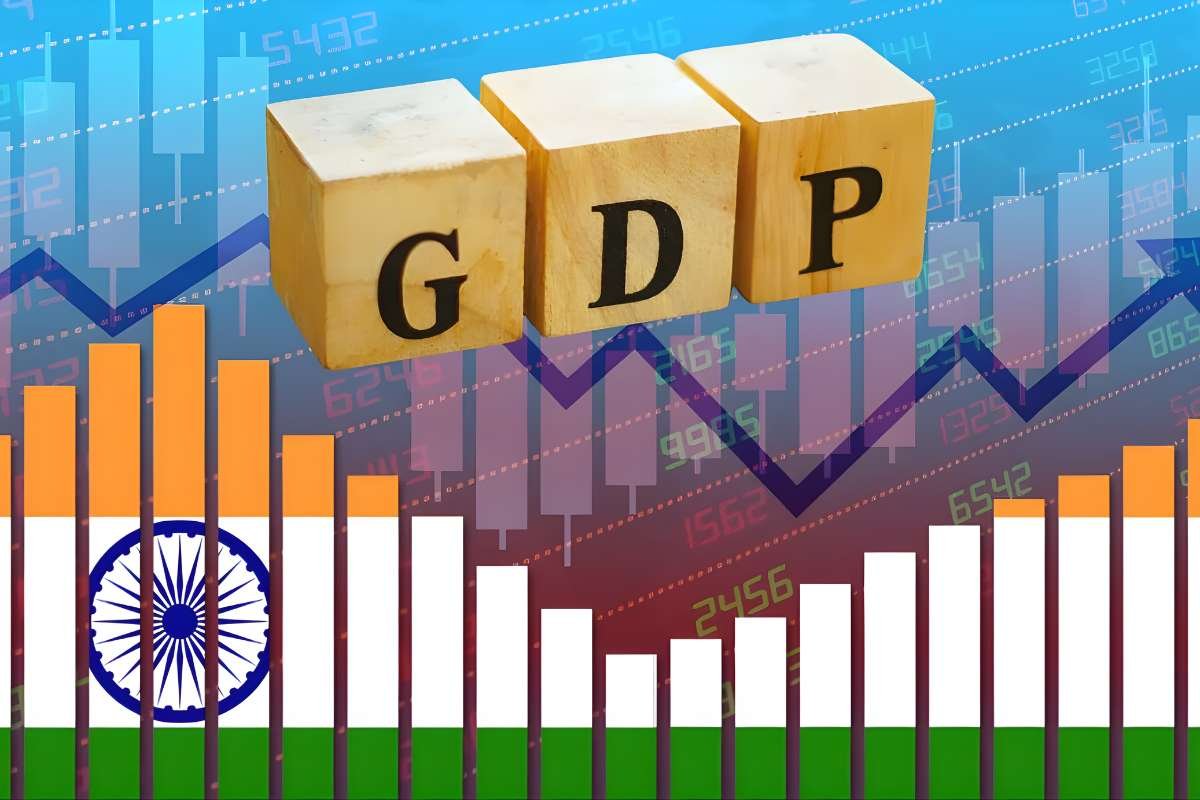
- India economic growth 2026 is projected at 7.4%, driven by strong domestic demand and higher government spending.
- U.S. trade tariffs pose risks to exports and overall growth.
- Easing inflation and RBI rate cuts support economic stability.
India’s economy is projected to grow 7.4% in fiscal 2026, highlighting strong India economic growth 2026 despite global trade uncertainty and prolonged U.S. tariffs on Indian exports.
Government Estimates Signal Faster Growth in 2026
The government’s first advance estimates indicate that India economic growth 2026 will reach 7.4% in the fiscal year ending March 2026, up from 6.5% a year earlier, according to first advance estimates released Wednesday by the government.
The projection comes despite rising global trade uncertainty and continued pressure on exports, particularly to the United States, India’s largest trading partner. Officials say domestic demand and public spending remain key drivers of growth.
“This estimate reflects the resilience of the Indian economy and the strength of domestic consumption,” a senior government official said, speaking on condition of anonymity because the data release did not include formal commentary.
In the previous fiscal year, advance estimates had pointed to a sharper slowdown, initially pegging growth at 6.4%, the weakest since the pandemic. That figure was later revised upward to 6.5% in May.
Private consumption is expected to grow 7% in fiscal 2026, slightly below the 7.2% recorded a year earlier. Government expenditure, however, is projected to rise 5.2%, more than double the 2.3% increase seen last year.
Trade Tensions Cloud Export Outlook
India’s export sector continues to face headwinds from trade restrictions, particularly in the U.S. market. Indian exports to the United States have been subject to 50% tariffs since August last year.
Negotiations toward a bilateral trade agreement are ongoing, but economists say the prolonged tariffs are likely to weigh on export growth and overall economic momentum if they persist.
“Trade uncertainty remains a downside risk, especially if tariffs stay in place longer than expected,” said an economist familiar with India’s external sector. “Exports could lag even as domestic demand stays firm.”
Last month, the International Monetary Fund projected India’s real gross domestic product to grow 6.6% in fiscal 2026, moderating to 6.2% in fiscal 2027. The IMF said its forecast assumes a prolonged delay in a U.S.-India trade deal.
An IMF spokesperson said India’s medium-term outlook remains strong but warned that global trade disruptions could slow growth. “India continues to outperform many peers, but external risks are elevated,” the spokesperson said, highlighting the resilience of India economic growth 2026.
Despite these challenges, India is set to become the world’s fourth-largest economy, underscoring its growing weight in the global economic order.
Cooling Inflation Gives Central Bank Room to Act
India’s economic performance in the first half of fiscal 2026 has been stronger than expected, providing support to the government’s growth outlook. The economy grew 7.8% in the June quarter and 8.2% in the three months ending September, reflecting steady India economic growth 2026.
The Reserve Bank of India last month revised its growth forecast for fiscal 2026 to 7.3%, up from an earlier estimate of 6.8%, citing easing price pressures and steady domestic demand.
The central bank also lowered its consumer price inflation forecast to 2.0% from 2.6% for the fiscal year. That allowed policymakers to cut the benchmark policy rate by twenty-five basis points to 5.25%.
“Lower inflation has created space to support growth, even as some indicators show weakness,” an RBI official said. The central bank has cautioned that global volatility and uneven demand could still affect the outlook.
Economists say the combination of stable prices, steady consumption and higher public spending has helped cushion India from external shocks, even as trade risks linger, sustaining India economic growth 2026.
Visit Business Viewpoint Magazine to read more.