


Key Points:
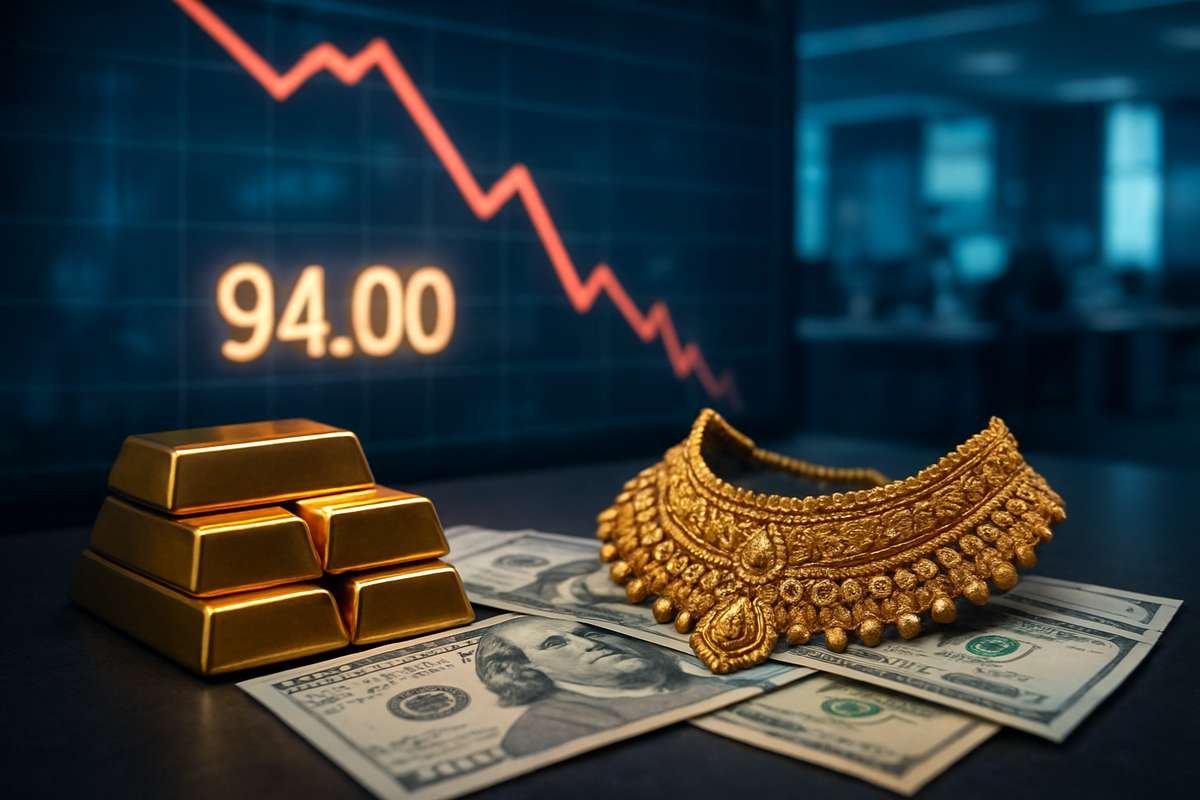
- Rupee forecast FY27 sees the currency weakening to 94 per dollar by FY27, driven by weak nominal growth and continued capital outflows.
- RBI’s FX reserve rebuilding is likely to cap any short-term rupee recovery, limiting rebounds to around 88–89.
- Rupee depreciation is structural, with UBS citing long-term competitiveness issues and muted foreign investment flows.
India’s rupee is likely to weaken to 94 per U.S. dollar by fiscal 2027 as weak nominal growth, subdued capital inflows, and Reserve Bank of India reserve rebuilding outweigh any near-term relief from easing global trade tensions. This forms the basis of UBS’s Rupee forecast FY27.
Weak Growth and Outflows Drive Bearish View
UBS expects the rupee to fall to 92 by the end of the current financial year before extending losses over the medium term, aligning with its broader Rupee forecast FY27. The Swiss bank said persistent capital outflows and underwhelming nominal GDP growth are pressuring corporate earnings and limiting equity market returns.
“At the core of the weakness in India’s capital account, it’s primarily growth,” Rohit Arora, head of Asia FX and rates strategy at UBS Investment Bank, said in a recent media interaction. While real growth remains strong, he said nominal growth has been “extremely weak,” weighing on earnings and foreign investor sentiment.
UBS attributed recent outflows to growth dynamics and valuation concerns rather than global tariff risks. Elevated equity valuations and India’s limited exposure to the global artificial intelligence investment cycle have also kept foreign equity inflows muted.
Net foreign direct investment is at multiyear lows, according to UBS, and the bank’s equity strategists remain underweight on Indian equities relative to China into 2026, further supporting its bearish Rupee forecast FY27.
RBI Reserve Strategy Caps Any Rupee Rebound
UBS said any near-term rebound in the rupee is likely to be limited, even if global trade rhetoric cools. The bank expects the RBI to actively rebuild foreign exchange reserves after recent drawdowns, which would cap sustained currency appreciation.
“The reason why we think pressure will come back is because of RBI’s loss of FX reserves over the last few months,” Arora said. He added that the central bank is likely to buy dollars as the rupee stabilizes or as capital flows return, limiting upside moves.
Arora said any trade-related rally would be modest. “Any rebound in rupee because of a trade deal would be limited, toward 88 to 89 at best,” he said.
The rupee depreciated more than 6% in 2025 and hit a record low of 91.07 against the dollar on Dec. 18. Despite that decline, UBS rejected the view that the currency has become cheap.
“Even though India’s real effective exchange rate has fallen to 10-year lows, we don’t think it’s necessarily cheap,” Arora said, pointing to a core goods trade balance that remains stuck in a multiyear range, another factor shaping the Rupee forecast FY27.
Long-Term Depreciation Seen as Structural Trend
UBS framed rupee weakness as part of a long-term structural trend rather than a short-term shock. The bank cited competitiveness challenges and India’s balance of payments dynamics as key drivers behind its Rupee forecast FY27.
“Even though 94 might seem relatively high, let’s not forget the RBI governor himself mentioned that 3% to 4% depreciation annually is broadly normal,” Arora said. He added that the dollar-rupee pair has been making higher highs and higher lows since 2019.
Bond inflows may offer limited support as yields rise, UBS said, but not enough to reverse the broader trend. The bank expects the 10-year benchmark government bond yield to end fiscal 2026 at 6.5% and fiscal 2027 at 6.6%, with risks skewed higher.
Globally, UBS expects a moderately stronger dollar, a view that contrasts with peers betting on sharp dollar weakness. The bank is constructive on China’s yuan over the medium term, forecasting gradual appreciation under conservative policy management, while remaining bearish on the Japanese yen amid negative real rates and ongoing capital outflows.
Visit more of our news! Business Viewpoint Magazine