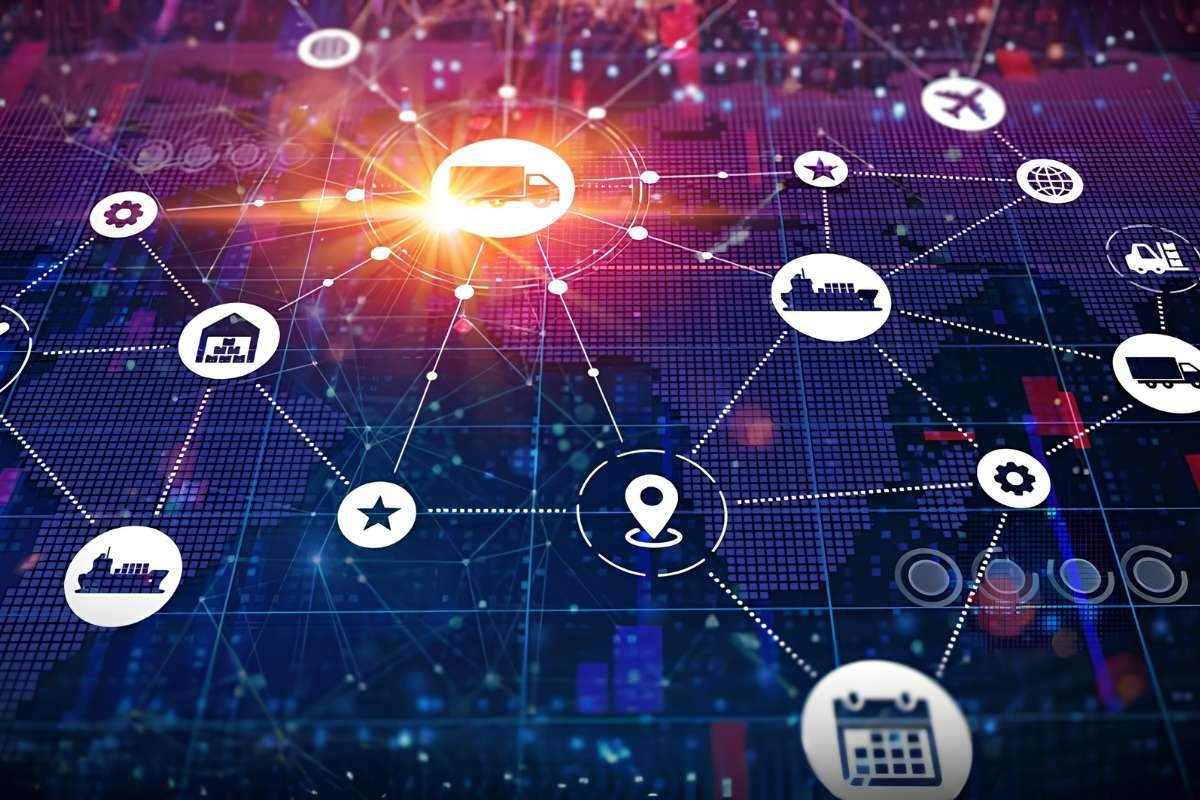

Modern supply chains involve multiple suppliers, warehouses, and transport partners, making it difficult to track products accurately. Blockchain in supply chain: transparency and traceability create secure digital records that improve visibility, reduce fraud, and build trust. This article explains how blockchain enhances supply chains, its key applications, benefits, and real-world examples from leading companies.
Have you ever wondered whether the coffee you drink really comes from the farm printed on the package? Or whether the medicine you buy has traveled safely before reaching the pharmacy?
Every product has a journey, but many companies still struggle to prove every step along the way. Missing records, paperwork, and disconnected systems often make it difficult to verify a product’s origin or authenticity.
That is where blockchain in the supply chain: transparency and traceability change the game. Instead of relying on scattered documents and separate databases, businesses can create one secure digital record that tracks every stage of a product’s journey.
This gives manufacturers, suppliers, retailers, and even customers access to reliable information whenever they need it. In a world where customers expect honesty and regulators demand accountability, blockchain is helping supply chains become more transparent, reliable, efficient, and ready for the future.
Why Transparency and Traceability Matter in Supply Chains?
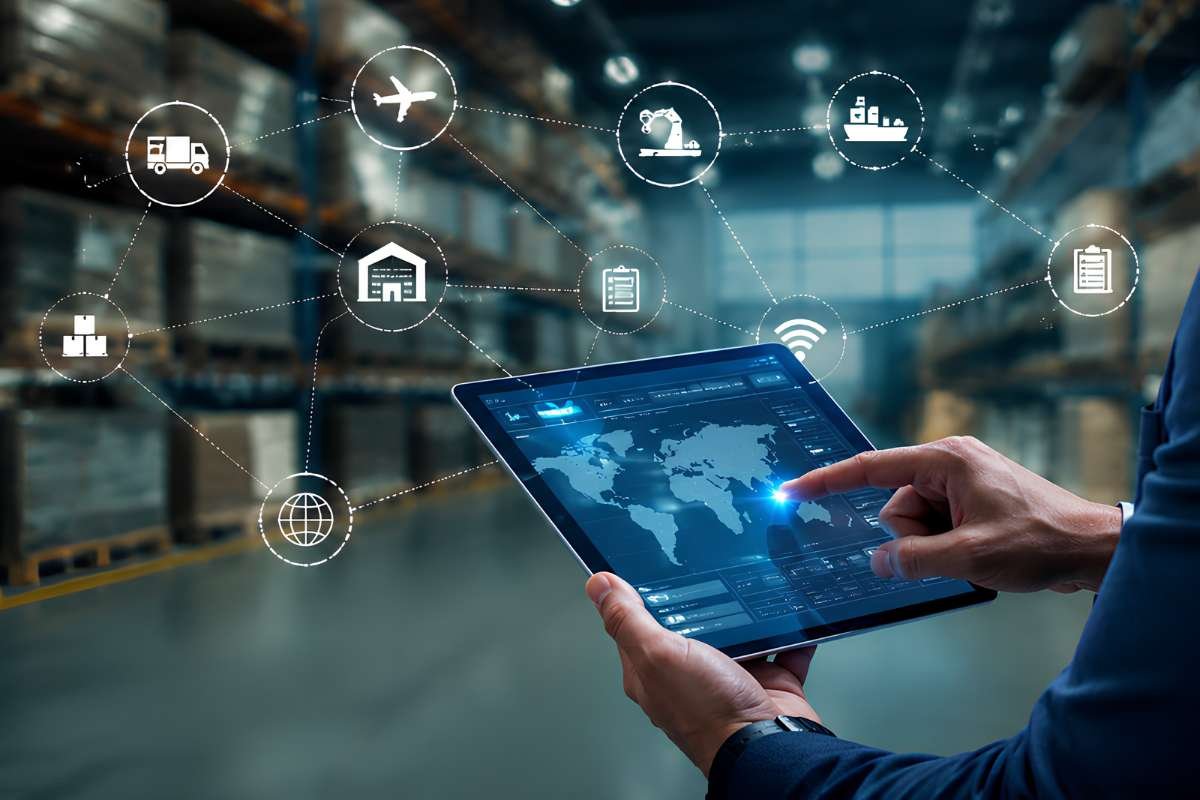
A product rarely moves directly from a factory to a customer. Instead, it passes through manufacturers, suppliers, warehouses, logistics providers, distributors, retailers, and finally reaches the consumer. Every handoff creates an opportunity for delays, mistakes, fraud, or data loss. This is why blockchain in supply chain: transparency and traceability has become one of the most discussed technologies in logistics and manufacturing.
Transparency means everyone involved can see accurate information about a product’s journey. Traceability means businesses can identify where a product came from, where it has been, and who handled it at every stage.
Without these capabilities, companies face serious challenges. Counterfeit products enter markets, food contamination becomes harder to trace, product recalls become expensive, and customers lose confidence in brands.
According to the IBM Institute for Business Value, businesses with greater supply chain visibility respond faster to disruptions and improve operational efficiency. Blockchain creates a shared digital ledger where records cannot be secretly changed, helping businesses maintain reliable information across multiple organizations.
Instead of depending on emails, spreadsheets, or separate databases, blockchain stores every transaction in chronological order. Each participant sees the same verified information, reducing confusion and improving collaboration.
Today, governments also demand greater product accountability. Regulations across industries such as pharmaceuticals, food, electronics, and luxury goods increasingly require companies to maintain detailed product records. Blockchain in supply chain: transparency and traceability help organizations meet these compliance requirements while improving customer confidence.
5 Key Applications of Transparency and Traceability in Supply Chains
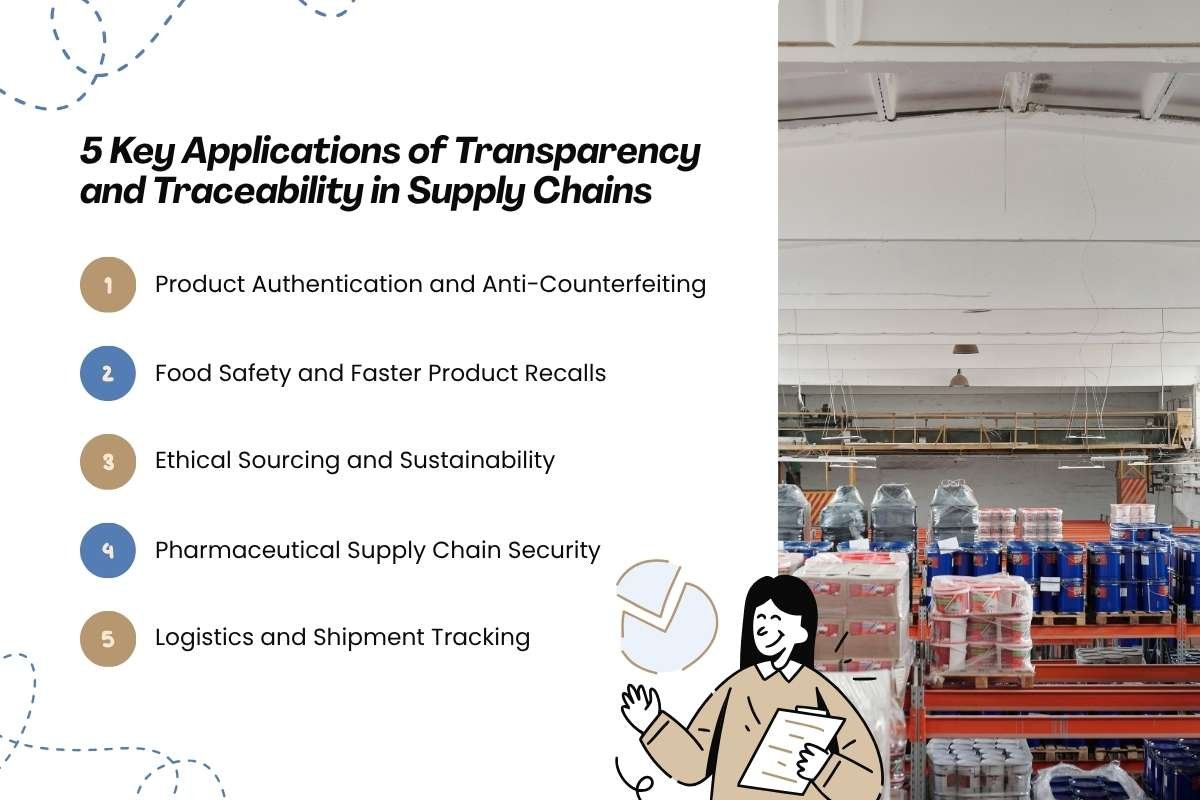
Modern supply chains involve many suppliers, factories, warehouses, and transport companies before a product reaches customers. This long journey makes it difficult to track products and increases the risk of delays, fraud, and mistakes.
Blockchain in supply chain: transparency and traceability solve this problem by creating one secure digital record that every authorized partner can access. Here are five major ways businesses use blockchain today.
1. Product Authentication and Anti-Counterfeiting
Fake products are a major challenge across industries like medicines, luxury goods, electronics, and cosmetics. These products not only cause financial losses but also put consumers at risk.
With Blockchain in the supply chain, transparency and traceability, every product gets a secure digital identity. Its journey is recorded from manufacturing to delivery, making it easier to verify whether a product is genuine.
Real-Life Example: LVMH and Aura Blockchain Consortium
Luxury brands like LVMH, Prada, and Cartier use the Aura Blockchain Consortium to fight counterfeit products. Customers can scan a product and check its manufacturing details and authenticity before buying.
2. Food Safety and Faster Product Recalls
Food passes through several stages before reaching stores. If contamination happens, companies must quickly identify the affected products.
Blockchain in supply chain: transparency and traceability record every step of the food journey, helping businesses trace the source of a problem within seconds instead of days.
Real-Life Example: IBM Food Trust
IBM Food Trust helps food companies record details such as farm location, harvest date, storage conditions, and shipping history. This allows faster recalls, reduces food waste, and improves customer safety.
3. Ethical Sourcing and Sustainability
Customers want to know where products come from and whether they are made responsibly. Blockchain helps businesses prove these claims with secure and verified records.
Using blockchain in the supply chain: transparency and traceability; companies can track raw materials, production processes, and transportation history.
Real-Life Example: Coffee Supply Chains
Many coffee companies use blockchain to record farm details, harvest dates, quality checks, and shipping information. Customers can scan a QR code to see the product’s complete journey and support ethical farming.
4. Pharmaceutical Supply Chain Security
Counterfeit medicines are a serious health risk. Accurate tracking is essential to ensure patients receive safe and genuine medicines.
Blockchain in supply chain: transparency and traceability help pharmaceutical companies securely record every stage of production and distribution.
Real-Life Example: MediLedger
The MediLedger network helps pharmaceutical companies verify medicines, improve compliance, reduce paperwork, and detect suspicious products more quickly.
5. Logistics and Shipment Tracking
International shipments involve many transport companies, ports, warehouses, and customs authorities. Keeping everyone updated can be difficult.
With blockchain in the supply chain, transparency and traceability, all partners can access the same real-time shipment information. This reduces paperwork, improves communication, and speeds up problem-solving.
Real-Life Example: TradeLens
Developed by IBM and Maersk, TradeLens used blockchain to digitize shipping documents and improve cargo tracking. Although the platform later closed due to business adoption challenges, it proved that blockchain can make global logistics more efficient.
Conclusion:
Remember the question from the beginning: Can you really trust the journey of the products you buy? Today, the answer is becoming clearer. Businesses no longer have to rely on paperwork or guesswork to prove where a product has been.
Blockchain in supply chain: transparency and traceability create a secure and shared record that builds trust at every stage. From safer food and genuine medicines to ethical sourcing and smarter logistics, blockchain is helping companies become more transparent, efficient, and customer-focused.
As supply chains continue to evolve, organizations that adopt this technology today will be better prepared for tomorrow’s challenges.
FAQs
1. What is blockchain in supply chain management?
Blockchain is a secure digital record that tracks a product from its source to the customer. It helps businesses improve transparency, reduce fraud, and build trust.
2. Why is transparency important in supply chains?
Transparency helps businesses know where products come from and how they move through the supply chain. It also improves customer trust and makes product recalls faster.
3. How does blockchain improve traceability?
Blockchain records every step of a product’s journey in one secure system. This makes it easy to trace products, verify their origin, and identify problems quickly.
4. Which industries use blockchain in supply chains?
Industries such as food, healthcare, retail, manufacturing, and logistics use blockchain to improve product tracking and reduce counterfeit goods.
5. What are the main benefits of blockchain in supply chains?
Blockchain improves product visibility, increases security, reduces paperwork, and helps businesses make faster and more accurate decisions.
Thank You For Reading!
See More
Supply Chain Management Essentials to Stop Your Operations From Breaking