
A decade ago, India’s Renewable Energy sector had been dominated by standalone solar and wind installations, often limited by high costs, policy uncertainties, and fragmented supply chains. By 2025, the landscape had undergone a dramatic transformation.
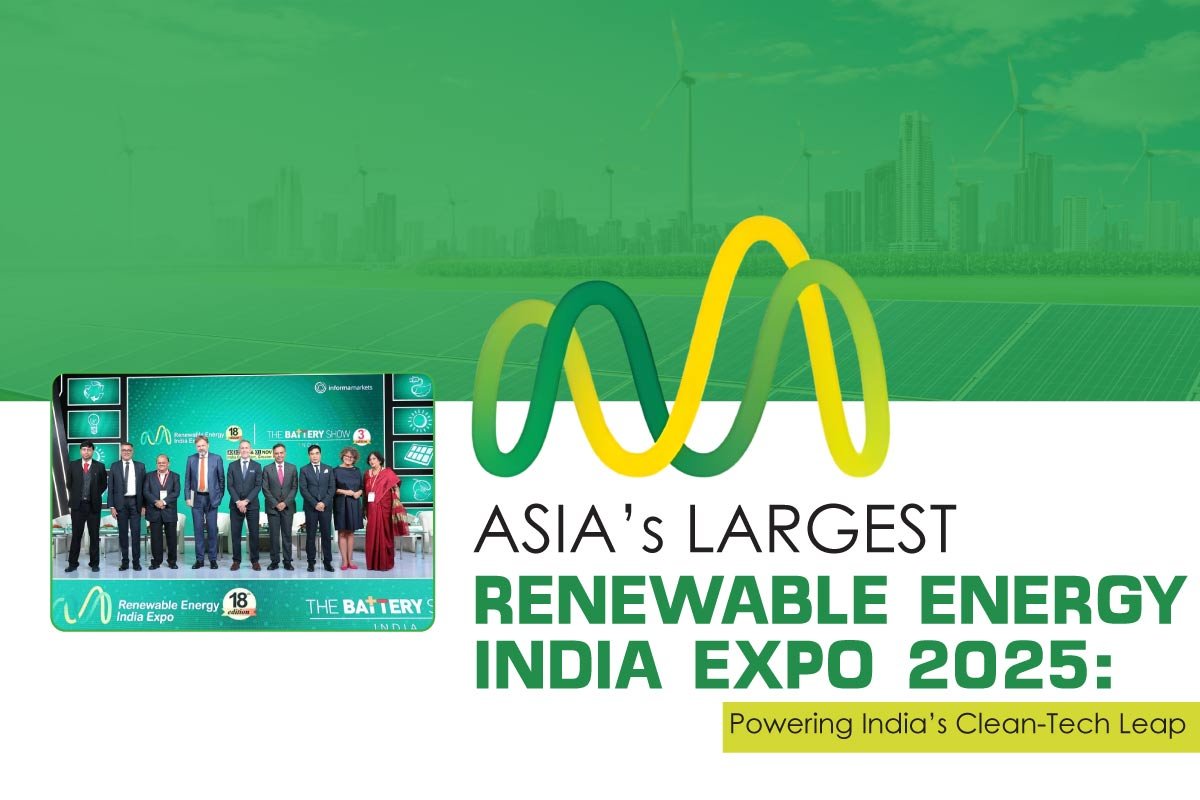
The global clean-energy transition had entered a decisive decade, and India was emerging as one of its strongest engines of growth. As climate commitments intensified and renewable adoption accelerated across industries, the Renewable Energy India (REI) Expo 2025 stood as a defining moment for the country’s green-tech ecosystem. More than just an exhibition, it represented India’s ambition to redefine its energy future through innovation, collaboration, and sustainable business models.
With India targeting 500 GW of non-fossil fuel capacity by 2030, the urgency had shifted from conceptualizing clean energy to operationalizing it at scale. REI Expo 2025 reflected this shift, not merely showcasing technology but creating a platform where policymakers, manufacturers, investors, and innovators converged to shape the next chapter of the country’s renewable revolution.
A New Era of Adaptability, Advancement, and Abiding Power
The REI Expo 2025 captured this transition from conventional power frameworks to an integrated clean-energy ecosystem powered by green hydrogen, battery storage, smart grids, floating solar, and offshore wind. What had once begun as a niche segment had become the backbone of India’s energy strategy.
Manufacturers, EPC companies, and global investors now view India not just as a market but as a hub for innovation, scale, and competitive clean energy production. The expo highlighted this newfound confidence through next-gen solutions that reduced costs, accelerated deployment, and enabled sector-wide interoperability.
The New Energy Currency- Technology
At REI 2025, technology was not a supporting element; it was the core of the transformation. The event brought together cutting-edge tools and digital systems that were powering the future of renewable energy:
- AI-driven forecasting platforms that optimized grid stability and reliability
- Digital twins that modeled solar and wind assets in real time
- Robotics and automation for large-scale PV manufacturing
- Advanced inverters, electrolyzers, and storage systems designed for efficiency and resilience
REI Expo 2025 also witnessed the rise of IoT-enabled O&M, where drones monitored solar farms, sensors tracked performance anomalies, and predictive analytics eliminated downtime. These technologies were redefining how India planned, deployed, and managed its renewable assets, shifting the focus from capacity addition to intelligent energy management.
Alongside these breakthroughs, the inaugural Energy Storage Conference emerged as one of the most defining moments of REI 2025. The showcase brought together pioneers in battery chemistry, grid-scale storage, hybrid systems, and circular economy models, signalling India’s readiness for a storage-powered clean-energy future. From next-gen lithium and sodium-ion innovations to utility-scale BESS deployments, safety frameworks, and recycling pathways, the conference highlighted how storage would become the backbone of 24/7 renewable power. It underscored a clear shift: India is no longer just generating clean energy it’s learning to store, balance, and deliver it intelligently.
Democratizing Clean Energy Access
One of the most significant transformations symbolized by REI 2025 was the democratization of India’s clean-energy marketplace. Renewable technologies were no longer limited to large industrial players; the expo highlighted solutions for MSMEs, startups, farmers, and urban consumers.
Affordable rooftop solar kits, modular microgrids, community energy storage, and pay-as-you-go green-tech models were bringing sustainability to the grassroots. For rural and peri-urban India, this meant reliable electricity, reduced energy costs, and new livelihood opportunities.
The event amplified India’s larger mission: making clean energy not just a climate necessity, but a tool for social and economic inclusion.
Humanizing the Clean-Energy Transition
While innovation drove the expo, the clean-energy movement remained deeply human. REI 2025 focused on improving the user experience for installers, consumers, developers, and operators.
- Interactive zones simulated real-world installation challenges
- Workshops demystified complex technologies for first-time adopters
- Skill labs equipped technicians with future-ready capabilities
Panels and dialogues also explored the sentimental, cultural, and behavioral dimensions of India’s energy transition, touching on the emotional appeal of sustainability, community-led adoption, and the personal stories behind clean-tech entrepreneurship. By blending data intelligence with empathy, the expo reinforced that renewable energy was not just about kilowatts it was about people.
Monetizing India’s Green Economy
As investment poured into clean energy, monetization strategies evolved rapidly.
REI Expo 2025 demonstrated new opportunities in:
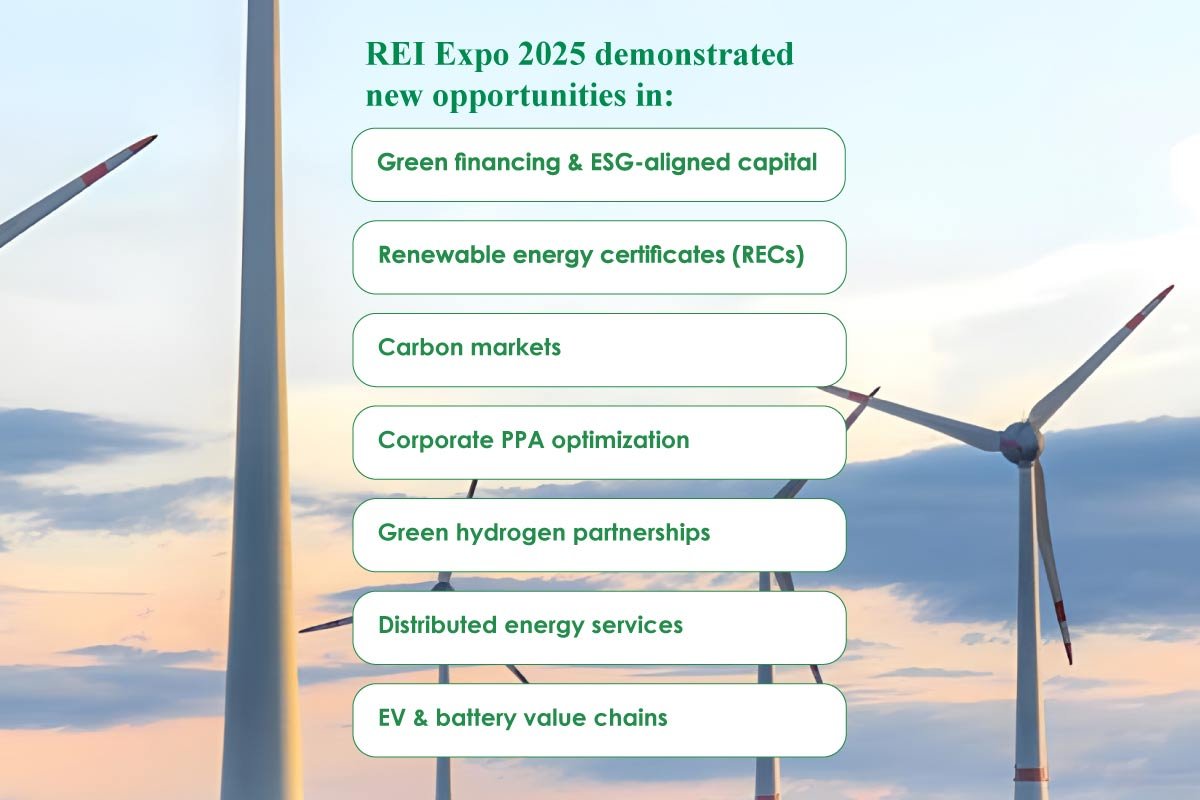
- Green financing & ESG-aligned capital
- Renewable energy certificates (RECs)
- Carbon markets
- Corporate PPA optimization
- Green hydrogen partnerships
- Distributed energy services
- EV & battery value chains
Hybrid event formats and digital extensions enabled partners to maximize visibility and lead generation. With archived sessions, virtual demos, and intelligent matchmaking, the value of participation extended far beyond the expo floor, creating a year-round business ecosystem that continues to thrive.
Challenges that Shaped the Road Ahead
The transition toward clean energy was accelerating, but challenges persisted, and REI 2025 directly confronted them. India continued to navigate issues such as:
- Grid integration limitations
- Land availability for large-scale projects
- Supply chain dependency on imports
- Financing gaps for early-stage green-tech
- Regulatory clarity in emerging segments like hydrogen and offshore wind
The expo’s “Digital Twin” strategy, a virtual replication of on-ground exhibits, ensured wider participation and enabled problem-solving at a national scale. It brought together voices that could influence policies, standardize technologies, and streamline implementation.
The Future: Integrated, Intelligent, and Impact-Oriented
The next decade of India’s renewable journey was expected to be defined by convergence. REI Expo 2025 pointed toward a future where AI, blockchain, green hydrogen, mobility, and circular manufacturing interacted seamlessly.
- Smart contracts could automate energy trading
- Blockchain could track carbon footprints across supply chains
- 3D virtual environments could simulate entire green industrial zones
- Integrated energy ecosystems could power cities with clean, autonomous systems
Indian clean-tech startups were pioneering many of these innovations, positioning the country as a global leader in renewable energy. The message was clear: India was no longer catching up, it was leading.
Turning Ambition into Action
Just as hybrid networking had reshaped India’s B2B events, the REI Expo transformed India’s energy narrative. It served as a catalyst for industries to move from aspirations to execution, from pilots to scalable solutions.
India’s renewable sector was not merely growing; it was redefining global standards of sustainability, innovation, and energy inclusivity. As the world looked toward cleaner, smarter, and more resilient systems, the Renewable Energy India Expo 2025 stood as a testament to India’s commitment to powering a green future.
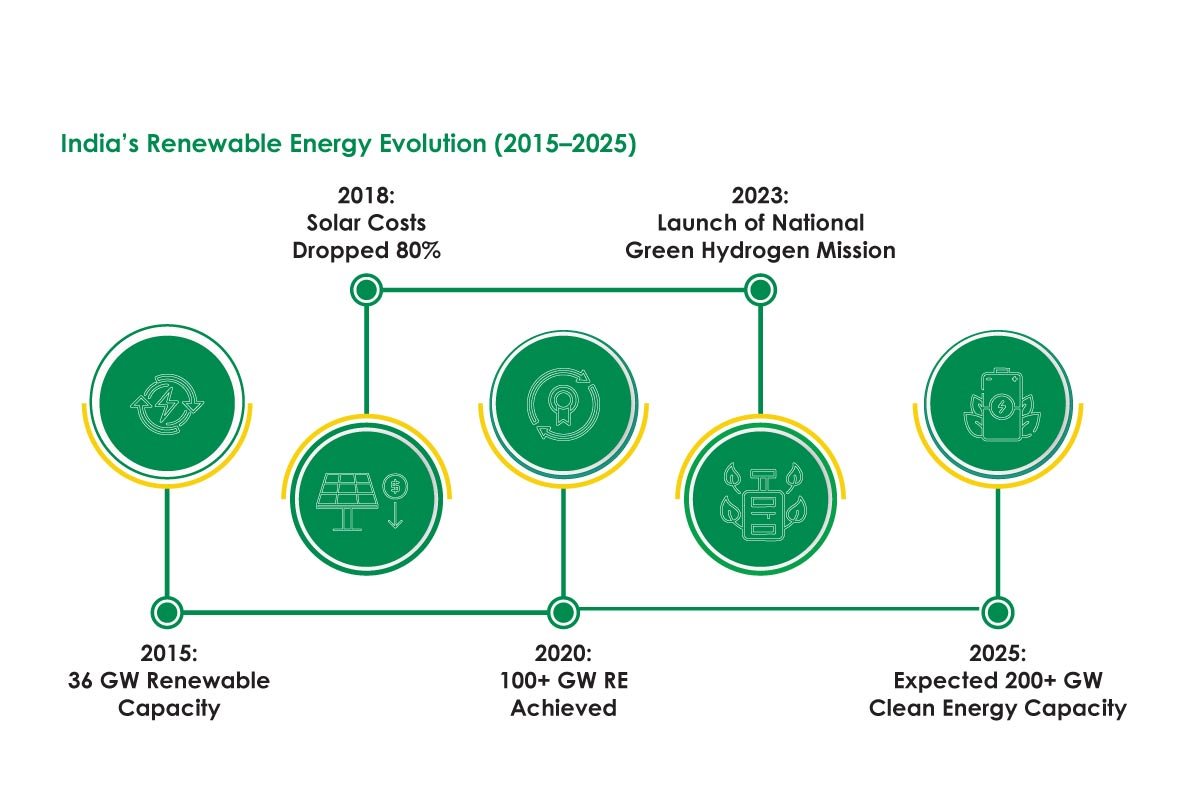
| India’s Renewable Energy Evolution (2015–2025) |
|---|
| 2015: 36 GW Renewable Capacity |
| 2018: Solar Costs Dropped 80% |
| 2020: 100+ GW RE Achieved |
| 2023: Launch of National Green Hydrogen Mission |
| 2025: Expected 200+ GW Clean Energy Capacity |
Conclusion
REI Expo 2025 wasn’t just another milestone on India’s renewable-energy timeline it was the clearest signal yet that the nation is entering its clean-tech prime. The event showcased an ecosystem that is bold, adaptive, and future-ready where technology, policy, and people converge to drive meaningful change. From pioneering energy-storage breakthroughs to democratizing access for communities and MSMEs, REI 2025 proved that India’s shift to green energy is no longer theoretical; it’s operational, scalable, and globally influential. As the country accelerates toward its 2030 targets, the momentum built here will shape how India powers its industries, its cities, and its people. In every sense, the expo reaffirmed one truth: India isn’t just participating in the renewable revolution it’s leading it.