



Key Points:
- India will reset the GDP base year to 2022-23, replacing the 2011-12 benchmark.
- The overhaul introduces new data sources like labour and enterprise surveys to better capture informal and digital sectors.
- Revised deflators and state-level data will reshape real growth estimates and impact fiscal policy, borrowing limits, and tax devolution.
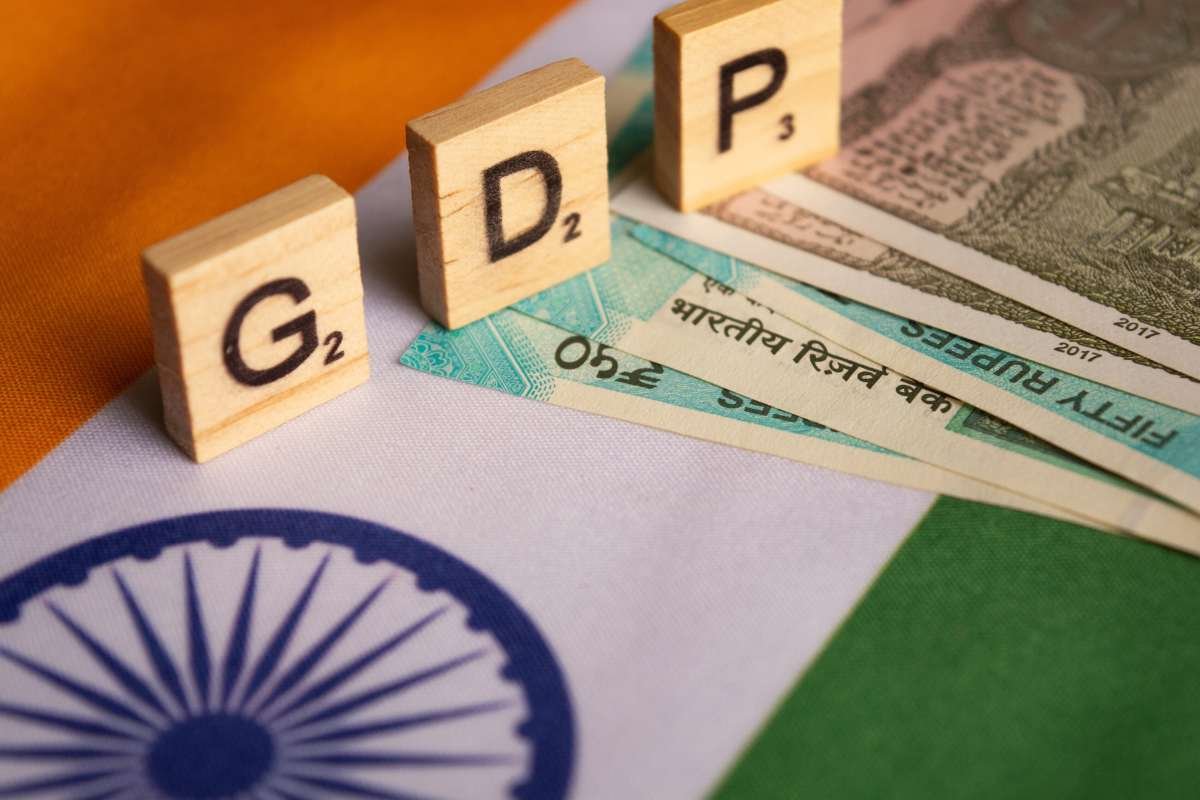
India will release a new series of national income accounts on Feb. 27, reset the GDP Base Year to 2022-23, and introduce methodological reforms that officials say better reflect the economy’s structure and could reshape fiscal policy and state finances.
The update replaces the 2011-12 base year and incorporates wider use of administrative and survey data, including the Periodic Labour Force Survey and enterprise surveys, to improve measurement of employment, informal activity, and digital services.
The base year revision resets the benchmark used to calculate gross domestic product, aligning official data with changes in technology, consumption, and sectoral composition over the past decade. Economists say the previous base year no longer captures the growing weight of services and digital sectors.
“This transition is not a benign technicality,” said Aashi Gupta, an economist who analyzed the changes. “It has implications for economic narrative, policy formation, and federal fiscal dynamics.”
Officials say the revised framework expands reliance on updated surveys rather than older proxy-based estimation methods. Employment composition will now draw on the Periodic Labour Force Survey instead of employment and unemployment surveys from 2010-11.
Data from the Annual Survey of Unincorporated Sector Enterprises will also be used to better measure informal firms, reducing dependence on fixed ratios that assume stable relationships between formal and informal output.
Emerging segments such as platform-based activity, digital services, and modern financial intermediation are expected to be more fully captured under the new series.
Government Shifts Base Year To 2022-23, Updates Data Sources
Rebasing the GDP Base Year updates the relative weights assigned to agriculture, manufacturing, and services. Under the previous series, those weights reflected the economy of more than a decade ago.
An old base year “implicitly assumes that the relative weights of sectors have remained the same,” Gupta said. “That assumption no longer holds.”
The revision also reflects updated consumption data from the Household Consumption Expenditure Survey 2022-23, which feeds into price indices used for calculating real growth.
Revised Deflators Aim To Improve Real Growth Estimates
Officials say changes in how the real GDP Base Year is computed are central to the overhaul.
Both the Wholesale Price Index and Consumer Price Index will continue to be used, but with closer alignment between sectors and the deflators applied to them. In the past, the Wholesale Price Index, which tracks producer-level prices of traded goods and excludes most services, was widely used.
Applying wholesale prices to services could distort growth estimates, economists say, especially in a services-dominated economy. The revised system moves toward greater use of sector-appropriate consumer price indices and, where feasible, double deflation methods that account separately for output and input prices.
“These changes allow a cleaner separation of price effects from real growth,” Gupta said.
States Face Fiscal Impact As GSDP Calculations Change
The revision is expected to affect Gross State Domestic Product, or GSDP, figures that underpin state budgets, borrowing limits, and tax devolution.
Previously, much of state-level gross value added was derived by apportioning national estimates using indicators such as employment shares. The revised series draws more heavily on state-specific administrative data, including goods and services tax records and labor market surveys.
Under India’s Fiscal Responsibility and Budget Management framework, fiscal deficit and debt limits are expressed as ratios to GSDP. If GSDP is revised upward, deficit ratios could improve mechanically, expanding borrowing headroom without changes in spending behavior. A downward revision could tighten fiscal space.
The Finance Commission assigns 10% weight to GSDP in its formula for distributing central tax revenues to states. As a result, revisions may alter states’ shares in tax devolution.
GDP and GSDP data also influence sovereign risk metrics and investment decisions. Analysts say a more accurate measurement could affect how investors assess macroeconomic stability and state-level performance.
Economists say the overhaul should be viewed as part of an ongoing effort to strengthen statistical governance rather than a one-time adjustment.
“The true test is whether revisions become routine and methodologically sophisticated,” Gupta said. “As the economy evolves, measurement systems must evolve with it.”