


Key Takeaways:
- Gaganyaan 2026remains on track: ISRO has reaffirmed the target for the first uncrewed G1 mission, a crucial step toward human spaceflight.
- ISRO faces an intensive launch calendar: Six more launches are targeted during the financial year, including the NVS-03 navigation satellite and other strategic, technology, and commercial missions.
- Testing is becoming the key focus: Parachute trials, ground tests, simulations and system qualification are being carried out to reduce risks before astronauts eventually fly aboard Gaganyaan.
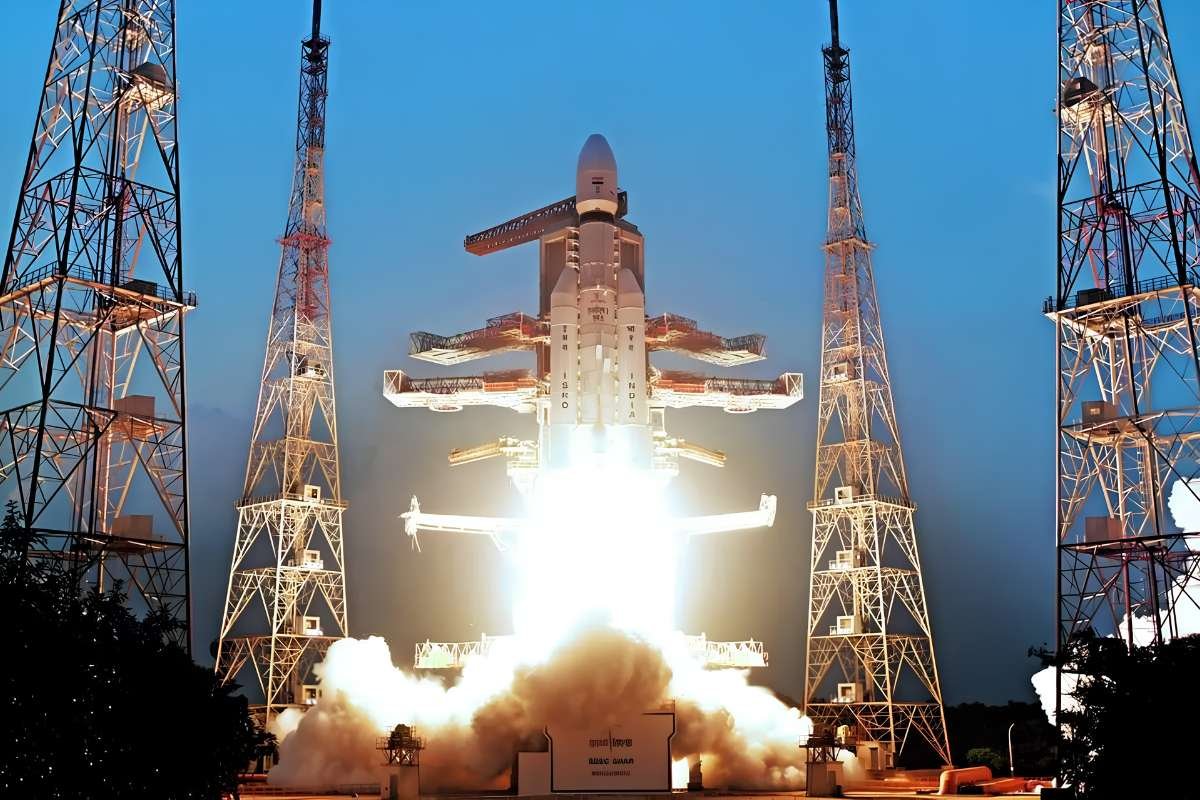
India’s space programme is entering a crucial phase, with the Indian Space Research Organisation (ISRO) preparing for a busy series of missions while advancing the country’s first human-spaceflight programme. ISRO Chairman V. Narayanan has reaffirmed that the first uncrewed Gaganyaan 2026 mission, G1, is targeted for launch during the year.
The announcement comes after the successful GSLV-F17 mission, which placed the EOS-05 Earth observation satellite into its designated sub-geosynchronous transfer orbit on September 4. The mission marked an important achievement for ISRO and provided fresh momentum for the agency’s upcoming launch schedule.
ISRO Prepares for Six More Launches
ISRO has set its sights on six additional launches during the current financial year. These missions are expected to cover areas including navigation, Earth observation, technology demonstrations and commercial space activities.
One of the important upcoming missions is NVS-03, which is part of India’s NavIC navigation system. NavIC provides positioning, navigation and timing services across India and parts of the surrounding region. NVS-03 is designed to strengthen the existing satellite constellation and improve the continuity of these services.
The successful EOS-05 mission also strengthens India’s Earth observation capabilities. Positioned roughly 36,000 kilometres above Earth, the satellite is designed to provide a wide and persistent view of areas of interest. Such capabilities can support applications that depend on regular and reliable Earth imaging.
The achievement is particularly significant after a difficult start to the year. The PSLV-C62/EOS-N1 mission encountered an anomaly during its third-stage flight in January. EOS-05 therefore represents an important return to successful orbital operations for ISRO in the current financial year.
Gaganyaan 2026 Remains the Biggest Challenge
Despite the importance of the upcoming satellite missions, Gaganyaan remains one of ISRO’s most demanding projects. The first uncrewed flight, G1, will carry no astronauts. Its purpose is to test the systems and technologies required to safely send humans into space and bring them back to Earth.
ISRO has been conducting extensive testing before the mission. This includes qualification trials for the crew module, parachute systems, and recovery procedures.
The agency completed its second Integrated Air Drop Test in April, using a simulated crew module weighing about 5.7 tonnes. In July, ISRO also conducted its fifth Integrated Main Parachute Air Drop Test to further validate the parachute system.
These tests are important because the crew module must slow down safely during atmospheric re-entry before landing in the sea. Reliable parachute and recovery systems are therefore essential to astronaut safety.
G1 is planned as the first of three uncrewed Gaganyaan missions, G1, G2 and G3, before the eventual crewed flight. Each mission is expected to provide additional validation of the systems needed for human spaceflight.
A Critical Phase for India’s Space Programme
The latest developments show that ISRO is moving into a period where consistent execution will be as important as individual mission successes. The agency must manage multiple satellite launches while continuing the complex testing programme required for Gaganyaan.
For India’s human-spaceflight ambitions, the Gaganyaan 2026 G1 mission will be a major milestone. A successful uncrewed flight would provide valuable operational data and help validate systems before astronauts are placed aboard the spacecraft.
At the same time, missions such as NVS-03 and EOS-05 demonstrate the broader role of India’s space programme in navigation, Earth observation and national infrastructure.
With several launches planned and Gaganyaan 2026 preparations accelerating, the coming months could prove decisive for ISRO. The agency’s ability to maintain safety, reliability and launch momentum will be closely watched as India moves toward its next major chapter in space exploration.