


In the global race for software dominance, India has completed a remarkable transition. It is no longer just the world’s back-office; it is the world’s product lab. The numbers tell the story clearly. According to the latest estimates from Bain & Company and SaaSBoomi, Indian SaaS companies now generate over $15 billion in annual recurring revenue (ARR). More importantly, the ecosystem remains firmly on track to hit the much-anticipated $50 billion ARR mark by 2030.
Yet behind these headline figures lies a more human reality: building a sustainable software company is notoriously lonely. The path from $1 million to $100 million ARR is filled with churn crises, hiring missteps, pricing confusion, and go-to-market failures. This is precisely where the SaaSBoomi Annual Conference steps in.
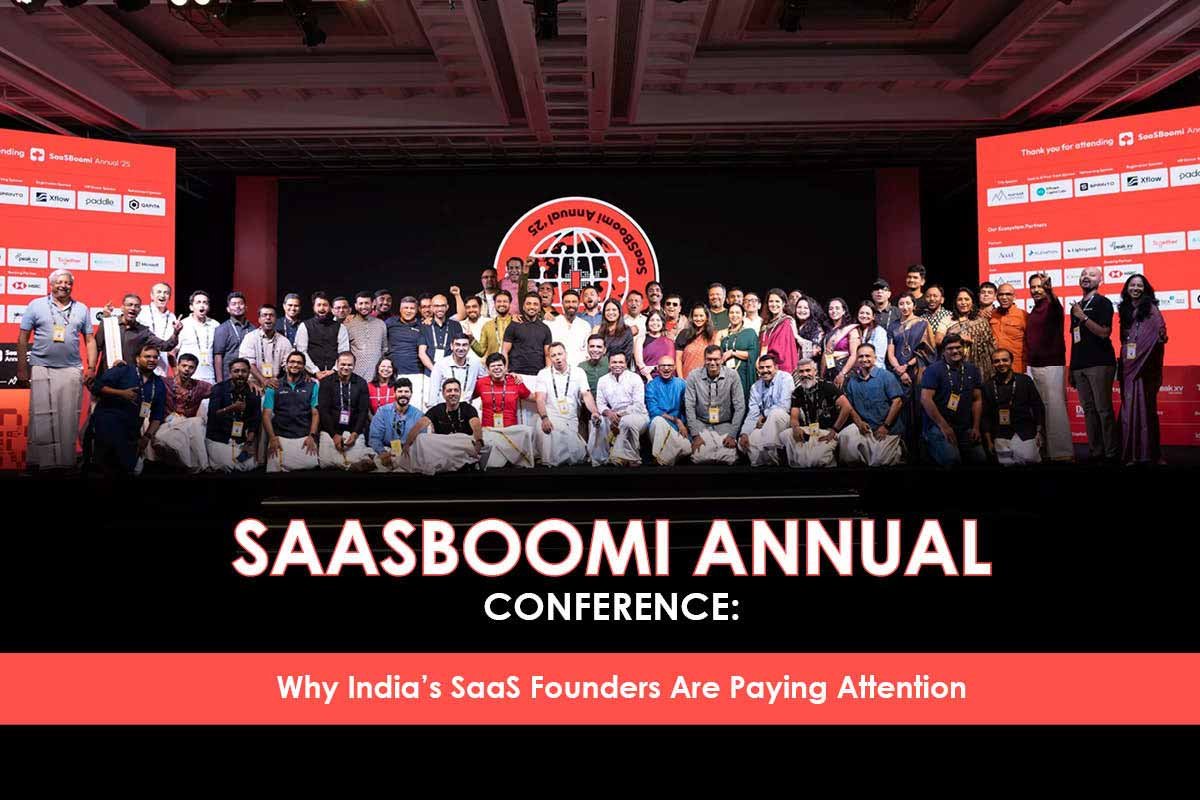
Often described not merely as an event but as a movement, the latest edition of the SaaSBoomi Annual Conference drew a record 2,500+ founders, investors, and operators, with hundreds more on the waitlist. It is not a trade show or a pitch fest for investors; it is a gathering of operators- for operators, the single most anticipated date on the calendar for India’s SaaS founders.
The “Pay-it-Forward” Moat
What separates the SaaSBoomi Annual Conference from the dozens of other tech summits populating Bengaluru, Chennai, and Pune each year? The answer lies in its unique culture. The community runs on a strict “Pay-it-Forward” ethos.
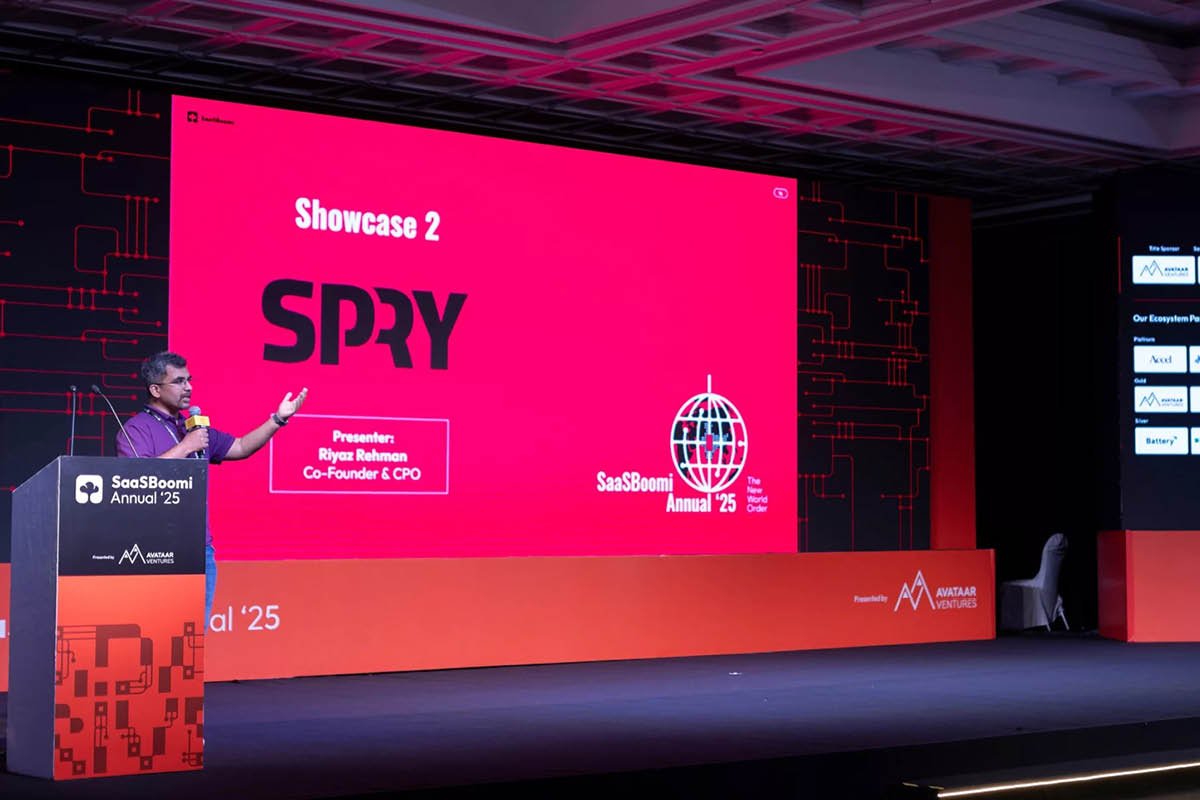
Vendors are banned from pitching on stage, and random, transactional networking gives way to curated, deep-dive “Boomi Circles.” Speakers are not imported celebrities or paid thought leaders; they are active founders who have recently crossed the exact chasms attendees are now facing. When a Series C founder explains how they reduced churn during the “valley of death,” it carries a weight that a generic keynote simply cannot match.
This culture has transformed the conference into a high-trust environment where competitors share notes, and late-stage founders mentor early-stage ones. In an industry often guarded by NDAs and proprietary algorithms, the SaaSBoomi Annual Conference has built a rare moat of vulnerability and trust. Today, the community connects over 4,500 founders from more than 2,000 SaaS companies, making it the largest and most influential founder network in Indian SaaS.
Beyond “Jugaad”: The Shift to Efficiency
For years, the Indian SaaS narrative was dominated by “affordable engineering” and “jugaad” doing more with less. However, the latest edition of the SaaSBoomi Annual Conference signals a decisive shift, as the conversations echoing through the halls are no longer about cost arbitrage but about capital efficiency and AI integration.
Attendees are no longer asking how to build cheaper but how to build smarter, and with the global funding winter of 2022–2024 now thawing slowly, the “Growth at All Costs” model is dead. The SaaSBoomi Annual Conference has become the primary classroom for the Rule of 40 generation of founders who balance growth and profitability as a single discipline.
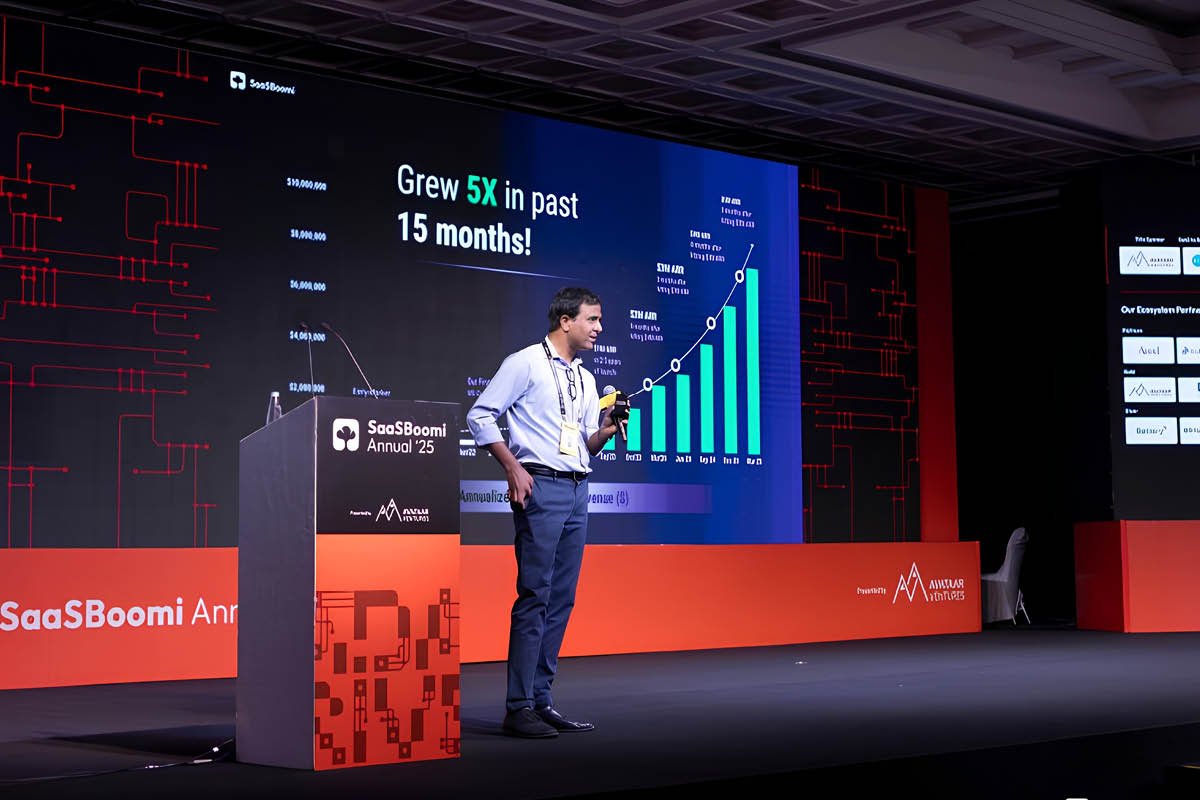
The data shared at the event paints a clear picture: the top quartile of Indian SaaS companies now operate with gross margins above 80% and burn multiples below 1.5x. These are not vanity metrics but financial signals that attract both venture capital and private equity, and they are now table stakes for any founder seeking serious funding.
2026 Trends from the Main Stage
The most recent SaaSBoomi Annual Conference made one thing unmistakably clear: Indian SaaS is moving from “cost-efficient engineering” to “efficient product leadership.” Four themes dominated the sessions, workshops, and hallway conversations.
1. Agentic AI Is No Longer Hype
While generative AI was the buzzword of 2023, agentic AI is the operating reality by 2026. Founders are no longer asking whether to add a chatbot to their product but how to build autonomous workflows that replace entire manual processes. The consensus at the conference was that blunt AI-native SaaS companies that own proprietary data and deep workflow automation will command premium valuations, whereas thin “wrapper” products that simply sit on top of large language models will struggle to survive the next platform shift.
2. Vertical SaaS Finally Wins
For years, Indian SaaS pursued horizontal platforms and broad tools designed to serve any industry. The 2026 edition marked a decisive shift toward vertical SaaS software built for specific sectors like logistics, healthcare, construction, and financial services. Data shared at the event indicated that vertical SaaS players in India are growing at 1.5x to 2x the rate of their horizontal peers, thanks to deeper domain expertise, stronger customer stickiness, and net revenue retention often exceeding 115%.
3. The Efficiency Mandate Is Permanent
The funding winter killed the “growth at all costs” playbook, and there is no going back. At the SaaSBoomi Annual Conference, the Rule of 40 was treated as gospel, as founders now optimize for profitable growth over vanity revenue. Every hiring decision, marketing rupee, and cloud expense is measured against one simple question: does this improve capital efficiency? Companies failing to demonstrate this discipline are finding it nearly impossible to raise their next round.
4. The IPO Pipeline Is Thickening
With Freshworks’ successful NYSE listing having broken the IPO ceiling for Indian SaaS, the 2026 conference buzzed with talk of at least a dozen late-stage Indian SaaS firms preparing for public market listings in the next 18–24 months. Public market investors are taking notice because Indian SaaS companies generate roughly 80% of their revenue from global markets, giving them dollar-linked, high-margin revenue streams that are rare in emerging markets. Roadshow conversations are no longer hypothetical; they are being planned in real time.
Data-Driven Networking, Not Coincidental
The organisers of the SaaSBoomi Annual Conference understand that a founder’s time is their most valuable asset. Consequently, the event eschews the “spray and pray” model of networking that plagues most industry conferences.
Through a highly curated matchmaking algorithm, your profile is matched with founders facing similar scaling bottlenecks or building in complementary sectors even before you arrive at the venue. This gives rise to Peer Circles, small, closed-door groups of 8–10 founders who meet throughout the year, anchored by the annual conference.
The ROI of this approach is measurable. Post-event surveys conducted by the community reveal that 9 in 10 attendees left the conference with at least one actionable strategy they planned to implement immediately. More than 70% of attendees said they made a meaningful connection that led to a business decision, whether a hiring referral, a customer introduction, or an investment conversation. For a founder struggling with sales compensation plans or platform migration, meeting a peer who solved that exact problem six months ago is worth the price of admission alone.
The “Trillion Dollar” Mindset
There is a palpable psychological shift happening within the Indian ecosystem, incubated largely at SaaSBoomi. For years, the goal was to build a company and sell it to a US giant as an “acqui-hire” or a strategic exit; while that remains a valid path, the SaaSBoomi Annual Conference increasingly pushes founders toward audacity.
With speakers routinely referencing the “trillion-dollar opportunity” that lies ahead for Indian software, the narrative is shifting from “India as a talent hub” to “India as a product nation.” The conference serves as a rallying point for this ambition, and by bringing together founders who have taken companies public or reached Centaur status ($100M ARR), the event demystifies the upper echelons of success.
Reading a blog post about IPO readiness is one thing, but sitting in a room with a founder who just went through the SEBI filing process, listening to their war stories about compliance, valuation, and the emotional toll of going public is an entirely different experience.
Why Founders Cannot Afford to Miss It?
In an ecosystem where a single wrong hire or a delayed pivot can kill a company, information asymmetry is deadly. The SaaSBoomi Annual Conference levels the playing field.
It is not about flashy booths or swag bags; it is about the four-hour coffee chat at 11 PM that changes your product roadmap, the investor who offers advice without asking for a term sheet, and realising that the problem keeping you up at night is simply a rite of passage that 50 other founders in the room have already survived.
As India’s SaaS journey enters its second decade, the playbook is still being written in real time, and the SaaSBoomi Annual Conference remains the primary publisher of that playbook. For founders serious about building generational companies rather than flipping startups, ignoring this event is like entering a Grand Slam without a racquet in hand.
Conclusion
The SaaSBoomi Annual Conference is more than an event; it is the beating heart of India’s product ecosystem. It represents a maturing of the Indian founder psyche, moving from isolated competition to collaborative growth. As the global economy tightens and AI rewrites the rules of software, the need for a dense, high-quality, founder-first community has never been more critical.
For India’s SaaS founders, the question is no longer “Why should I go?” but rather, “Can I afford to miss it?”