
India is a land with a history as old as time itself. Our world is littered with empires that believed they were eternal, and India stands as a witness to their fall. The Indian subcontinent is a witness to the victories of time over the victors. The oldest cities of India are a reminder that beauty stays even when their beholders don’t.
So, which cities in India are the oldest? That’s the question we will tackle today. And it is an interesting question to answer. You see, when we talk about the oldest cities of India, we are not just looking at cities with historical importance, but at the birthplace of spirituality. In India, you cannot tackle history without spirituality.
And that’s why today, we will go through the oldest Indian cities and their religious and historical importance. So, let’s begin, shall we?
Top 10 Oldest Cities of India With 2,000+ Years of History
Here are some of the oldest Indian cities you can visit. We will explore their age, significance, and continued relevance.

We have ranked them according to their age, from the oldest to the youngest.
| SR. No | City | Approx. Age | Old Name | Current State/Location |
|---|---|---|---|---|
| 1 | Varanasi | 3,200 years | Kashi | Uttar Pradesh |
| 2 | Delhi | 3,000+ years | Indraprastha | National capital |
| 3 | Pataliputra | 2,500 years | Pataliputra (Patlipattan) | Patna, Bihar |
| 4 | Ayodhya | 2,700 years | Saketa | Uttar Pradesh |
| 5 | Ujjain | 2,600 years | Ujjayini | Madhya Pradesh |
| 6 | Mathura | 2,600 years | Madhupuri | Uttar Pradesh |
| 7 | Vaiśālī | 2,600 years | Vaiśālī | Vaishali, Bihar |
| 8 | Madurai | 2,300 years | Madurai | Tamil Nadu |
| 9 | Thanjavur | 2,200 years | Tanjapuri | Tamil Nadu |
| 10 | Tamluk | 2,230 years | Tamralipta | West Bengal |
1. Varanasi (Kashi)

| Old Name | Approx. Age | Current State |
|---|---|---|
| Kashi | 3,200 years | Uttar Pradesh |
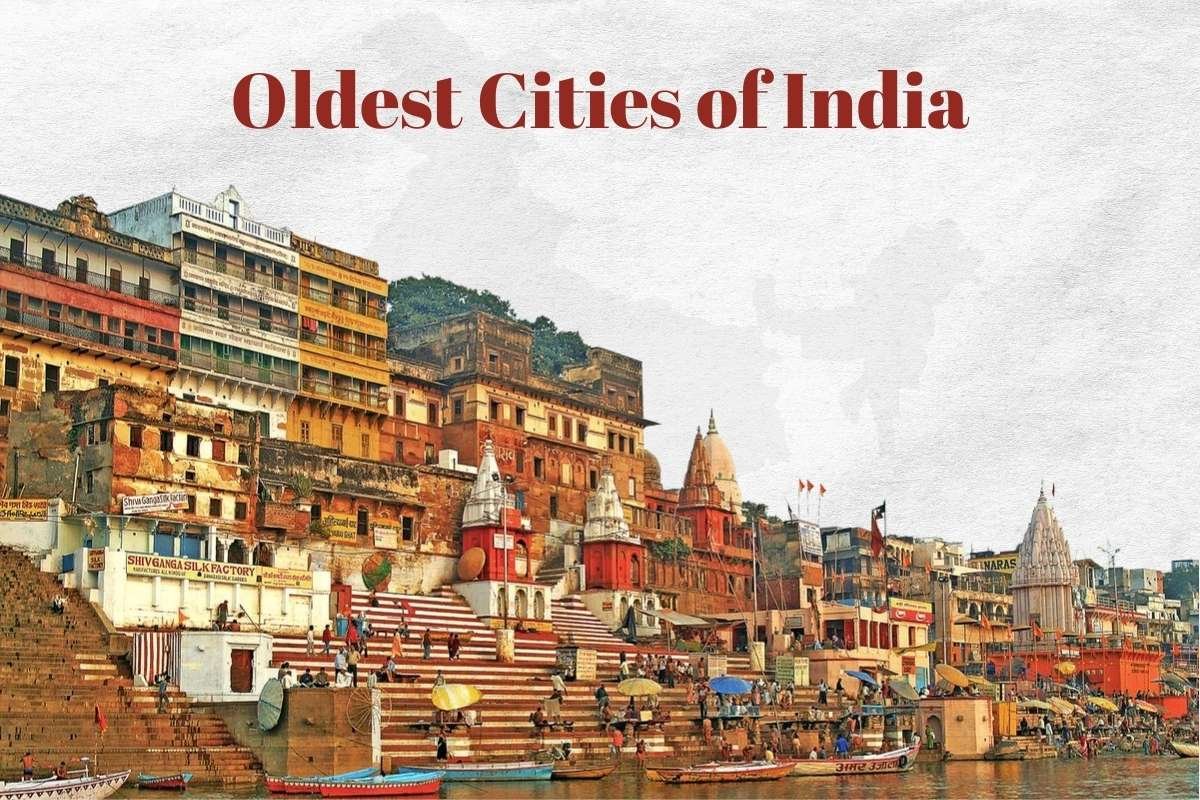
Varanasi is one of the oldest living cities in the world. It sits on the banks of the Ganges River in northern India. People have lived here for at least 3,000 years.
Archaeologists found items from 800 BC. Some experts believe people lived in the area as early as 1800 BC. The city was a major hub for trade, art, and learning during the Vedic era. It was the capital of the Kashi Kingdom. In the 6th century BC, the Buddha gave his first sermon at Sarnath, which is very close to the city centre.
According to Hindu legend, Lord Shiva founded the city at the start of time. Hindus call it Kashi, which means the “City of Light.” It is one of the seven holiest spots in the faith. Many people believe that dying here breaks the cycle of rebirth. The city is also the birthplace of four Jain prophets.
Today, as of 2026, Varanasi is a busy city of 1.9 million people. It recently won a Guinness book of world record for planting 3 lakh trees in one hour on March 1. The riverfront has 84 ghats, or stone steps leading to the water.
- Dashashwamedh Ghat: Famous for its nightly lamp ceremony.
- Manikarnika Ghat: A primary site for traditional cremations.
- Modern Changes: A large new temple corridor opened in 2021. The city is now undergoing a project to make its riverfront cleaner and more eco-friendly.
2. Delhi (Indraprastha)

| Old Name | Approx. Age | Current State |
|---|---|---|
| Indraprastha | 3,000+ years | Delhi (NCT) |
Delhi sits on the banks of the Yamuna River in northern India. People have lived in this area for over 3,000 years.
The city served as the capital for many empires. Archaeological finds show people lived here as early as the Iron Age. It was a stop on the trade route between the Punjab and the Ganges plain. Over the centuries, eight different cities rose and fell in this spot. The Tomar Rajputs, the Delhi Sultanate, and the Mughals all left their mark here. It became a global centre for power and art.
Hindu tradition identifies the city as Indraprastha. According to the Mahabharata, the Pandavas built this capital on a barren land. It is a famous location for the oldest cities of India. The city is also home to many Sufi shrines. One of the most famous is the shrine of Nizamuddin Auliya. Many people believe the city has a magical soul that survives every conquest.
Today, Delhi is the capital of India. As of 2026, it is a massive urban hub with over 35.5 million people.
- Red Fort: A huge sandstone palace built by the Mughal Emperor Shah Jahan.
- Qutub Minar: A 12th-century brick tower that is a UNESCO World Heritage site.
- Modern Growth: The city now has a large metro rail system and a global business district
3. Ayodhya, Uttar Pradesh

| Old Name | Approx. Age | Current State |
|---|---|---|
| Saketa | 2,700 years | Uttar Pradesh |
Ayodhya sits on the banks of the Sarayu River in northern India. Records show people have lived in this area since 700 BCE.
The city served as the capital of the Kosala Kingdom. It was a primary spot for trade and politics in ancient times. In the 6th century BCE, the Buddha stayed here for a long time. Early texts describe the city as a massive fortified town with high walls. It was a centre for Vedic learning and Jain philosophy for centuries.
Hindu tradition identifies Ayodhya as the birthplace of Lord Rama. It is one of the oldest cities of India and a holy site for millions. The name means “a place that cannot be conquered.” According to the Ramayana, the sun god founded the city. It is also the birthplace of five Jain prophets.
Today, the city is a major centre for prayer in the state of Uttar Pradesh. It has seen a large amount of new growth and building in the last few years.
- Ram Janmabhoomi: A massive new temple opened here in 2024.
- Ghats: The riverfront has many stone steps used for ritual baths.
- New Infrastructure: A large airport and a modern train station now serve the city.
4. Ujjain, Madhya Pradesh

| Old Name | Approx. Age | Current State |
|---|---|---|
| Ujjayini | 2,600 years | Madhya Pradesh |
Ujjain stands on the banks of the Shipra River in central India. It is an important member of the oldest cities of India. Historical records date the city back to at least 700 BC.
Ujjain served as the capital of the Avanti Kingdom. In the 4th century BC, it was a key stop on the trade route between North and South India. Emperor Ashoka governed the region before he took the throne. Later, King Vikramaditya made it his royal seat. The city became a global centre for math and astronomy. Scholars used Ujjain to set the prime meridian for Indian time.
Hindu tradition says the gods and demons churned the ocean to find the nectar of life. A drop of this nectar fell in Ujjain. This event created the Kumbh Mela, a massive prayer festival held every 12 years. The Mahakaleshwar Temple houses one of the twelve sacred light shrines of Lord Shiva. Legend also says Lord Krishna studied here as a boy.
Today, Ujjain is a religious hub in the state of Madhya Pradesh. It blends ancient stone temples with modern markets.
- Jantar Mantar: An 18th-century observatory built to study the stars.
- Mahakal Corridor: A large walkway opened in 2022 to manage the millions of visitors.
- Industry: The city is a trade centre for cotton, grain, and soybeans.

History, Science, and Culture Intertwine Through Fascinating, Interesting Facts About India
There are many such hidden, interesting facts about India that you must know about. We are talking about the Chola Empire, the Bengal tiger population, the Western Ghats, and many more!
So, are you ready to hear about more interesting facts about India?
5. Mathura, Uttar Pradesh

| Old Name | Approx. Age | Current State |
|---|---|---|
| Madhupuri | 2,600 years | Uttar Pradesh |
Mathura sits on the banks of the Yamuna River in northern India. Archaeologists have found evidence of people living here since 600 BCE.
The city was a vital trade hub on the route between the Ganges plain and Central Asia. It served as the capital of the Surasena Kingdom. Later, it became a major artistic centre under the Kushan Empire. Artists in Mathura created some of the first human-like statues of the Buddha. The city also appears in the records of ancient Greek and Chinese travellers.
Hindu tradition identifies the city as the birthplace of Lord Krishna. A large temple marks the spot where his parents were held in a prison cell. It is one of the seven holy spots for Hindus. The city also has deep roots in Buddhism and Jainism. Many ancient stupas and monasteries stood here for centuries. Today, it remains a major destination for the oldest cities of India.
Mathura is a busy urban centre in the state of Uttar Pradesh. It is a major site for religious tourism and oil refining.
- Krishna Janmasthan: The temple complex built at the site of Krishna’s birth.
- Mathura Museum: A gallery of red sandstone sculptures from the ancient era.
- Local Trade: The city is famous for its milk sweets and brass work.
6. Vaiśālī (Vaishali), Bihar

| Old Name | Approx. Age | Current State |
|---|---|---|
| Vaiśālī | 2,600 years | Bihar |
Vaiśālī sits in the fertile plains of northern Bihar. People have lived in this region for over 2,500 years.
The city served as the capital of the Licchavi state, the world’s first republic. In the 6th century BCE, the people elected their leaders and made laws in a public hall. The Buddha visited the city many times and gave his last sermon here. A famous pillar built by Emperor Ashoka still stands to mark the spot. It was a centre for trade and thought in the oldest cities of India.
Legend says the city is named after King Vishal of the Mahabharata era. It is a holy place for both Buddhists and Jains. Lord Mahavira, the 24th Jain prophet, was born in this city. A large stupa once held the sacred ashes of the Buddha. Many people believe the soil of the city is blessed by the great teachers who walked its streets.
Today, Vaiśālī is an archaeological site near the town of Hajipur. It is a quiet rural area that draws many visitors from around the world.
- Ashoka Pillar: A single piece of polished red sandstone topped with a lion.
- Abhishek Pushkarini: A large pond where elected rulers took a sacred bath.
- Vishwa Shanti Stupa: A modern white peace pagoda built by Japanese monks.
7. Pataliputra (modern Patna), Bihar

| Old Name | Approx. Age | Current State |
|---|---|---|
| Pataliputra | 2,500 years | Bihar (Patna) |
Pataliputra, known today as Patna, is among the oldest cities of India. It sits at the junction of the Ganges and Son rivers in eastern India.
The city of Pataliputra began as a small fort built by King Ajatashatru in 490 BC. It later became the capital of the Magadha Empire. Under the Maurya and Gupta dynasties, it was one of the largest cities in the ancient world. Greek travellers wrote about its tall wooden walls and deep moats. It served as a global centre for trade, law, and science for centuries.
Legend says the city grew from a magical plant called the Patali flower. A king named Putrak created the town for his queen, Patali. In Buddhist tradition, the Buddha passed through the village of Pataligrama and predicted it would become a great city. It also hosted the Third Buddhist Council. For Sikhs, the city is holy as the birthplace of Guru Gobind Singh.
Today, the area is the capital of the state of Bihar. While much of the old city is buried under modern Patna, archaeologists have found ruins of a huge pillared hall at Kumhrar.
- Archaeology: Remnants of wooden walls from the Mauryan era still exist underground.
- Culture: It remains a key transport hub with one of the longest river bridges in India.
- Economy: The city is a major centre for grain trade and sugar milling.
8. Madurai, Tamil Nadu

| Old Name | Approx Age | Current State |
|---|---|---|
| Madurai | 2,300 years | Tamil Nadu |
Madurai stands on the banks of the Vaigai River in southern India. People have lived in this spot for over 2,500 years.
The city served as the capital of the Pandya Kingdom for centuries. It was a centre for the Sangam era, a golden age of Tamil poetry. Greek and Roman traders visited the city to buy spices and pearls. In the 14th century, the city came under the rule of the Delhi Sultanate. Later, the Nayak kings built the city in the shape of a lotus flower.
Legend says Lord Shiva blessed the city with nectar from his hair. The name Madurai comes from the word for sweetness. It is an important part of the oldest cities of India. The central temple honours Goddess Meenakshi. It is one of the few large temples in India dedicated to a female deity. Many people call it the “Athens of the East” due to its rich culture.
Today, Madurai is a major hub in the state of Tamil Nadu. It is a city that never sleeps, with markets open all night.
- Meenakshi Amman Temple: A massive complex with 14 colourful towers.
- Jasmine Trade: The city grows a famous type of jasmine flower exported globally.
- Thirumalai Nayakkar Mahal: A 17th-century palace known for its giant white pillars.
9. Tamluk

| Old Name | Approx. Age | Current State |
|---|---|---|
| Tamralipta | 2,230 years | West Bengal |
Tamluk sits on the banks of the Rupnarayan River in West Bengal. People have lived in this coastal area for over 2,500 years.
The city was known as Tamralipta in ancient times. It served as a primary seaport for the Maurya and Gupta Empires. Ships sailed from here to Sri Lanka, Java, and China. Greek and Roman writers noted its wealth and busy docks. It was a global hub for trade in silk, copper, and spices. The city is a key member of the oldest cities of India.
Legend says the city got its name from the copper that flowed into the river. Hindu texts describe it as a holy place where a drop of nectar fell. The Bargabhima Temple stands at the heart of the town. People believe it is one of the spots where parts of Goddess Sati fell. It also served as a major centre for Buddhist monks who travelled by sea.
Today, Tamluk is the capital of the East Midnapore district. It is a quiet town with a deep sense of history.
- Bargabhima Temple: A 1,100-year-old temple built in the Bengali style.
- Museum: A local gallery houses terracotta toys and coins from the Roman era.
- Agriculture: The area is now famous for growing betel leaves and rice.
10. Thanjavur (Tanjore), Tamil Nadu

| Old Name | Approx. Age | Current State |
|---|---|---|
| Tanjapuri | 2,200 years | Tamil Nadu |
Thanjavur sits in the fertile delta of the Kaveri River in southern India. People have lived in this region for over 2,000 years.
The city rose to fame as the capital of the Chola Empire. Under King Raja Raja I, it became a global centre for art and power. The Cholas built many stone temples that still stand today. Later, the Nayaks and Marathas ruled the city. Each group added new layers to its culture and buildings. It was a hub for learning and music in the oldest cities of India.
Legend says the city is named after a demon named Tanjan. In his final moments, he asked for the city to bear his name. The central temple honours Lord Shiva and is a masterpiece of South Indian style. People believe the shadow of the main temple tower never falls on the ground. The city is also a holy site for many local saints.
Today, Thanjavur is a major centre for agriculture and crafts in Tamil Nadu. Its temples are UNESCO World Heritage sites.
- Brihadisvara Temple: A massive granite temple over 1,000 years old.
- Thanjavur Paintings: A famous style of art using gold leaf and gems.
- Maratha Palace: A large complex that houses a library with rare palm-leaf books.
How Archaeologists Calculate the Origins of India’s Oldest Cities?
Archaeologists do not age the oldest cities of India like they age a person. Instead, they estimate when people first arrived, when the town grew, and when it was left behind. They use two main types of dating to find these answers.
Sequence of Time
Relative dating helps experts put events in order without exact years.
- Soil Layers: This is called stratigraphy. Deeper layers of the Earth are usually older. By digging down, teams can see a timeline of how a city changed.
- Style Changes: This is called typology. Experts look at pottery, tools, and coins. If a specific pot style was popular from 200 to 100 BCE, any layer with that pot is roughly that age.
Finding Exact Years
Absolute dating gives specific numbers to a site.
- Carbon Dating: Scientists test organic items such as charcoal, bones, or seeds. They measure the decay of carbon-14 to get a date, such as 1250 BCE.
- Special Tools: They use light-based tests on fired clay or count tree rings in old wood. For cities near volcanoes, they can even test the ash layers.
Linking to Records
For cities with written history, experts check their finds against old books or stone carvings. They look for coins with a king’s name or records of a great fire. By mixing science with stories, they can prove that a city began in the 8th century BCE and reached its peak a few hundred years later.
Conclusion:
The oldest cities of India are more than just ruins or busy streets. They are living links to a time thousands of years ago. By studying soil layers and old coins, we can see how these places grew from small forts into global hubs of trade and faith.
Each city tells a unique story of survival. While some spots like Pataliputra are buried under modern roads, others like Varanasi have kept their traditions alive for three millennia. These urban centres shaped the music, art, and math that the world uses today. The oldest cities of India prove that it has always been centres for human growth.
Exploring these ancient sites helps us understand our shared past. Whether through a stone pillar in Vaiśālī or a temple in Madurai, the legacy of these cities continues to thrive in the modern world.
FAQs
1. Why did these cities grow in specific spots?
Most of the oldest cities of India began near large rivers such as the Ganges, Yamuna, or Kaveri. These rivers provided water for farming and served as a primary path for trade boats. This allowed the towns to grow into wealthy urban centres.
3. Can I visit these ancient sites today?
Most of these cities are still busy urban hubs. You can visit the ancient temples of Madurai or see the ruins of Pataliputra in Patna. Many sites have museums that display the pottery and coins found by experts.
3. Which city is the oldest in South India?
Madurai is a candidate for this title. Records show it has been a centre for trade and Tamil culture for over 2,500 years. It served as the royal seat for the Pandya kings during the ancient Sangam era
Thank You For Reading!
Learn More
Largest Cities in India by Area: A Complete Urban Geography Guide