


Key Points:
- India seeks Iran’s help for safe ship passage.
- Attacks have killed and injured Indian seafarers.
- Strait of Hormuz disruption drives energy prices up.
India is negotiating with Iran to secure safe passage for nearly 30 Indian-flagged vessels through the Strait of Hormuz as escalating conflict in West Asia disrupts shipping and threatens global energy supplies.
India Negotiates With Iran to Protect Merchant Shipping
India is in contact with Iranian authorities to arrange safe passage for almost 30 Indian-flagged merchant vessels through the Strait of Hormuz, officials said Thursday, as the key shipping corridor remains effectively restricted amid the Iran-U.S.-Israel conflict.
The discussions focus on moving the vessels through the strategic waterway with an escort from the Indian Navy, according to people familiar with the matter. The talks come after several recent attacks on commercial ships in the Persian Gulf.
Three Indian seafarers have been killed, and another remains missing after attacks on three vessels in recent weeks, officials said.
“Talks are continuing, and things are yet to be worked out,” one person familiar with the discussions said.
India has also raised the safety of merchant ships during diplomatic contacts with Tehran. External Affairs Minister S. Jaishankar and Iran’s Foreign Minister Seyed Abbas Araghchi spoke on March 10 about shipping security and India’s energy needs.
“External affairs minister and the foreign minister of Iran have had three conversations in recent days,” Foreign Ministry spokesperson Randhir Jaiswal said during a weekly briefing. “The last one discussed issues pertaining to the safety of shipping and India’s energy security.”
Attacks on Ships Raise Risks for Indian Seafarers
Indian authorities are closely monitoring vessels and crew members in the region as tensions intensify.
Rajesh Kumar Sinha, special secretary in the shipping ministry, said 24 Indian-flagged vessels with 677 Indian seafarers are currently west of the Strait of Hormuz. Another four vessels carrying 101 Indian crew members are located east of the waterway.
“All Indian vessels and their crews are being actively monitored for their safety and security,” Sinha said.
He added that 78 Indian sailors were aboard foreign-flagged ships involved in recent maritime incidents. Three crew members died, one remains missing, and four others were injured.
India also condemned an attack on Wednesday on the Thai-flagged vessel Mayuree Naree, which was bound for Kandla port in Gujarat. The ship came under fire from Iran’s Islamic Revolutionary Guard Corps.
Twenty crew members were rescued, while three remain missing.
“India deplores the fact that commercial shipping is being made a target of military attacks in the ongoing conflict in West Asia,” the foreign ministry said in a statement.
The ministry added that targeting civilian vessels and obstructing global trade routes should be avoided.
Strait of Hormuz Disruption Fuels Global Energy Concerns
The Strait of Hormuz is one of the world’s most critical shipping lanes, carrying about 20% of global oil and gas supplies. The narrow passage links the Persian Gulf with the Gulf of Oman and the wider Arabian Sea.
Shipping disruptions have already driven global energy prices higher.
Iran’s foreign ministry said its March 10 conversation with India addressed the consequences of U.S. and Israeli military actions on regional maritime security.
Iran maintains that instability in the Persian Gulf stems from “aggressive and destabilizing actions” by the United States, according to an official readout of the call.
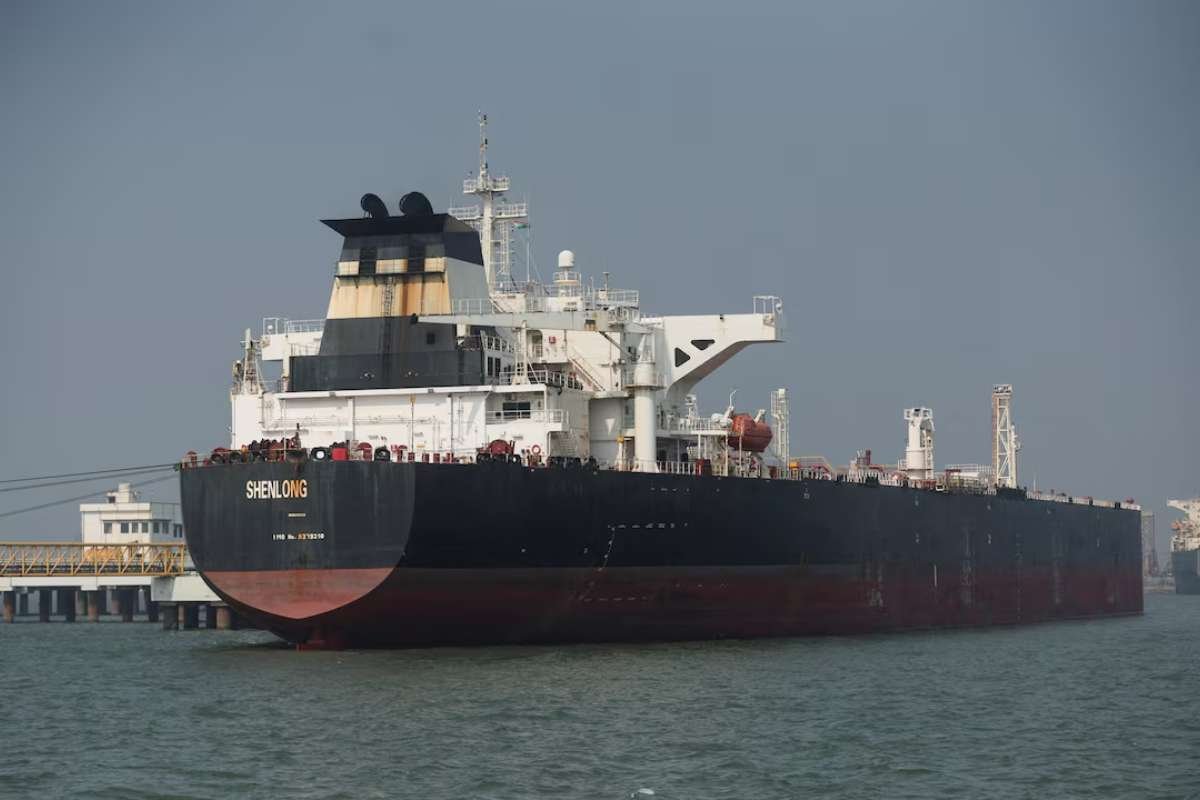
Despite the restrictions, the Suezmax tanker Shenlong, carrying Saudi crude oil, arrived in Mumbai on Thursday after transiting the Strait of Hormuz. The Liberia-flagged ship is believed to be the first tanker to reach India from West Asia since hostilities began Feb. 28.
Meanwhile, the Indian government is also monitoring the safety of its citizens in Iran. Jaiswal said about 9,000 Indians remain in the country, including students, businesspeople, and pilgrims.
Authorities are helping those who wish to leave by facilitating visas and land travel to Azerbaijan and Armenia, from where they can return to India.
Several Indian nationals have already been relocated from Tehran to safer locations within Iran, officials said.
Stay Updated with Business Viewpoint Magazine.