
As global demand for rare earths accelerates alongside the clean energy transition and advanced manufacturing growth, India faces a defining challenge: transforming resource potential into a fully integrated, competitive value chain. Fragmented downstream capabilities, slow technology commercialization, and evolving policy frameworks have highlighted the need for leadership that can bridge strategy with execution. Addressing these gaps requires not only technical insight but ecosystem thinking, aligning government, industry, and innovation toward long-term resilience.
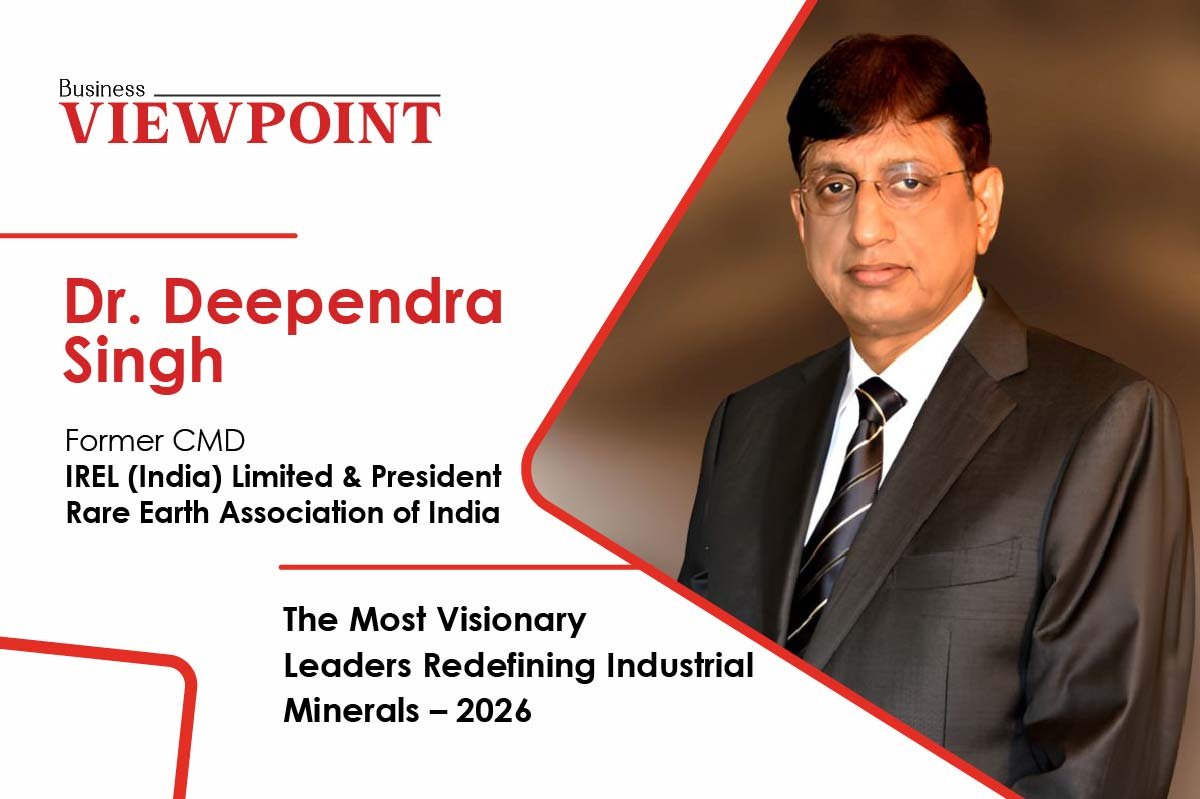
This vision has been central to the work of Dr. Deependra Singh, Former CMD, IREL (India) Limited & President Rare Earth Association of India, whose leadership journey reflects a commitment to building institutional strength, advancing sustainable mining practices, and positioning India as a strategic force within the global critical minerals landscape.
A Journey into India’s Critical Minerals Leadership
Dr. Deependra Singh’s professional journey reflects a steady evolution shaped by curiosity, responsibility, and a clear understanding of how industries support national progress. Beginning his career as a management trainee after completing his education in engineering and marketing management, he focused on understanding organizational systems rather than confining himself to a single sector. Early exposure to diverse roles helped him build a holistic perspective that later defined his leadership style.

As his career advanced, he transitioned from operational execution to strategic leadership, taking on corporate-level roles that required balancing commercial priorities with institutional responsibility. With more than fifteen years of Board-level experience, including nine years as Chairman and Managing Director of IREL (India) Limited, his outlook expanded to include governance, sustainability, and long-term stewardship.
His commitment to industrial minerals and rare earths developed through a gradual recognition of their critical role in clean energy, advanced manufacturing, and technological self-reliance. Today, Dr. Singh’s leadership is guided by purpose, focusing on strengthening India’s critical minerals ecosystem and supporting long-term strategic resilience.
India’s Strategic Position in the Global Rare Earth Landscape
Drawing from his experience at IREL and now at REAI, Dr. Singh sees India as a strategically important yet under-leveraged player in the global rare earth ecosystem. Geologically, India possesses significant reserves of beach sand minerals, including monazite rich in light rare earth elements, along with titanium and zirconium. The country has also built upstream capabilities across extraction, separation, and refining up to oxide levels, offering a foundational advantage over many advanced economies that lack domestic resources.
However, Dr. Singh stresses that true strategic value now lies beyond mining and processing. Global competitiveness increasingly depends on midstream and downstream integration, including metallization, alloy production, permanent magnet manufacturing, and advanced material applications, areas where India is still evolving.
Under his leadership, initiatives such as establishing metal and Sm-Co magnet facilities marked early progress toward an integrated value chain. Yet he maintains that faster investment in processing technologies, manufacturing ecosystems, and international collaborations is essential for India to emerge as a reliable alternative supplier in global supply chains.
The Critical Gaps in the Value Chain
Despite strong resource availability, several structural gaps continue to limit India’s potential. According to Dr. Singh, the most pressing challenges lie not in geology but in ecosystem integration.
Downstream processing capabilities remain limited, particularly in advanced refining, metallization, and alloy production necessary for high-purity rare earth applications. Equally significant is the weak linkage between upstream processing and end-use manufacturing sectors such as electric mobility, electronics, and defense, resulting in lost opportunities for domestic value addition.
Technology commercialization also presents hurdles. While research institutions generate promising innovations, the transition from laboratory-scale development to industrial deployment is often slow, constrained by funding gaps, risk aversion, and coordination challenges.
Addressing these issues, he argues, requires an end-to-end strategy focused on value-chain integration, policy alignment, private sector participation, and investment in human capital. Moving beyond resource ownership toward ecosystem leadership will be essential for India’s long-term success.
Policy Enablers for a Strategic Industry
Having navigated complex regulatory environments as a PSU leader, Dr. Singh advocates for policy frameworks that provide clarity, stability, and execution efficiency.
Long-term strategic signalling is critical for attracting investment into capital-intensive rare earth projects with extended gestation periods. Streamlined regulatory approvals, potentially through coordinated or single-window mechanisms, could significantly reduce delays while maintaining environmental and safety standards.
Targeted incentives for midstream and downstream manufacturing, including production-linked schemes and preferential procurement in strategic sectors, are necessary to catalyze domestic industry development. At the same time, policies supporting pilot plants and semi-commercial technology validation can bridge the gap between research and commercialization.
He also stresses the importance of enabling private sector participation and global collaboration while safeguarding strategic interests, creating a balanced framework that encourages innovation without compromising national priorities.
Responsible Growth as a Path to Sustainable Mining
Over his leadership journey, Dr. Deependra Singh’s view of sustainability has shifted from regulatory compliance to a core strategic priority. He considers responsible resource development fundamental to long-term industrial resilience, embedding environmental and social considerations directly into planning and decision-making.
Rather than treating sustainability as reactive, he emphasizes early-stage integration through responsible land use, resource efficiency, and lifecycle-based project design. This philosophy reflects his belief that strong environmental foundations strengthen operational stability and institutional credibility.
Technology plays a central role in his leadership approach. By promoting digital monitoring, process optimization, and cleaner extraction methods, he aligns productivity improvements with lower environmental impact. For Dr. Deependra Singh, innovation is not merely about efficiency, but about delivering measurable sustainability outcomes.
Equally important is his commitment to stakeholder trust. Transparent engagement with communities, regulators, and institutional partners reinforces governance accountability and long-term project viability. He defines sustainable mining as progress aligned with environmental responsibility.
Building Institutional Strength and Strategic Ecosystems
Rather than measuring success through individual achievements, leadership has focused on creating long-term institutional resilience and strengthening national strategic ecosystems. The following milestones reflect a shift toward integrated value creation, collaborative innovation, and sustainable industrial transformation.
1. Strategic Transformation
- Repositioned PSU to align with national priorities in critical and strategic minerals
- Expanded mandate from operations to integrated exploration, processing, and downstream value creation
2. Collaborative Ecosystem Building
- Established partnerships with government, academia, and industry
- Enabled technology pilots and accelerated research-to-commercialization pathways
3. Operational Modernization
- Implemented digital monitoring and efficiency systems
- Strengthened sustainability practices and ESG governance
4. Technology and Innovation Milestones
- First RE (Sm-Co) permanent magnet plant
- RE metal pilot plant, recycling initiatives, and CoE evolution
- Advancements in Nano Titania and Zirconia
5. Strategic Growth and Expansion
- JV for Ti Slag production and Tamil Nadu expansion
- Production capacity increased by 2.5x
- Initiated RE exploration in Oman
6. Policy Leadership
- Drafted policies for NdFeB magnet incentives and overseas RE acquisition
- RE magnet incentivisation policy already notified
Aligning Government, Industry, and Academia for Impact
Throughout his career, Dr. Deependra Singh has consistently observed that meaningful progress in critical minerals requires collaboration across government, industry, and academia.
Policy clarity from the government creates the enabling environment, industry provides execution and capital discipline, and academic institutions drive innovation and talent development. When these stakeholders align through joint research programs, pilot projects, and shared infrastructure platforms, the pathway from innovation to commercialization becomes significantly more efficient.
As President of REAI, he continues to promote platform-based collaboration models that reduce duplication of effort, accelerate technology adoption, and strengthen the national ecosystem.

Tested by Complexity, Shaped by Challenge
Throughout his career, Dr. Deependra Singh has led within high-accountability environments where strategic importance often intersected with regulatory, financial, and operational constraints. Navigating such complexity required disciplined decision-making and a strong ethical foundation, shaping a leadership style grounded in responsibility and clarity of purpose.
A defining challenge has been translating long-term strategic vision into execution within technology-driven sectors characterized by long development cycles and institutional resistance to change. Guiding transformation in such environments demanded patience, structured execution, and the ability to balance innovation with organizational stability.
Managing diverse stakeholder expectations further refined his leadership approach. Engagement across government, industry, technical communities, and local stakeholders required aligning competing priorities while maintaining strategic direction.
Operating under resource constraints reinforced a focus on capability building, prioritization, and sustainable progress rather than short-term gains. Introducing new technologies and collaborative models in traditionally conservative ecosystems required persistence and thoughtful change management.
Collectively, these experiences shaped a leadership philosophy centered on resilience, accountability, and long-term institutional strengthening.
The Technology Imperative in Critical Minerals
Dr. Deependra Singh views technology and innovation as critical to transforming mineral processing, enabling higher recovery rates, stronger economic viability, and reduced environmental impact, especially for complex and low-grade resources. He highlights the growing adoption of advanced processing and separation technologies such as sensor-based ore sorting, automation, and data-driven process control, which support early waste rejection, improved grade optimisation, and more efficient use of energy and water.
Digital integration, including AI-enabled analytics and real-time monitoring, is strengthening operational stability and improving decision-making across processing systems. According to him, these capabilities are essential for maintaining consistent performance while enhancing recovery efficiency in increasingly complex operating environments.
Dr. Deependra Singh also emphasises sustainable processing innovations, including cleaner beneficiation methods, tailings reprocessing, and circular resource approaches that maximise value extraction while minimising environmental footprint. From a national perspective, he advocates stronger indigenous technology development, pilot-to-commercial infrastructure, and processing solutions aligned with domestic industrial needs. In his view, technology has evolved from a support function into a strategic driver of resource security and long-term competitiveness.
Building Talent and Institutional Knowledge
Beyond technology and policy, Dr. Deependra Singh emphasizes that human capital remains the ultimate differentiator. Industrial minerals and materials science require deep technical expertise developed through sustained education, industry exposure, and practical experience.
Bridging the gap between academia and industry is essential. Greater industry involvement in curriculum design, hands-on pilot facilities, internships, and joint research programs can ensure graduates are prepared for real-world challenges.
He also advocates for continuous learning within the existing workforce and structured knowledge-sharing platforms to preserve institutional memory and accelerate sector-wide progress.

The Strategic Role of Industry Associations in National Policy
With the government’s growing emphasis on critical mineral self-reliance, Dr. Deependra Singh underscores the pivotal role of industry associations such as the Rare Earths Association of India (REAI) in shaping policy dialogue and long-term national strategy. He believes effective associations must move beyond representation to act as structured interfaces connecting policymakers, industry stakeholders, technology experts, and academia.
Under his leadership, REAI has evolved into a neutral platform where diverse perspectives converge to develop practical, technically grounded recommendations. By translating on-ground operational experience into constructive policy inputs, the association helps bridge the gap between strategic intent and industry realities, strengthening trust between government and industry.
Dr. Deependra Singh also views associations as key enablers of capability development and ecosystem readiness. Facilitating knowledge exchange, supporting technology demonstration and commercialization, and encouraging global engagement are central to aligning India with evolving supply chain dynamics. Through sustained collaboration, REAI contributes to building a resilient and competitive rare earth ecosystem aligned with India’s long-term strategic priorities.

The Responsibility of Future Builders
Reflecting on the future of India’s mining and critical minerals ecosystem, Dr. Deependra Singh encourages emerging leaders to think long term, act responsibly, and embrace collaboration as a strategic necessity. He believes the sector’s future will be defined not merely by resource extraction but by the ability to align national priorities with technological advancement and sustainable development.
In his view, young professionals must build strong foundations in science, technology, and systems thinking while maintaining ethical clarity and environmental responsibility. The challenges across exploration, processing, and downstream integration are deeply interconnected, requiring leaders who can work across institutional and disciplinary boundaries.
Dr. Deependra Singh also highlights the importance of patience and resilience. Progress in critical minerals is shaped by long development cycles and capital-intensive innovation, making continuous learning and adaptability essential. Ultimately, he sees leadership in this sector as stewardship of resources, institutions, and public trust, where lasting impact comes from strengthening systems that endure beyond individual careers.