
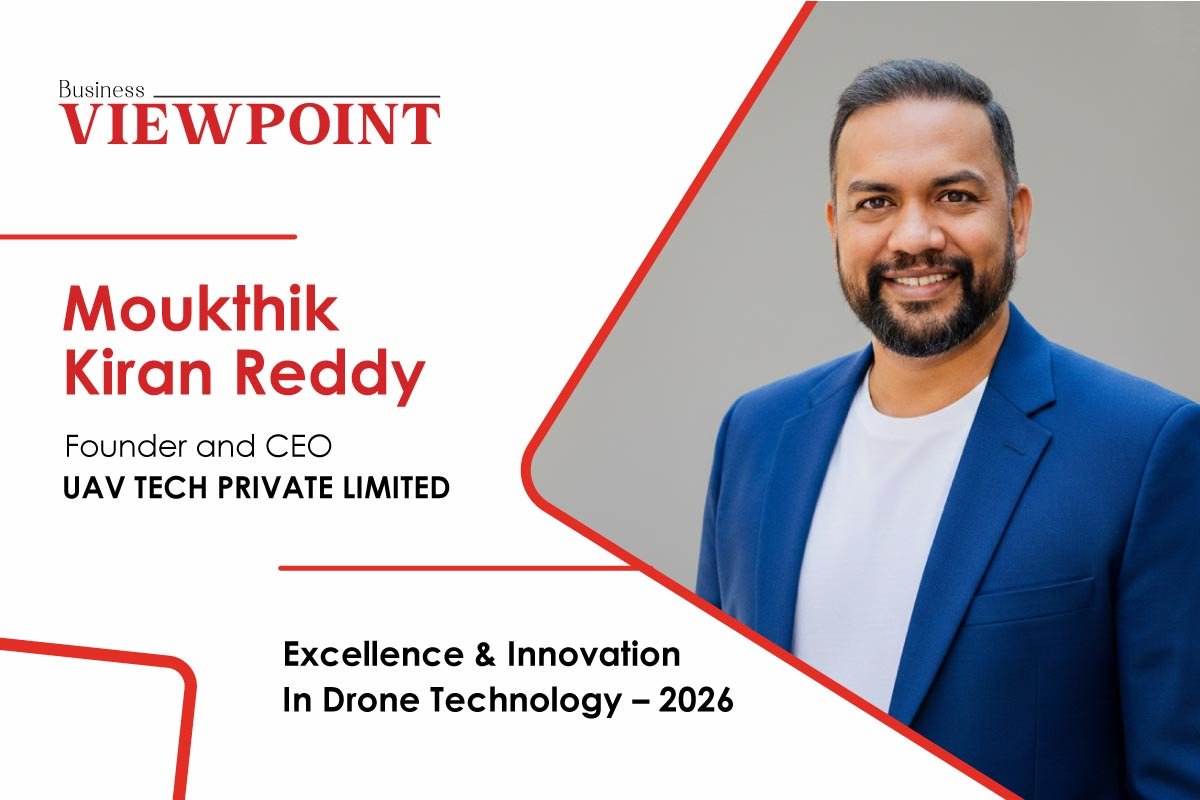


From experimental deployment to strategic infrastructure, autonomous aviation is progressing. Unmanned aerial systems are developing into high-capacity operational assets that are used in humanitarian operations, industrial supply chains, defense corridors, and regional commerce networks. As part of this transition, Moukthik Kiran Reddy Dharasani, the Founder and CEO of UAV TECH PRIVATE LIMITED, has established his company as a leader in scalable autonomous mobility systems, aerospace engineering innovation, and heavy-payload logistics.
UAV TECH, a new type of Indian aerospace company, was founded in 2021 and has its headquarters in Hyderabad. Under a single, cohesive structure, it combines research, design, advanced composite manufacturing, propulsion systems, autonomous flight control development, and unmanned traffic management.
Building High-Capacity Autonomous Aircraft for Real-World Logistics
A targeted research project focused on cargo transportation aircraft is where UAV TECH got its start. A structural inefficiency in the defense mobility and logistics systems was discovered by Moukthik Kiran Reddy. The speed, emergency response, and terrain access of ground-based transportation were all constrained. Flexible deployment was limited by the operational cost structures, regulatory overhead, and runway infrastructure needed for conventional aviation.
Designing unmanned aircraft that could carry large payloads over significant distances while maintaining economic viability, safety discipline, and aerodynamic efficiency presented an opportunity.
UAV TECH has always placed more emphasis on heavy-payload capability than on consumer or recreational drone markets. The goal was to design platforms that could facilitate remote industrial operations, emergency medical transport, defense resupply, and mid-mile logistics. Scalable manufacturing, operational dependability, and endurance-driven design were key components of the founding philosophy.
The company made investments in propulsion optimization, composite material research, aerostructural modeling, and domestic avionics development. A company culture focused on technical rigor rather than quick commercialization was shaped by this engineering-first approach.
The Three-Lifting-Surface Aircraft Architecture
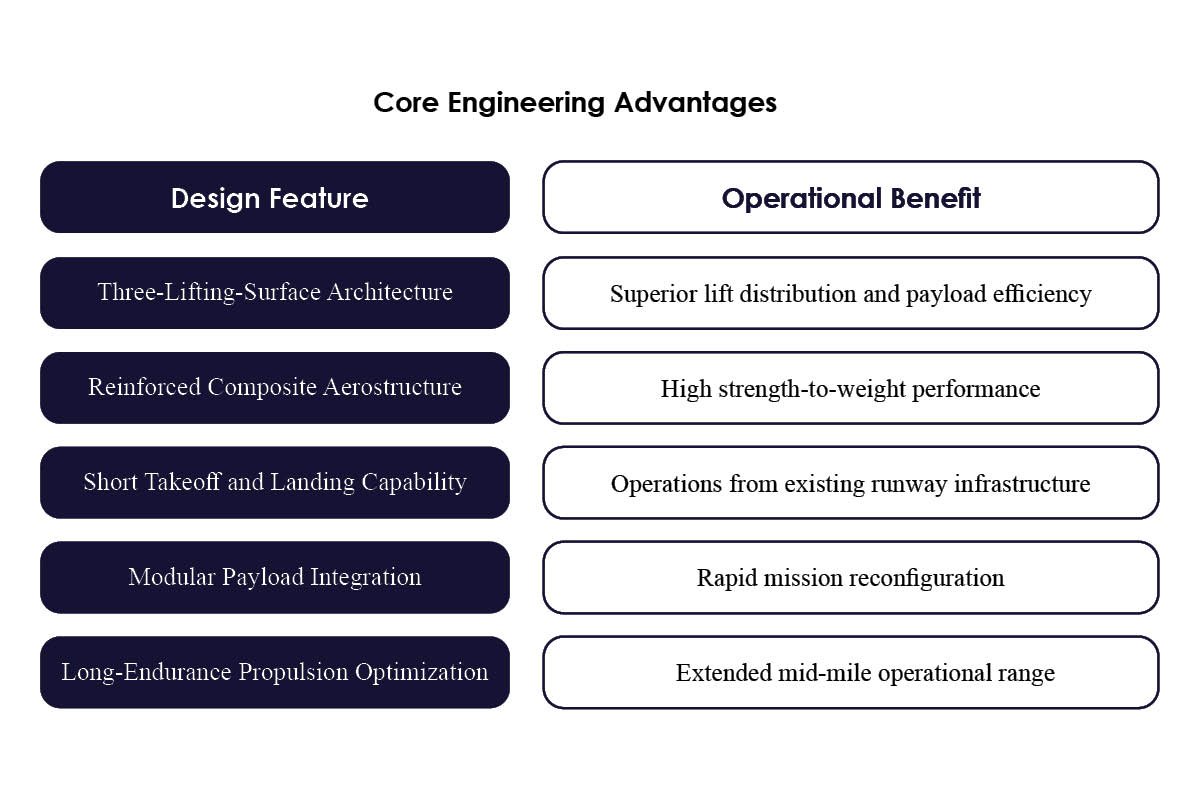
UAV TECH’s unique three-lifting-surface aircraft design is one of its most notable innovations. By distributing aerodynamic load across three lifting surfaces, this design improves the lift-to-weight ratio and stability during long-range missions, which is different from traditional fixed-wing UAV layouts.
Both payload expansion and operational endurance are supported by the configuration’s structural logic. The aircraft preserves balance in high-altitude or turbulent conditions while maintaining aerodynamic efficiency under heavier load conditions by optimizing lift distribution.
The architecture enables payload capacities up to 500 kg within current operational design parameters. The structural engineering integrates composite reinforcement, stress-distribution modeling, and aerodynamic load balancing to ensure reliability under demanding conditions.
This design philosophy reflects UAV TECH’s central principle: mission-ready aircraft built for real-world deployment rather than laboratory demonstration.
| Core Engineering Advantages | |
|---|---|
| Design Feature | Operational Benefit |
| Three-Lifting-Surface Architecture | Superior lift distribution and payload efficiency |
| Reinforced Composite Aerostructure | High strength-to-weight performance |
| Short Takeoff and Landing Capability | Operations from existing runway infrastructure |
| Modular Payload Integration | Rapid mission reconfiguration |
| Long-Endurance Propulsion Optimization | Extended mid-mile operational range |
Enabling Operational Transformation
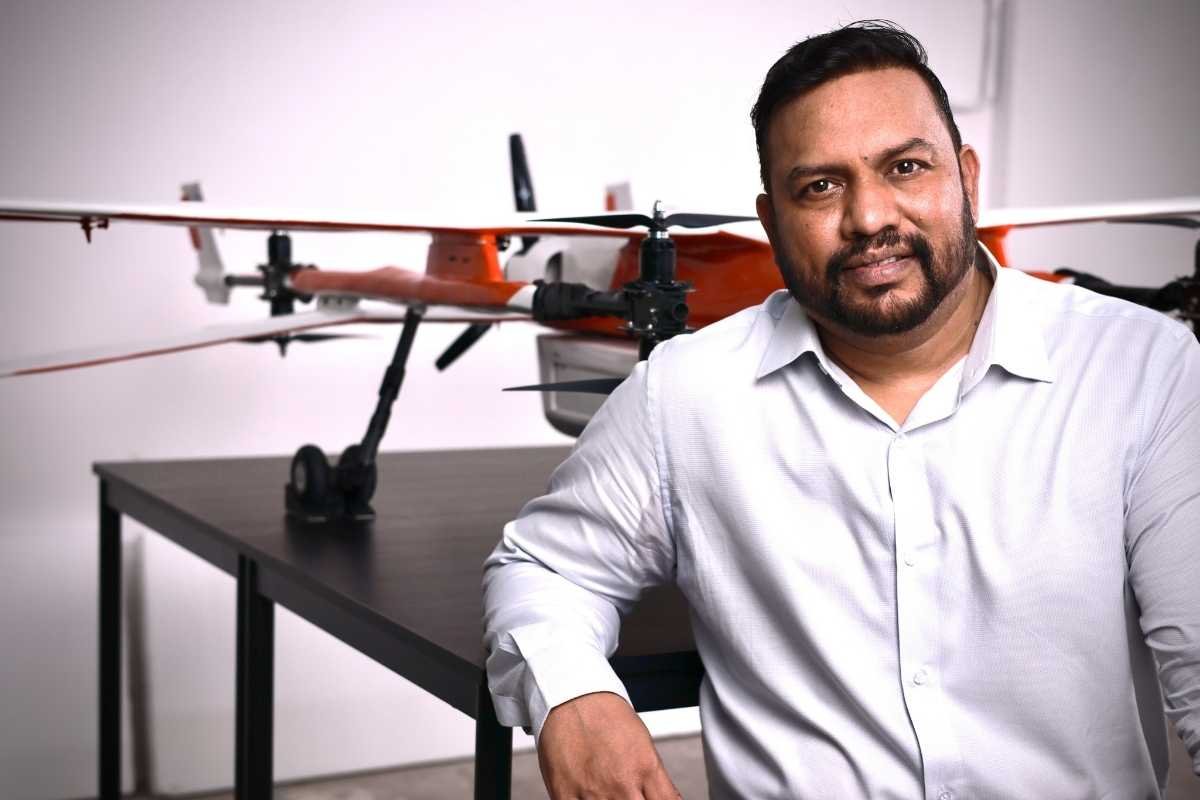
UAV TECH’s aerial platforms are engineered as adaptable assets capable of serving diverse verticals. The modular payload pod system allows rapid transition between mission profiles without structural redesign.
Defence and Security Operations
Autonomous endurance platforms support reconnaissance, border monitoring, strategic resupply, and persistent surveillance. High-altitude capability, extended range, and autonomous navigation enhance situational awareness while minimizing personnel exposure.
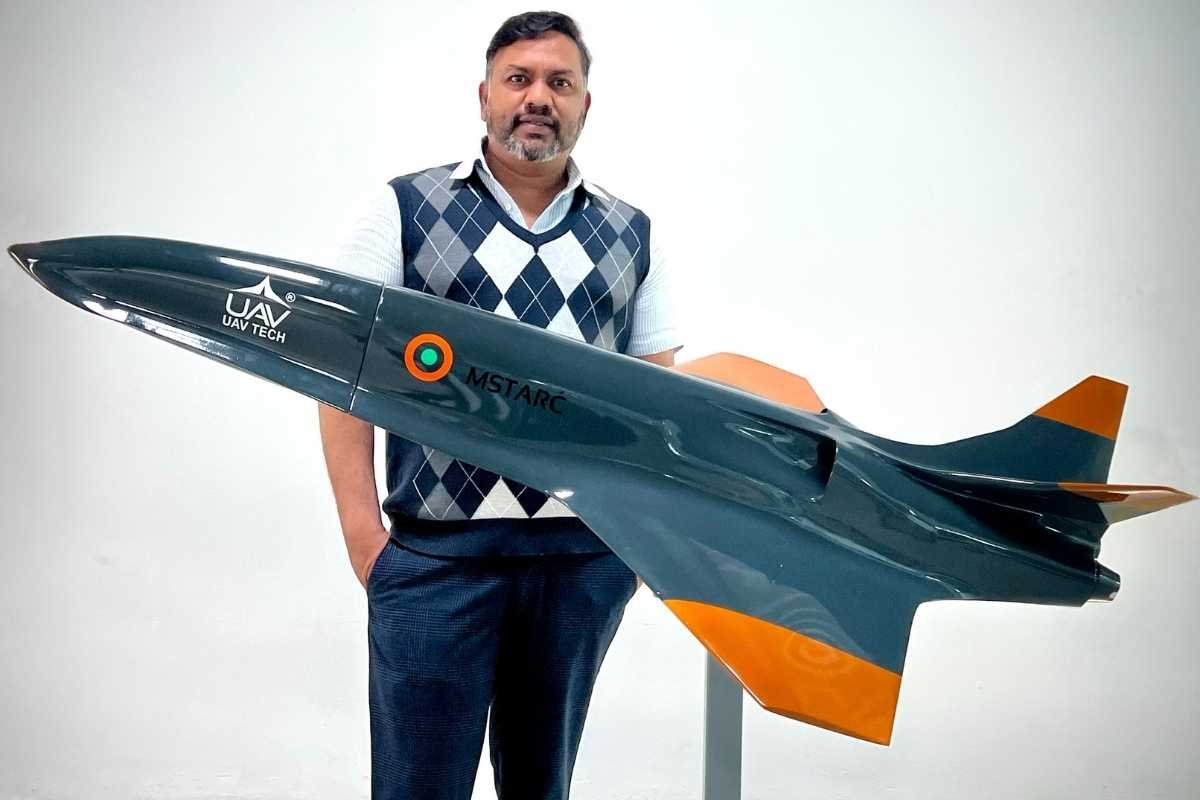
Advanced stealth UAV systems under development are designed to enhance mission persistence in complex operational theatres. Integrated avionics and indigenous flight control systems strengthen operational autonomy and resilience.
Logistics and Regional Supply Chains
Mid-mile cargo transportation remains central to UAV TECH’s commercial roadmap. Heavy-lift UAVs reduce transit time between distribution hubs, ports, industrial clusters, and remote facilities. Interstate cargo corridors supported by autonomous aircraft present a transformative opportunity for time-sensitive industries.
The ability to transport goods over 300 kilometers with reliable payload integrity expands supply chain flexibility and reduces dependency on congested road networks.
Disaster Response and Humanitarian Support
Natural disasters frequently compromise infrastructure. Autonomous UAV deployment enables rapid aerial access for delivering medical supplies, food resources, communication systems, and essential equipment.
Search-and-rescue coordination, damage assessment imaging, and emergency medical logistics benefit from aerial platforms capable of operating independently of ground accessibility constraints.
Healthcare and Medical Logistics
Dedicated emergency response drones transport blood units, plasma, vaccines, organs, and essential pharmaceuticals. By bypassing traffic congestion and geographic barriers, UAV systems reduce critical response time and enhance patient survival probability.
Industrial and Infrastructure Monitoring
Autonomous inspection of pipelines, power transmission lines, mining sites, rail networks, and offshore installations enhances safety and reduces manual risk exposure. High-endurance UAV systems allow continuous monitoring across expansive industrial territories.
Research and Development Roadmap
Heavy-payload autonomous aviation demands multidisciplinary research integration. UAV TECH’s R&D initiatives encompass aerodynamic optimization, propulsion systems, avionics engineering, and scalable manufacturing processes.
Hybrid propulsion platforms combining vertical takeoff capability with long-range cruise efficiency are under active development. Hydrogen fuel-cell integration remains a forward-looking initiative aimed at reducing emissions while expanding mission endurance.
The company is also building proprietary Unmanned Traffic Management platforms to support large-scale drone network deployment. Traffic deconfliction, flight path optimization, and regulatory compliance integration form core components of this system.
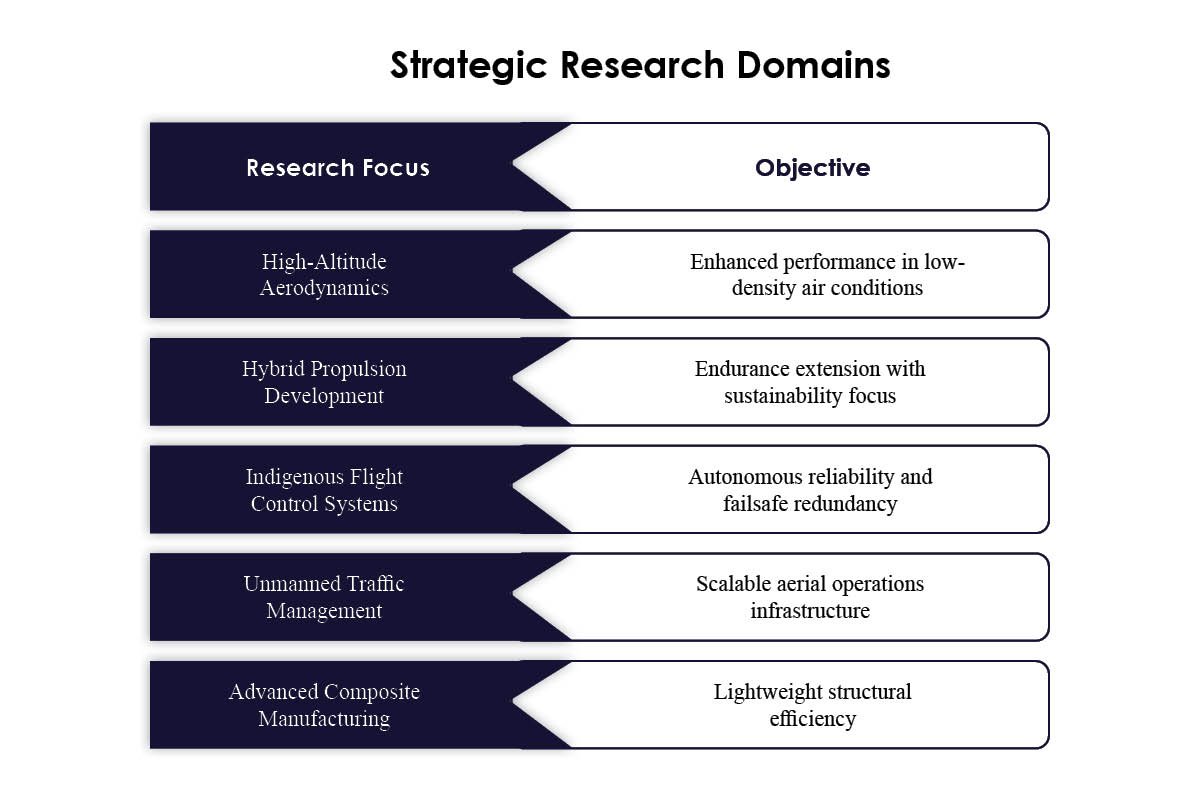
| Strategic Research Domains | |
|---|---|
| Research Focus | Objective |
| High-Altitude Aerodynamics | Enhanced performance in low-density air conditions |
| Hybrid Propulsion Development | Endurance extension with sustainability focus |
| Indigenous Flight Control Systems | Autonomous reliability and failsafe redundancy |
| Unmanned Traffic Management | Scalable aerial operations infrastructure |
| Advanced Composite Manufacturing | Lightweight structural efficiency |
Safety, Compliance, and Regulatory Alignment
Operating within aerospace engineering demands structured adherence to regulatory frameworks aligned with DGCA, FAA, and EASA standards. UAV TECH integrates compliance protocols into its development cycle from design validation to flight testing and operational deployment.
Safety governance includes:
- Structured pre-flight risk assessment procedures
- Standardized operational protocols
- Redundant failsafe integration
- Continuous performance monitoring systems
- Rigorous maintenance discipline
The multidisciplinary team brings decades of combined aerospace and defence experience. Engineering oversight, certification alignment, and operational accountability remain central to the organization’s culture.
Strategic Collaborations Strengthening Ecosystem Integration
Autonomous aviation development requires coordinated ecosystem partnerships. UAV TECH has engaged with established aerospace and mobility organizations to accelerate certification readiness and infrastructure capability.
Key Collaborators
- Manah Aerospace & Engineering
- Aerpace Industries
These collaborations expand maintenance support, certification pathways, and sustainable propulsion research. Partnership-driven integration ensures operational readiness beyond aircraft manufacturing alone.
Recognition and Industry Visibility
UAV TECH’s progress has been acknowledged across several respected business and technology platforms:
The Bharat 2.0 recognition under “Excellence & Innovation in Drone Technology – 2026” reflects sustained technical progress and national-level visibility. For Moukthik Kiran Reddy, the honor represents collective validation of the organization’s engineering depth and strategic direction.
Structured Innovation with Ethical Foundation
Moukthik Kiran Reddy’s leadership framework rests upon collaboration, innovation, and integrity.
Collaboration integrates aerodynamics specialists, propulsion engineers, avionics developers, and regulatory advisors within unified project teams.
Innovation encourages experimental validation, computational modeling, and engineering iteration aimed at endurance-driven design.
Integrity ensures transparent engagement with partners, disciplined financial management, and accountability across operational decision-making.
This structured leadership model fosters technical excellence while preserving long-term strategic coherence.
Financial Discipline and Growth Strategy
In deep-technology sectors such as aerospace, capital allocation demands precision. Early-stage investment focused on research infrastructure, prototype validation, and structural engineering capability.
As UAV TECH matured, strategic capital deployment expanded toward composite manufacturing capability, infrastructure development, and scalable operational frameworks. The emphasis remains on sustainable expansion supported by technological maturity rather than speculative acceleration.
Prudent risk management and reinvestment into innovation underpin the company’s financial philosophy.
Product Roadmap 2026 and Beyond
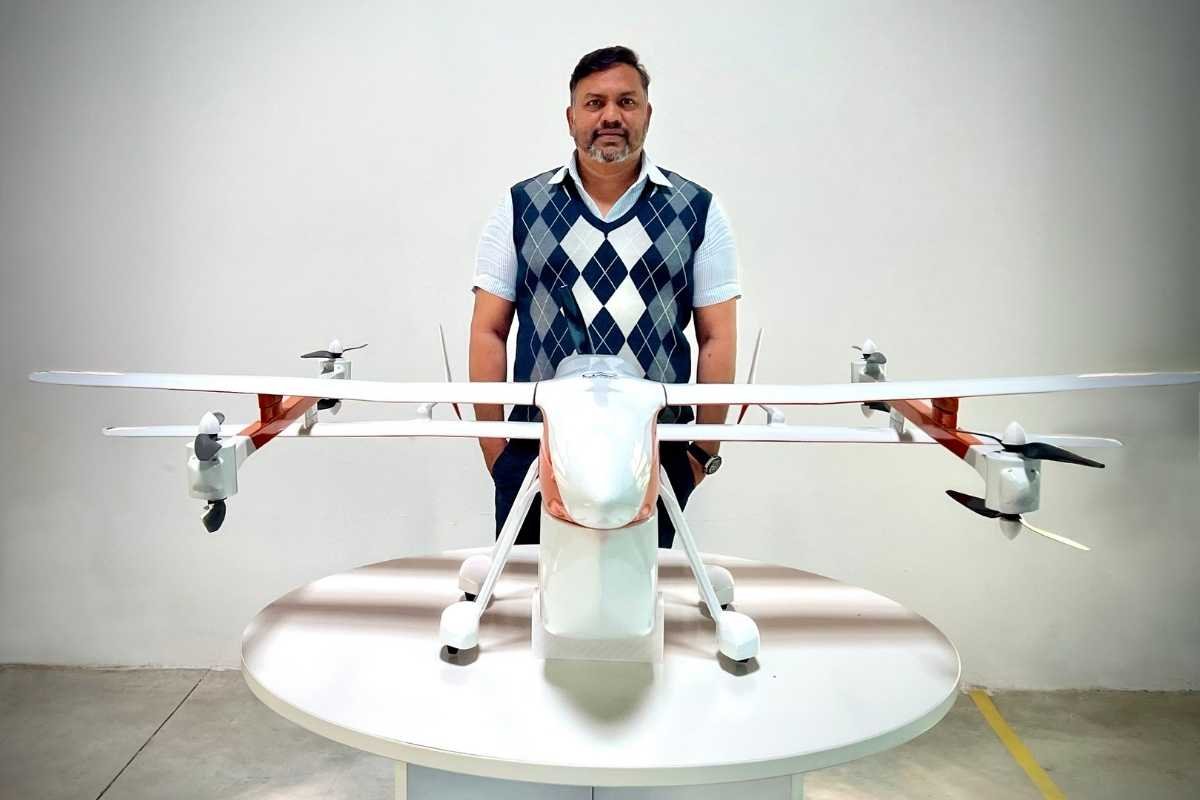
UAV TECH’s upcoming deployment strategy reflects platform diversification and vertical integration. Expansion into in-house composite manufacturing will enhance structural strength while reducing supply chain dependency. Development of proprietary flight controllers and traffic management systems supports scalable interstate and international cargo corridors.
Vertiport infrastructure planning complements aircraft deployment strategy, creating integrated aerial logistics ecosystems.
Advice to Aspiring Drone Entrepreneurs
Moukthik Kiran Reddy advises young innovators in drone technology to dream boldly and commit fully to their vision. He believes aerospace and defence innovation demands perseverance, courage, and long-term dedication. Failures, in his perspective, are inevitable stages of engineering progress and serve as valuable learning opportunities when approached with discipline.
He emphasizes that success emerges from combining visionary thinking with structured execution and relentless hard work. Entrepreneurs who remain adaptable, resilient, and ethically grounded, he suggests, are best positioned to build unmanned systems that redefine industries and shape the future of autonomous aviation.
The Next Five Years in Indian Drone Aviation
India’s drone ecosystem is positioned for accelerated growth, driven by regulatory clarity, defence modernization initiatives, commercial logistics expansion, and the integration of artificial intelligence.
AI-enabled detect-and-avoid systems will facilitate beyond-visual-line-of-sight operations. Autonomous navigation algorithms will enhance real-time terrain analysis and threat assessment.
Hybrid propulsion systems combining sustainable fuels with internal combustion cruise efficiency will extend operational range.
In this evolving environment, UAV TECH envisions itself as a foundational contributor to infrastructure rather than a peripheral participant. The objective is to establish high-capacity autonomous cargo systems capable of interstate and cross-border logistics integration.