

Key Points:
- India has purchased its first Iranian LPG cargo in years to address immediate supply shortages.
- Disruptions in the Strait of Hormuz have strained India’s energy supply, forcing reliance on alternative sources.
- Authorities are prioritizing household cooking gas distribution, while industrial users face reduced allocations.
India has purchased its first Iranian LPG cargo in years, arriving soon at Mangalore, as supply disruptions in the Strait of Hormuz and eased U.S. sanctions force urgent sourcing shifts.
India Secures Iranian LPG Cargo Amid Supply Pressure
India has bought its first shipment of Iranian liquefied petroleum gas in several years as it grapples with supply shortages linked to tensions in West Asia. The move follows a temporary easing of U.S. sanctions on Iran’s oil and fuel exports.
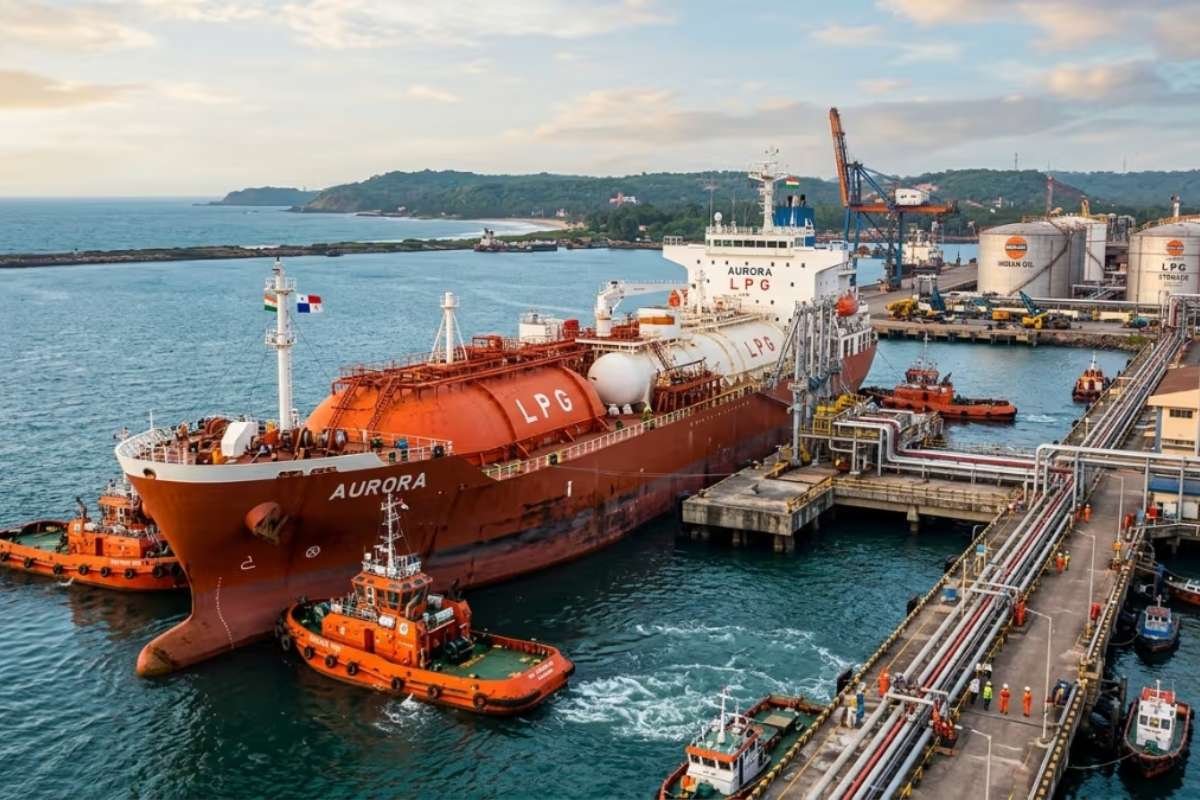
The cargo, carried by the sanctioned tanker Aurora, is expected to arrive shortly at Mangalore port on India’s west coast, according to industry sources. Shipping data shows the vessel was initially headed to China before being redirected.
The shipment will be distributed among state-run fuel retailers, including Indian Oil Corporation, Bharat Petroleum Corporation, and Hindustan Petroleum Corporation.
“This appears to be a short-term procurement to address immediate supply gaps,” an industry official said, requesting anonymity due to the sensitivity of the matter.
Hormuz Disruptions Strain India’s Energy Supply
India’s decision comes as disruptions in the Strait of Hormuz, a critical global energy route, delay shipments across Asia. Escalating tensions involving the United States, Israel, and Iran have constrained movement through the corridor.
India, the world’s second-largest LPG importer, relies heavily on imports to meet domestic demand. It consumed about 33 million tonnes of LPG last year, with nearly 60% sourced from overseas markets.
Around 90% of these imports originate from the Middle East, making the country particularly vulnerable to regional instability. Delays and rerouting of tankers have tightened supply and increased logistical challenges.
“The Hormuz situation has significantly impacted supply chains, forcing buyers to look at alternative or unconventional sources,” another industry source said.
Government Prioritizes Domestic Needs as Imports Shift
The supply crunch has prompted authorities to prioritize cooking gas distribution for households, while industrial users face reduced allocations. Officials say ensuring an uninterrupted supply for domestic consumption remains the top priority.
Sources indicate the Iranian LPG cargo was purchased through a trader, with payment likely to be made in rupees. India is also exploring additional shipments from Iran if disruptions persist.
However, a senior government official said he was not aware of any confirmed Iranian deals, suggesting uncertainty around future imports.
India had halted Iranian energy imports in 2019 under Western sanctions, shifting dependence to other West Asian suppliers. The latest purchase signals a temporary adjustment rather than a long-term policy change.
Industry analysts say the move underscores how geopolitical tensions directly affect India’s energy security. Efforts are also underway to redirect stranded cargoes from the Persian Gulf and deploy empty vessels to transport available supplies.
“This highlights the fragility of supply chains and the need for diversified sourcing strategies,” an energy analyst said.
Explore Business Viewpoint Magazine for the latest insights and updates.