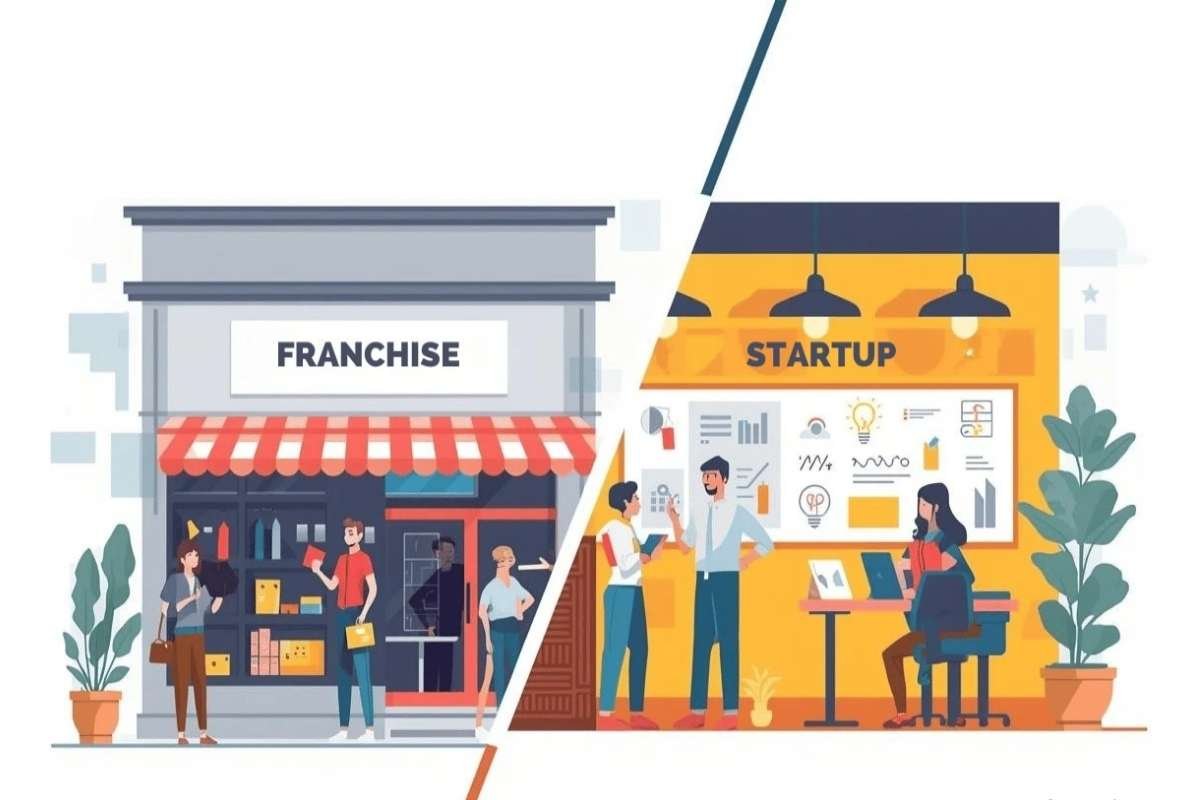
“I want to launch my own startup.” “Why don’t you just buy my hotel’s franchise instead?” was a conversation between two people I overheard in a cafe last Saturday. Franchise vs Startup in India has been a question every young Indian has considered. Which one do you choose? Do you put all your money into a franchise everyone knows about, or try building something that is your own?
The choices can be very confusing, especially for a younger entrepreneur new to the business world. For first-time entrepreneurs, understanding franchise vs startup in India is critical before investing capital.
So which do you choose? Well, it depends. In this blog, we will go through all the reasons to think about when you are deciding between a franchise and a startup.
What is a Franchise and Startup? And How Do They Differ?
To understand franchise vs startup in India, we must know what they are. Here’s the key definition of franchise and startup.
Franchise: A franchise is a business model where an established company (the franchisor) grants an individual or another business (the franchisee) the right to operate under its name and use its proven business system.
Think of it as “buying a business in a box.” Instead of coming up with a new idea and building a brand from scratch, you pay for the rights to use a brand that people already know and trust.
Kannu ki Chai, McDonald’s, KFC, Delhi Chaat, and Domino’s are some of the very popular franchisors.
How does it work?
The Franchise Agreement governs the relationship between the franchisor and franchisee, which usually involves three key financial components:
- Franchise Fee: A one-time upfront payment to join the system.
- Royalties: Ongoing fees (usually a percentage of monthly sales) paid to the parent company for continued support and brand use.
- Marketing Fees: Contributions to a collective fund for national or regional advertising.
| Role | Responsibility | Benefits |
|---|---|---|
| Franchisor | Provides the brand, training, supply chain, and operating manuals. | Rapid expansion without using their own capital for every location. |
| Franchisee | Manages daily operations, hires staff, and pays for the local site. | Access to a proven model, lower risk of failure, and instant brand recognition. |
Pros and Cons
- Pros: You get immediate “street cred” with customers, professional training, and a higher success rate than most independent startups.
- Cons: You have limited creative freedom (you must follow their rules exactly), high initial costs, and you must share your profits for the life of the business.
Startup: While a franchise is about following a proven recipe, a startup is about creating the recipe from scratch. A startup is a young company founded to develop a unique product or service, bring it to market, and make it scalable (meaning it can grow very quickly).
Franchise vs startup in India is the same as your grandma’s recipe vs your own. Grandma’s recipe will be tasty, you know that. But your own recipe is something you might want to explore.
When we look at BoAt, Swiggy, Zomato, and many other startups, we realise that maybe we can cook our own recipe over grandma’s.
How does it work?
Unlike a franchise, which relies on an existing brand, a startup starts with an unproven idea. The goal is to find “Product-Market Fit”, proving that people actually want what you’re building.
- Innovation: Startups usually focus on tech or new ways of doing things (e.g., Uber changing how we hail taxis).
- Equity: Instead of paying a franchise fee, founders own “equity” (shares) in the company. They often give some of this equity to investors in exchange for funding.
- The Exit: Most startup founders aim for an exit, such as selling the company to a giant like Google or going public on the stock market (IPO).
The Lifecycle of a Successful Startup

Startups move through specific funding rounds as they grow:
- Seed Stage: The “garage” phase. You’re building a prototype (MVP) with small amounts of money.
- Series A/B/C: Larger rounds of funding to help the company scale, hire hundreds of people, and expand to new cities.
- Unicorn Status: A rare term for a private startup valued at over $1 billion (such as SpaceX or Canva once were).
Franchise vs Startup in India: The Big Difference
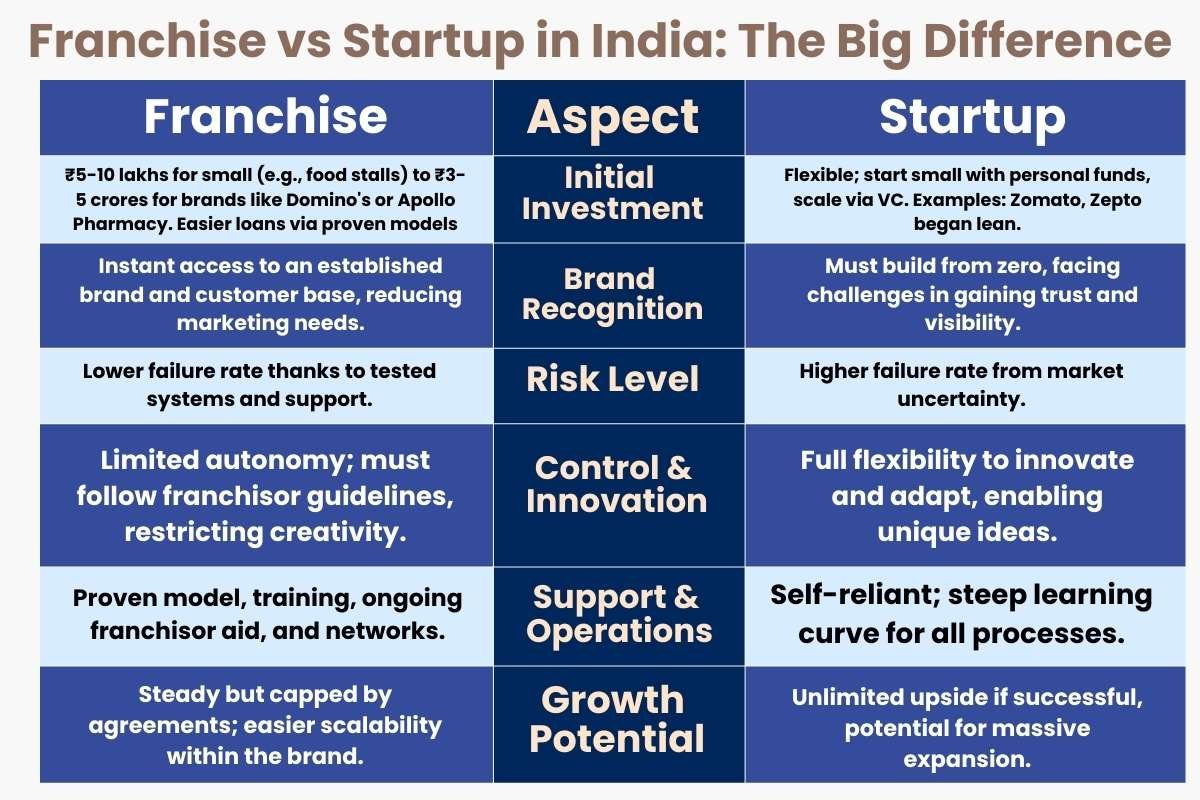
So, what are the differences between a startup and a franchise? Let’s find out
| Franchise | Aspect | Startup |
|---|---|---|
| ₹5-10 lakhs for small (e.g., food stalls) to ₹3-5 crores for brands like Domino’s or Apollo Pharmacy. Easier loans via proven models | Initial Investment | Flexible; start small with personal funds, scale via VC. Examples: Zomato, Zepto began lean. |
| Instant access to an established brand and customer base, reducing marketing needs. | Brand Recognition | Must build from zero, facing challenges in gaining trust and visibility. |
| Lower failure rate thanks to tested systems and support. | Risk Level | Higher failure rate from market uncertainty. |
| Limited autonomy; must follow franchisor guidelines, restricting creativity. | Control & Innovation | Full flexibility to innovate and adapt, enabling unique ideas. |
| Proven model, training, ongoing franchisor aid, and networks. | Support & Operations | Self-reliant; steep learning curve for all processes. |
| Steady but capped by agreements; easier scalability within the brand. | Growth Potential | Unlimited upside if successful, potential for massive expansion. |
The Risk of Choosing Franchise Vs Startup in India: Unpredictability of Choosing the Right One
Which is the safer choice: Franchise or Startup?
Grant Thornton, citing an IBM study, reports a 60 to 80% franchise success rate after five years in India, attributed to structured support, brand leverage, and operational guidelines. Education franchises achieve a success rate of around 80% per sector analysis, outperforming independent schools.
SSRN academic papers note that Indian startups can fail within five years, aligning with broader research from sources such as DPIIT and NASSCOM on high attrition due to funding shortages and market challenges, highlighting start-ups’ vulnerability in diverse markets like India.
Underestimated costs such as royalties (5-10% of sales), rent escalations, and mandatory procurements erode margins. Around 25-40% higher expenses than projected. Supply chain disruptions, one-sided agreements with harsh termination clauses, and limited autonomy trap owners.
High failure in F&B/QSR due to competition in Tier-1 cities and quality inconsistencies across diverse franchisees.
Meanwhile, most of them fail within five years due to funding gaps, poor market fit, and scaling issues in competitive sectors, especially in the tech and fintech sectors. Zero established support for these startups leads to steep learning curves, cash burn, and talent retention challenges. Then there are the economic shifts that lead to investor pullbacks, amplifying risks.
So, franchise vs startup in India, which one should you choose? Let’s look at the benefits before we make a decision, right?

Indian Startup Ecosystem: Driving Innovation and Growth
In this article, we will explore the key drivers, challenges, and opportunities within the Indian startup ecosystem, while also reflecting on the sectors that are gaining the most momentum.
Benefits of Franchise Vs Benefits of Startup: Which Weighs More?
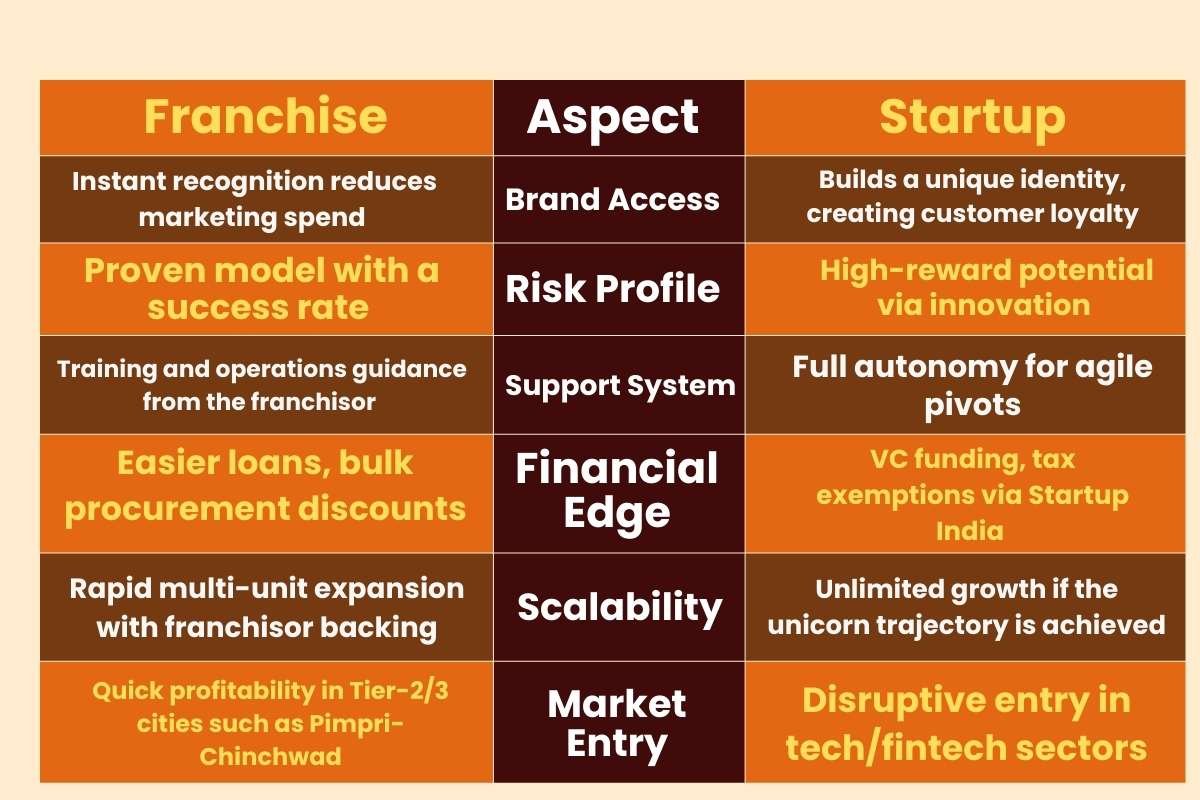
We can divide the benefits of franchises and startups into six aspects. These aspects are Brand Access, Risk Profile, Support System, Financial Edge, Scalability, and Market Entry.
Here’s a simple explanation of these aspects:
| Franchise | Aspect | Startup |
|---|---|---|
| Instant recognition reduces marketing spend | Brand Access | Builds a unique identity, creating customer loyalty |
| Proven model with a success rate | Risk Profile | High-reward potential via innovation |
| Training and operations guidance from the franchisor | Support System | Full autonomy for agile pivots |
| Easier loans, bulk procurement discounts | Financial Edge | VC funding, tax exemptions via Startup India |
| Rapid multi-unit expansion with franchisor backing | Scalability | Unlimited growth if the unicorn trajectory is achieved |
| Quick profitability in Tier-2/3 cities such as Pimpri-Chinchwad | Market Entry | Disruptive entry in tech/fintech sectors |
So, now that we know the benefits, drawbacks, and differences, let’s try to decide.
Franchise vs Startup in India: The 10 Top Players and Their Stories
Here are five startups and five franchises that you can look at for inspiration.
Top Five Successful Indian Startups
These companies focus on innovation, tech-driven solutions, and rapid scalability.
- Zepto (Quick Commerce): A unicorn redefining grocery shopping with a promise of 10-minute deliveries. Founded in 2020, it uses a network of “dark stores” to optimise hyper-local logistics. It is currently a leader in the high-frequency retail space, challenging traditional e-commerce giants.
- Groww (Fintech): One of India’s most profitable startups, Groww provides a user-friendly platform for investing in stocks, mutual funds, and ETFs. By automating KYC and keeping operating costs low, it has made wealth management accessible to millions of first-time retail investors.
- Meesho (E-commerce): A social commerce platform that empowers small businesses and individual resellers, particularly in Tier-2 and Tier-3 cities. It democratizes e-commerce by offering a zero-commission model for sellers and focusing on unbranded fashion and lifestyle products.
- Skyroot Aerospace (Space-Tech): A pioneer in India’s private space sector, Skyroot designs and manufactures modular launch vehicles for satellites. They made history with the “Vikram-S” launch, proving that Indian startups can compete in high-stakes, deep-tech industries globally.
- Razorpay (Fintech Payments): A critical backbone for India’s digital economy, Razorpay provides a full-stack payments and banking platform for businesses. It enables merchants to accept, process, and disburse payments seamlessly, supporting everything from startups to large enterprises.
Five Popular Franchises in India
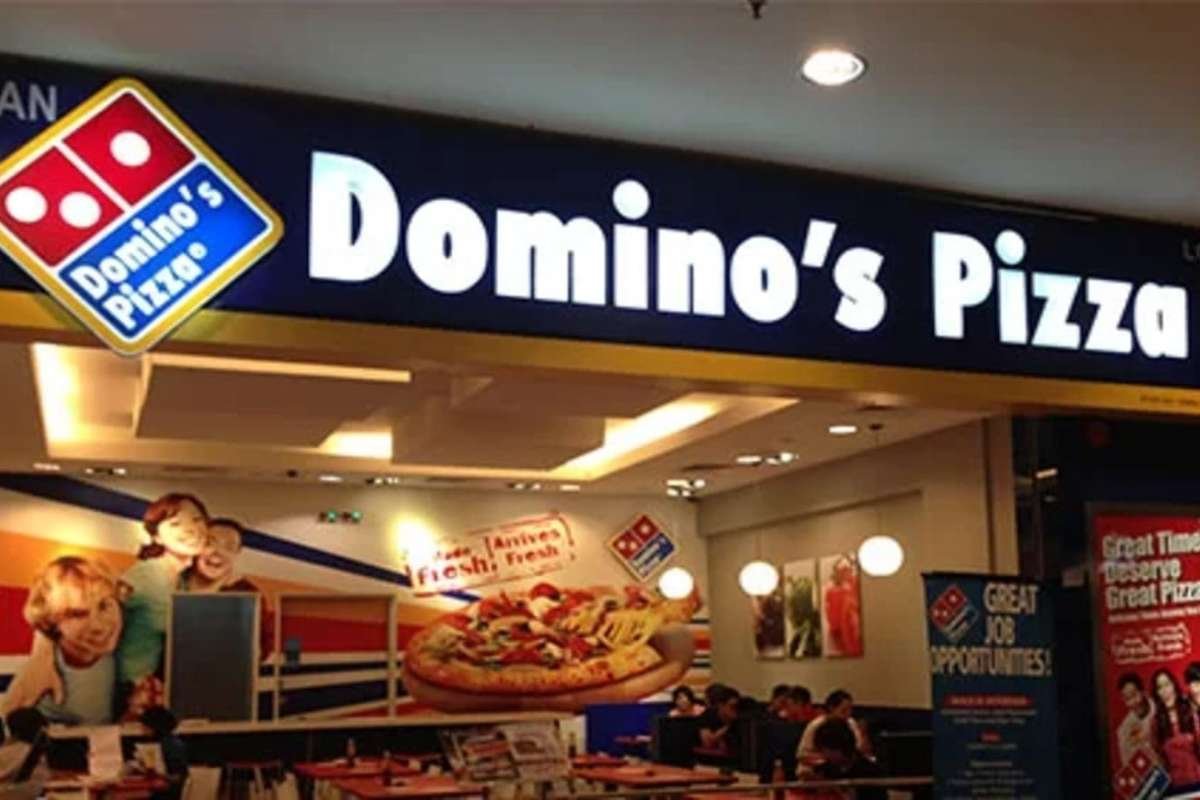
These brands offer a business-in-a-box model with proven systems and high brand recall, adding a question mark to the franchise vs startup in India debate.
- Amul (Dairy/Retail): One of the most affordable and trusted franchises. With a low entry barrier (investment starting around ₹5–10 lakhs), Amul Parlours sell a wide range of dairy products. Its massive supply chain and “household name” status guarantee consistent footfall.
- Domino’s Pizza (Food & Beverage): Managed by Jubilant FoodWorks in India, this is a high-investment but high-volume franchise. Known for its 30-minute delivery guarantee, it has a massive presence in urban and semi-urban markets, benefiting from world-class operational training.
- Kidzee (Education): As Asia’s largest preschool network with over 2,000 centres, Kidzee is a top choice in the education sector. It provides franchisees with a standardised curriculum (iLLUME) and extensive teacher training, tapping into parents’ consistent demand for quality early education.
- Lenskart (Retail/Eyewear): Revolutionising the optical industry, Lenskart offers an omnichannel franchise model. It combines high-tech 3D try-on features with physical stores. Franchisees benefit from a strong supply chain and aggressive national marketing that keeps the brand top-of-mind.
- Dr Lal PathLabs (Healthcare): A leader in diagnostic franchising, it offers opportunities for collection centres and labs. With growing health awareness, this model is highly resilient. The franchisor handles the complex testing, while the franchisee focuses on local customer service and sample collection.
Franchise vs Startup in India: What Do We Think?
To conclude this debate, what you choose between buying a franchise and launching a startup is a simple question: which sector do you want to enter?
Franchise: The Sector Factor
Based on our own analysis, the sector is the deciding factor for this choice.
Let’s say you want to start a hotel. Should you launch your own, you can, but buying a franchise is a safer bet. Think about the last time you were comfortable visiting a newly opened hotel.
For the last twenty years, I’ve had pani puris from the same eatery, and while a little more expensive than average, I cannot find their taste anywhere else.
Buying a franchise gives you pre-existing customer loyalty. Someone who has been visiting Irani Café will visit your franchise, no matter where you are.
The Takeaway: Franchising in the service sector and hotel industry might feel like a good option, but there is a risk of underperformance.
Startup: The Necessity Provider
The idea behind BoAt was to provide a brand offering high-quality wearables at affordable rates for Indians. Shaadi.com tried to help people find partners according to their liking and simplify the marriage scene in India.
As I said before, modern solutions require modern problems. Every issue is solvable, and every obstacle is removable. A startup’s goal is to find these solutions for the general public.
The reason why the majority of startups fail is the mismatch between the market’s necessity and the product. If there is something that you believe the world needs, well, first take a survey. A theory can only take you so far; you need definite proof. And, by the way, these proofs will come in handy in the future when you present your idea to a Venture Capitalist.
A survey can start from your home, extend to your neighbourhood, and then to your city. Find if you have an actual answer to a real question.
The Golden Rule:Don’t just believe you have a solution for a problem; prove the problem exists.
The Takeaway: Startups succeed when they provide a solution for real necessities.
Franchise vs Startup in India: Things to Do

Choosing between a franchise and a startup isn’t just a financial decision; it’s a personality and lifestyle choice. Here are the key factors to help you decide which path aligns with your goals:
1. Risk Tolerance vs. Potential Reward
- Choose Franchise if: You want a safety net. Most of the franchises are typically still open after 2 years, compared to independent startups.
- Choose Startup if: You want the jackpot. While the risk of failure is high, the financial upside of a successful startup is unlimited because you own 100% of the equity and brand.
2. Creative Control vs. Proven Systems
- Choose Franchise if: You prefer a playbook. You are happy to follow strict rules, everything from the colour of the walls to the way employees greet customers, in exchange for a model that already works.
- Choose Startup if: You are a creator. You want to invent your own brand, set your own prices, and pivot your business model whenever you see a new opportunity without asking for permission.
3. Upfront Costs vs. Ongoing Fees
- Choose Franchise if: You have significant capital ready now. Most franchises require a high upfront Franchise Fee plus the cost of equipment and real estate. However, you save money on trial and error.
- Choose Startup if: You want to bootstrap. You can start a business in your garage with $500. While you don’t pay royalties, you will spend more on marketing and testing to see what customers actually like.
4. Speed to Market
- Choose Franchise if: You want to open now. Since the supply chain, training, and branding are already set, you can often go from signing to Grand Opening in a few months.
- Choose Startup if: You are prepared for a “slow burn.” Building a brand from scratch and finding “Product-Market Fit” often takes years of quiet struggle before the business gains momentum.
Here’s your checklist when the choice of franchise vs startup in India comes to you.
| Factor | Go Franchise If… | Go Startup If… |
|---|---|---|
| Your Skillset | You are an excellent Operator. | You are an excellent Innovator. |
| Brand Goal | You want to borrow a legacy. | You want to build a legacy. |
| Daily Life | You like structure and SOPs. | You like chaos and problem-solving. |
| Exit Strategy | You want to sell a stable asset. | You want an IPO or a massive acquisition. |
Conclusion:
As of January 2026, 200,000+ startups have been recognised by Startup India. As for a franchise, having a proven system might feel like a safer bet. Unlike 200,000+ DPIIT-recognised startups, ~5,000 franchise brands operate without central registration under general MCA laws.
Both of them can lead to big success or great failure. It all comes down to how you run it.
In the end, franchise vs startup in India isn’t a battle of options, but one of needs. Franchises and startups can be both risky and profitable; choosing the right one is extremely important. So look at what you want and what your surroundings need, and you’ll have your answers.
FAQs
1. Can I sell my business later?
Yes, both are sellable. Selling a franchise requires approval from the franchisor and following their transfer rules. Selling a startup is more flexible but depends entirely on proving your independent brand has market value and a solid customer base.
2. Who has more control over daily operations?
Startup founders have total autonomy over every decision. Franchisees must strictly follow the Operations Manual, which dictates everything from uniforms to pricing. If you enjoy experimenting with new ideas, a startup is better; for structure, choose a franchise.
3. Which is more expensive to start in a franchise vs startup in India?
Franchises often require higher upfront capital for fees and specific equipment. Startups can be launched cheaply via bootstrapping, but they often face unpredictable costs while trying to develop a unique product and build brand awareness from scratch.