


Key Points:
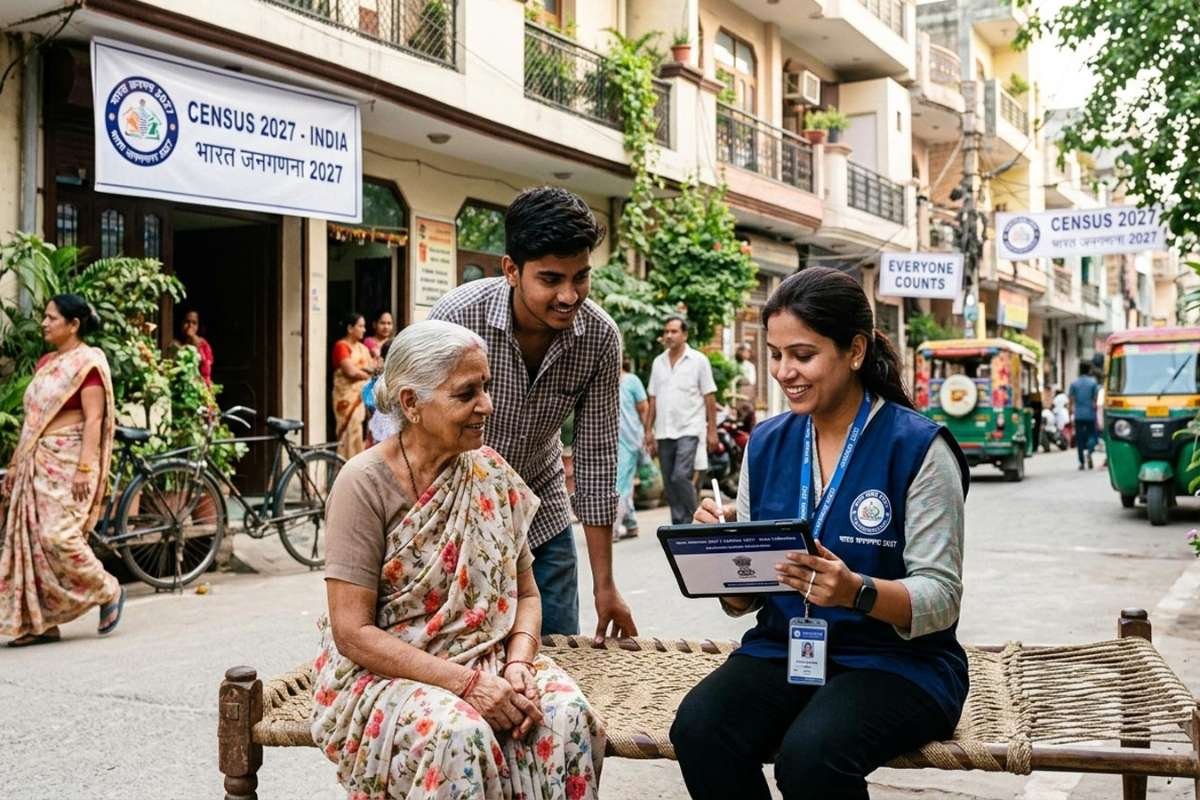
- India has launched its first fully digital census with self-enumeration open until April 15, 2026.
- Citizens can submit household data online through a step-by-step portal designed for accuracy and ease.
- Early participation is encouraged to ensure reliable data collection and reduce the need for door-to-door surveys.
India has launched self-enumeration for Census 2027, allowing households to submit data online until April 15, aiming to improve accuracy, reduce physical surveys, and mark the country’s first fully digital census process.
The process began April 1, 2026, with a pilot self-enumeration phase across eight locations: Andaman and Nicobar Islands, Delhi (NDMC/Cantonment), Goa, Karnataka, Lakshadweep, Mizoram, Odisha, and Sikkim.
The government has opened an online portal enabling citizens to enter household details without waiting for enumerators. Officials say the move is designed to make data collection faster, more efficient, and less resource-intensive.
“This is a major step toward modernizing India’s Digital Census operations,” a senior government official said. “Digital participation ensures better accuracy and reduces logistical challenges.”
The self-enumeration window remains open until April 15, after which traditional enumeration methods may continue for those who do not participate online.
Step-By-Step Process Simplifies Online Submission
Citizens begin by visiting the official portal, selecting their state or union territory, and completing a captcha verification. Users must then register by entering the head of household’s name and mobile number, followed by an OTP verification.
Once logged in, participants fill in address details, including district, PIN code, and locality. The portal then guides users through multiple sections covering housing conditions, household size, and demographic details.
Further sections collect information on amenities such as water, electricity, and sanitation, as well as assets such as vehicles, internet access, and appliances. A final review page allows users to verify entries before submission.
“The process is straightforward and user-friendly,” said a technology consultant involved in digital governance projects. “It minimizes errors by allowing people to review their own data before final submission.”
After completing the process, users receive a confirmation message indicating successful registration.
Government Pushes Early Participation for Accuracy
Officials are urging residents to complete self-enumeration early to avoid last-minute technical issues and ensure comprehensive data collection.
Self-enumeration is expected to reduce the burden on field staff and limit the need for door-to-door visits. Authorities say this hybrid approach will help reach more people while maintaining data integrity.
Experts note that citizen-led data entry could improve accuracy, as individuals are more likely to provide precise details about their households compared to third-party enumerators.
“Direct participation increases accountability and data reliability,” said a public policy analyst. “It also reflects the broader push toward digital governance in India.”
Digital Census data plays a critical role in policy planning, resource allocation, and development programs. Accurate population statistics influence decisions on infrastructure, welfare schemes, and economic strategies.
With the deadline approaching, officials emphasize that timely participation is essential for the success of the digital initiative.
Explore the latest insights in Business Viewpoint magazine.