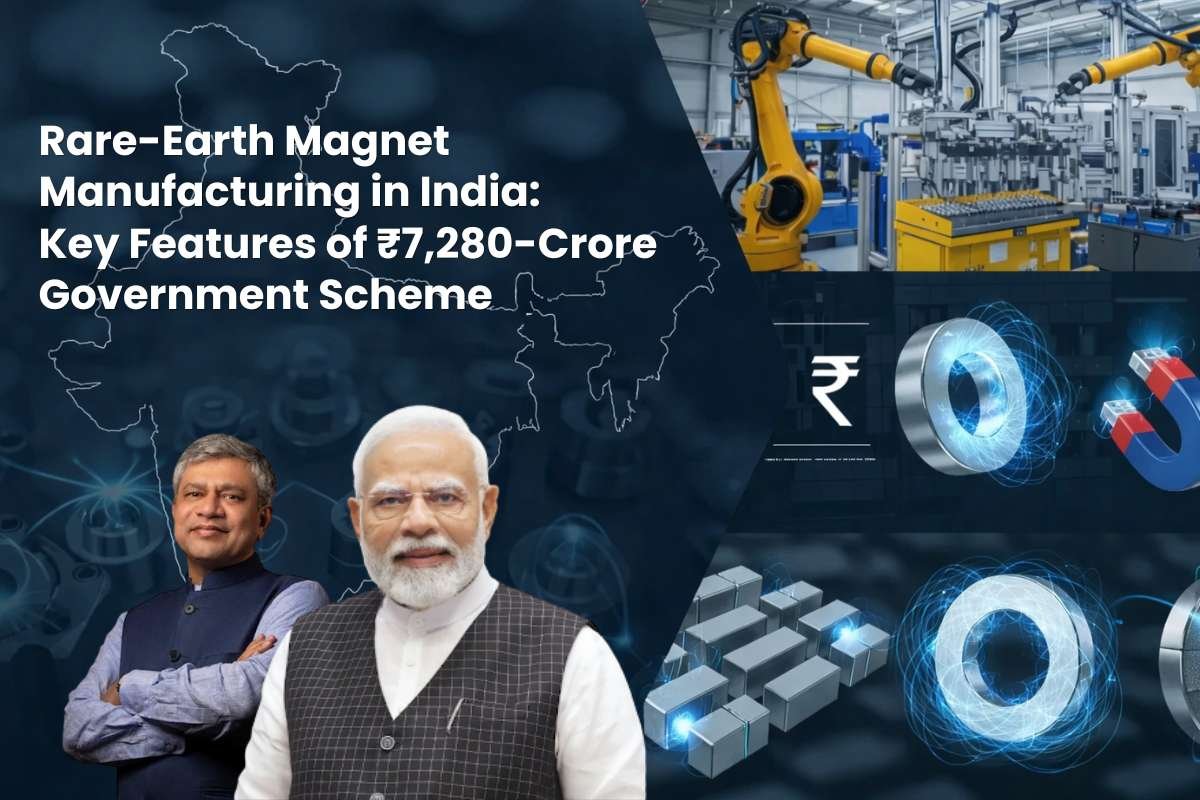



The Centre, on March 30, approves 29 projects worth Rs 7,104 crore under the component manufacturing scheme, including India’s first rare earth magnet unit, aiming to boost domestic manufacturing, create jobs, and reduce import dependence.
Government Pushes Indigenous Manufacturing Growth
Under the component manufacturing scheme, the government approves 29 projects across 16 product segments, covering lithium-ion cells, flexible printed circuit boards, connectors, and display modules, with Karnataka and Maharashtra leading in approvals.
Electronics and IT Minister Ashwini Vaishnaw says the initiative marks a significant step toward strengthening India’s electronics ecosystem. He adds that the approvals are expected to generate more than 14,000 jobs.
The total projected production from these projects stands at Rs 84,515 crore, reflecting the scale of the government’s manufacturing push. Officials say the scheme aims to improve domestic value addition and reduce reliance on imports.
Rare Earth Magnet Unit Marks Strategic Breakthrough
A key highlight of the component manufacturing scheme is the approval of a Rs 700 crore rare earth permanent magnet manufacturing unit, the first of its kind in India. The project is based entirely on indigenous technology and intellectual property, with Vaishnaw emphasizing self-reliance in critical components.
The minister says the unit could anchor India’s efforts to move up the value chain, from raw minerals to high-value magnet production. This area is currently dominated by a few global suppliers, making it strategically important.
Government estimates suggest domestic production could meet up to 25 percent of India’s rare earth magnet demand in the coming years.
Targets Set for Localisation and Supply Chain Expansion
The Components Manufacturing Scheme also sets ambitious localisation targets across key segments. Officials aim for 50 percent localisation in printed circuit boards and 61 percent in lithium-ion batteries.
Industry experts say the component manufacturing scheme could significantly strengthen India’s position in global electronics manufacturing if targets are achieved. They note that localising component production is critical for sectors like electric vehicles, consumer electronics, and renewable energy, while also helping build a resilient and competitive supply chain
Officials expect more investments to follow as companies respond to policy support and rising domestic demand.