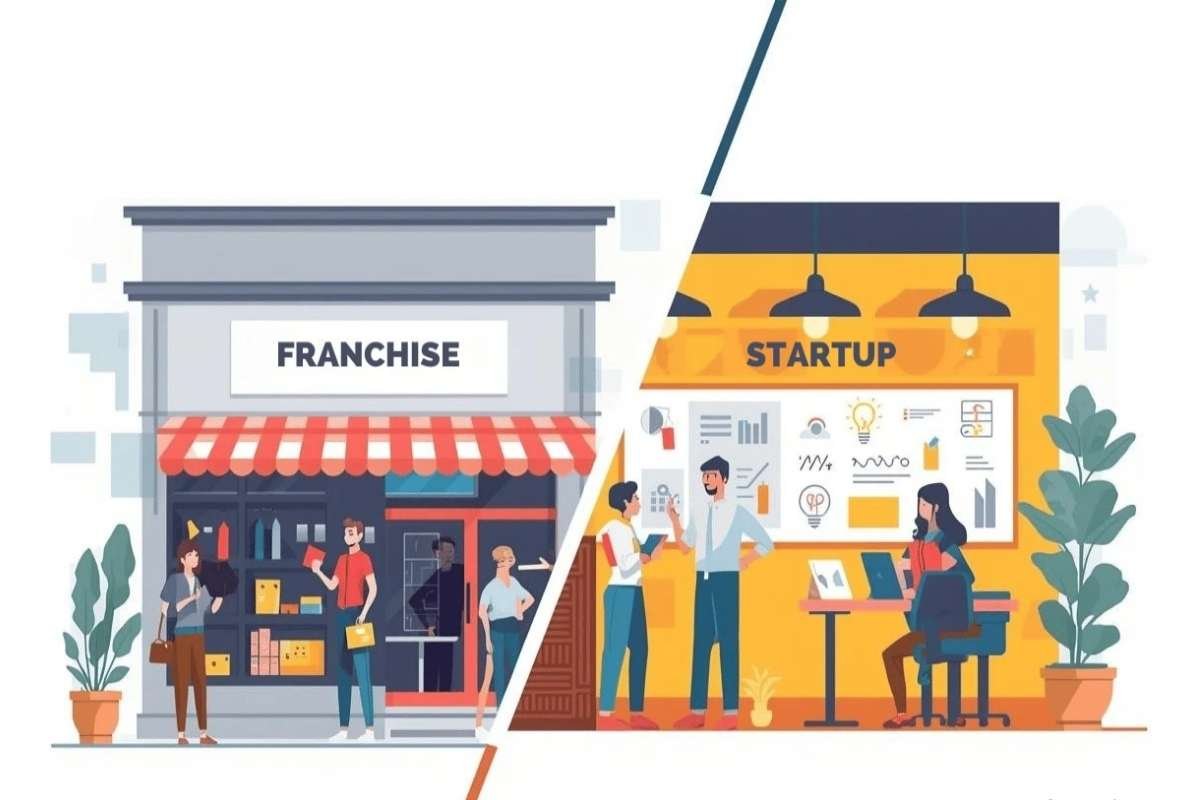



In the previous blog, we discussed the differences between a franchise and a startup. Now, you have the passion and a brilliant idea for a startup, but the path forward looks blurry. To clear the fog, you must look for successful business plan examples for startups to see how other founders navigated the early days. These stories turn a blank page into a roadmap for growth.
Seeing a real-world strategy helps you communicate your vision to the people who matter most. Investors and future teammates want to see your heart and your logic on the page. By studying various business plan examples for startups, you gain the confidence to tell your own story. You transform a simple dream into a grounded reality that people can actually support.
Why Business Plan Examples for Startups are Essential before Raising Capital?

A solid business plan acts as more than just a document; it is the heartbeat of your new venture. It forces you to move beyond excitement and look at the cold, hard facts of how your business will actually survive and thrive. Without this foundation, even the best ideas can lose momentum when things get messy.
Here is why business plan examples for startups are non-negotiable for your success:
- Clarity of Vision: It transforms your “big idea” into a series of actionable steps. You define exactly what you sell, who needs it, and how you will reach them.
- Securing Funding: Banks and investors rarely hand over cash based on a handshake. They want to see your math, your market research, and your strategy for paying them back.
- Spotting Flaws Early: Writing your plan helps you catch potential disasters before they cost you money. It is much cheaper to fail on paper than in the real world.
- Resource Management: Startups often have limited cash and time. A plan ensures you spend those precious resources on the things that actually drive growth.
- Team Alignment: When you hire your first employees, a plan ensures everyone rows in the same direction. It sets the standard for your company culture and goals.
| Feature | Startup With a Plan | Startup Without a Plan |
|---|---|---|
| Decision Making | Based on data and strategy | Based on “gut feelings.” |
| Growth Speed | Measured and scalable | Erratic and unpredictable |
| Investor Appeal | High (Professional) | Low (Risky) |
Standard Startup Business Plan Structure
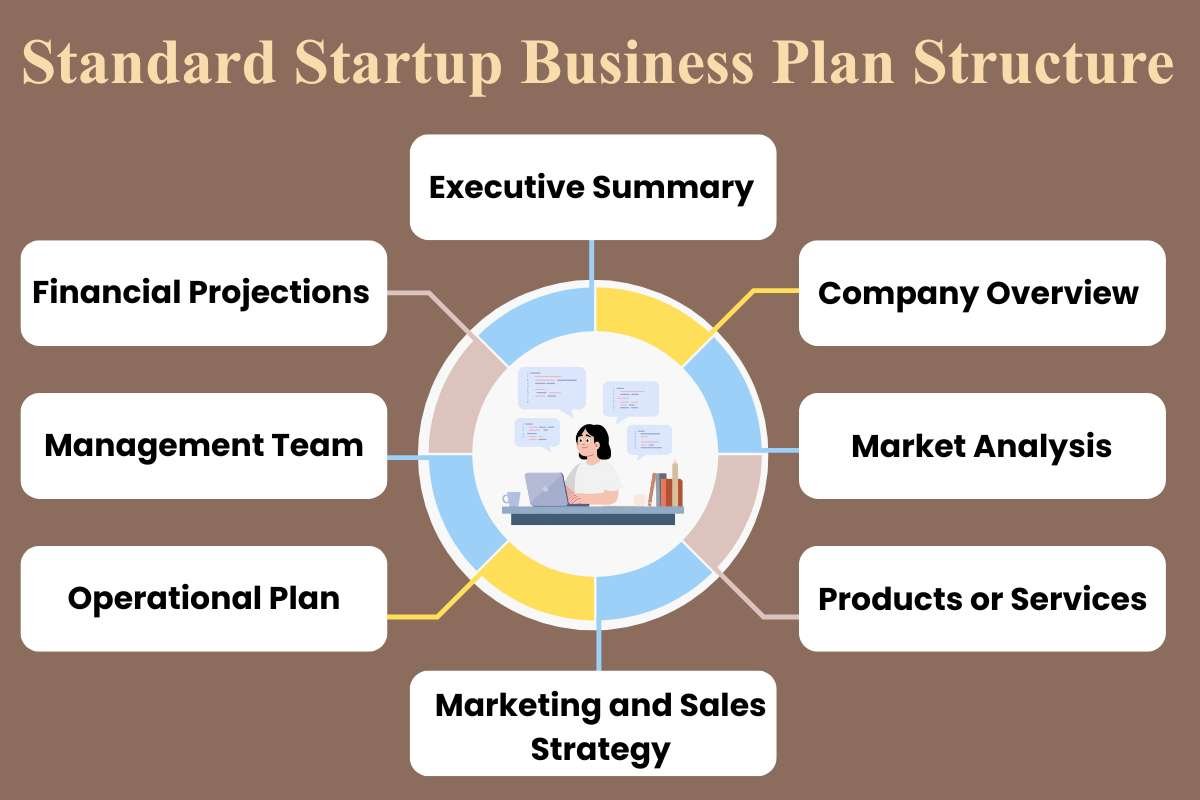
A standard business plan isn’t just a checklist; it’s a narrative that proves your business makes sense. While every startup is unique, most successful founders follow a specific flow to ensure they cover all the bases that investors and partners care about.
Here is the standard business plan example for startups:
1. Executive Summary
Think of this as your “elevator pitch” on paper. It summarizes everything else in the document. Even though it appears first, write it last. It should capture your mission, your product, and why you will win in two pages or less.
2. Company Overview
This section introduces the “who” and “why” behind the venture.
- Mission Statement: Your core purpose.
- Legal Structure: Are you an LLC, C-Corp, or something else?
- History: Briefly explain how the idea started and what you’ve achieved so far.
3. Market Analysis
You need to prove there is a “gap” in the world that only you can fill.
- Target Audience: Define your ideal customer’s habits and needs.
- Market Size: Use real numbers to show how big the opportunity is.
- Competitor Research: List your main rivals and explain your “unfair advantage” over them.
4. Products or Services
Describe exactly what you are selling. Focus on the benefits, not just the features. How does your product fix a specific pain point for your customer? If you have patents or proprietary tech, mention them here.
5. Marketing and Sales Strategy
A great product is useless if no one knows it exists.
- Acquisition: How will you find customers (Social media, SEO, Partnerships)?
- Pricing: How much will you charge, and why?
- Sales Process: How do you turn a curious lead into a paying customer?
6. Operational Plan
This covers the day-to-day logistics.
- Supply Chain: Where do you get your materials?
- Production: How do you create the product?
- Technology: What software or hardware do you need to keep running?
7. Management Team
Investors bet on people more than ideas. Highlight the expertise of your founders and key advisors. Show that your team has the skills to execute the plan you’ve just described.
8. Financial Projections
This is where you prove the business is viable. Usually, you should provide a 3-to-5-year outlook, including:
- Income Statements: Your projected revenue and expenses.
- Cash Flow: How money moves in and out (vital for staying alive).
- Break-even Analysis: When will you start making a profit?
- Quick Tip: The “Why” Test
For every section you write, ask yourself: “Why does this matter to an investor?” If the answer isn’t clear, trim the fluff and focus on the data.
Now, this is just a basic structure for a business plan. What about various niches? While there are SBA.gov free templates, here are 4 business plan examples for startups, divided according to their sector:

Top 10 Business Conferences in India You Cannot Miss in 2026!
These business conferences in India are more than just meetings; they’re a chance to get the inside track on new trends and build the partnerships that will help your career or business take off.
Four Business Plan Examples for Startups That Actually Work in Practice
We have curated 4 business plans that can be used by startups across various sectors and niches.
Here’s what they are:
1. Agriculture / Farm Business Plan Example
Executive Summary
Commercial cultivation of high-margin specialty crops using precision farming + contract offtake. Focus is on yield consistency, not volume.
Core Insight (Industry Reality)
Traditional farming fails in predictability. Buyers pay premiums for uniform quality + guaranteed supply, not just organic labels.
| Section | Details |
| Market Structure | Primary buyers: Nutraceutical processors, export wholesalers.Demand driver: Year-round supply contracts. Pricing model: Fixed floor price + seasonal upside |
| Operations (This is where agri plans usually fail) | Crop cycle calendar (sowing → harvest → processing), Yield per acre benchmarks (conservative vs optimal), Soil input plan (fertilizer, water, pest management) |
| Risk Management | Climate risk hedged via crop diversification. Price volatility is reduced through pre-signed contracts. Insurance & buffer inventory strategy |
| Financial Logic | EBITDA driven by yield stability, not acreage expansion. Break-even calculated per harvest cycle. Capex amortized over 3–5 growing seasons |
2. Food & Beverage / Café Business Plan (Sector‑specific)

This reflects core sections with sector detail, like menu and location strategy.
Executive Summary
This business establishes a high-throughput specialty food operation focused on premium, limited-menu offerings designed for repeat daily consumption, not destination dining. The model prioritizes menu engineering, speed, and unit economics over variety.
Revenue is generated through:
- Walk-in sales (primary)
- Online aggregators (secondary)
- Corporate bulk orders (high-margin)
Break-even targeted within 9–12 months due to controlled food costs and high table/turnover ratio.
| Section | Details |
| Industry Context & Opportunity | Urban food demand is shifting toward quick, consistent, premium meals. Customers prioritize speed, hygiene, and predictable taste. Oversized menus increase wastage and labour costs. Gap: Many outlets chase variety instead of operational efficiency. |
| Product Strategy | Instead of a long menu, offerings are built around:3 hero items (70% of revenue), 2 seasonal rotations (to test demand without cost risk), and add-on modifiers (upsell without kitchen complexity). Menu economics example: Target food cost: 28–32%, Contribution margin per item: 60%,+ Prep time per order: under 4 minutes |
| Location & Footfall Logic | Location selection based on:60% office / commercial crowd30% students/transit users. Minimum 1,000 daily walk-by traffic. Space requirement:500–700 sq ft. Seating optional, throughput prioritized |
| Operations & Supply Chain | Centralized sourcing for core ingredients. Pre-portioned prep to reduce variance. Daily demand forecasting based on POS data. Two-shift staffing model to avoid overtime creep. Daily operations tracked on: Order cycle timeWastage %, Labour cost per order |
| Marketing & Demand Creation | Soft launch with controlled capacity (avoid bad first impressions), Loyalty-driven repeat visits (not discounts), Local office sampling programsInfluencer only for launch week, not sustained CAC |
| Financial Snapshot | Gross margin target: 65%. Monthly fixed costs capped at 22–25% of revenue. Break-even volume calculated on orders/day, not revenue |
3. Tech Startup / SaaS Business Plan
This is where most business plan examples for startups fail. Here’s how it should look.
Executive Summary
The business delivers narrow, high-value workflow automation for a specific business function rather than a horizontal “all-in-one” platform.
Target customers are mid-sized teams (20–200 employees) that rely on manual coordination, spreadsheets, and email-based approvals.
Revenue model:
- Subscription-based (monthly & annual)
- Tiered by usage, not features (reduces churn)
| Section | Details |
| Problem Definition | Current solutions fail because: Enterprise tools are overbuilt and expensive. SMB tools lack depth and reporting. Manual processes create invisible cost leakage. Quantified pain: Teams lose 6–10 hours per employee per week due to process friction. |
| Product Architecture & Roadmap | Core System (MVP)Workflow builderRole-based approvalsAudit logs & compliance exportsYear-1 ExpansionAPI integrationsAdvanced analyticsAutomation templates by industryNon-Goals: No custom development for single clients. No services-heavy onboarding |
| Market Strategy (Real SaaS Thinking) | Initial ICP: one department, one use case. Expand account value post-adoption. Bottom-up adoption → top-down contracts. Go-to-market: Content addressing specific operational pain.Founder-led sales for the first 50 accounts. Channel partnerships after PMF |
| Competitive Advantage | Faster deployment (days, not months), Lower training burdenClear ROI reporting is built into the dashboard |
| SaaS Economics | Target CAC payback: <6 months. Gross margin: 80%+. Churn managed via workflow stickiness, not contracts |
4. E‑Commerce / D2C Plan

Executive Summary
This business builds a category-focused D2C brand rather than a broad marketplace. The strategy prioritizes repeat purchases and brand trust over aggressive top-line growth.
Primary channels:
- Direct website sales
- Secondary marketplaces for discovery only
| Section | Details |
| Category & Consumer Insight | The category is characterized by: Low trust in mass-market products. High information asymmetry. Emotional purchase drivers.Opportunity: Build authority + consistency, not price competition. |
| Product Strategy | Limited SKUs (launch with 5–8 products), Deep storytelling per product. Packaging optimized for unboxing + returns. Pricing is value-anchored, not competitor-anchored. |
| Customer Acquisition (Non-Generic) | SEO for education-led queries. Influencer content reused as paid ads. Email & WhatsApp for retention, not spam. Paid ads are used only after: Conversion rate > 2.5%, Repeat purchase rate >30% |
| Fulfillment & Operations | Inventory planning based on sell-through velocity3PL after Month 6Clear reverse-logistics cost controls |
| Brand Moat | Content depth, Community feedback loop, High switching cost through trust |
| Financial Discipline | Contribution margin tracked per SKU. Marketing spend capped at % of gross profit. Cash conversion cycle is monitored weekly |
| Final Note (Why These Work) | These plans work because they: Focus on how money is actually made. Show operational control. Avoid buzzwords. Think in unit economics, not vanity metrics |
Know More: 10 Ideas That Could Be the World’s Best Business Opportunity
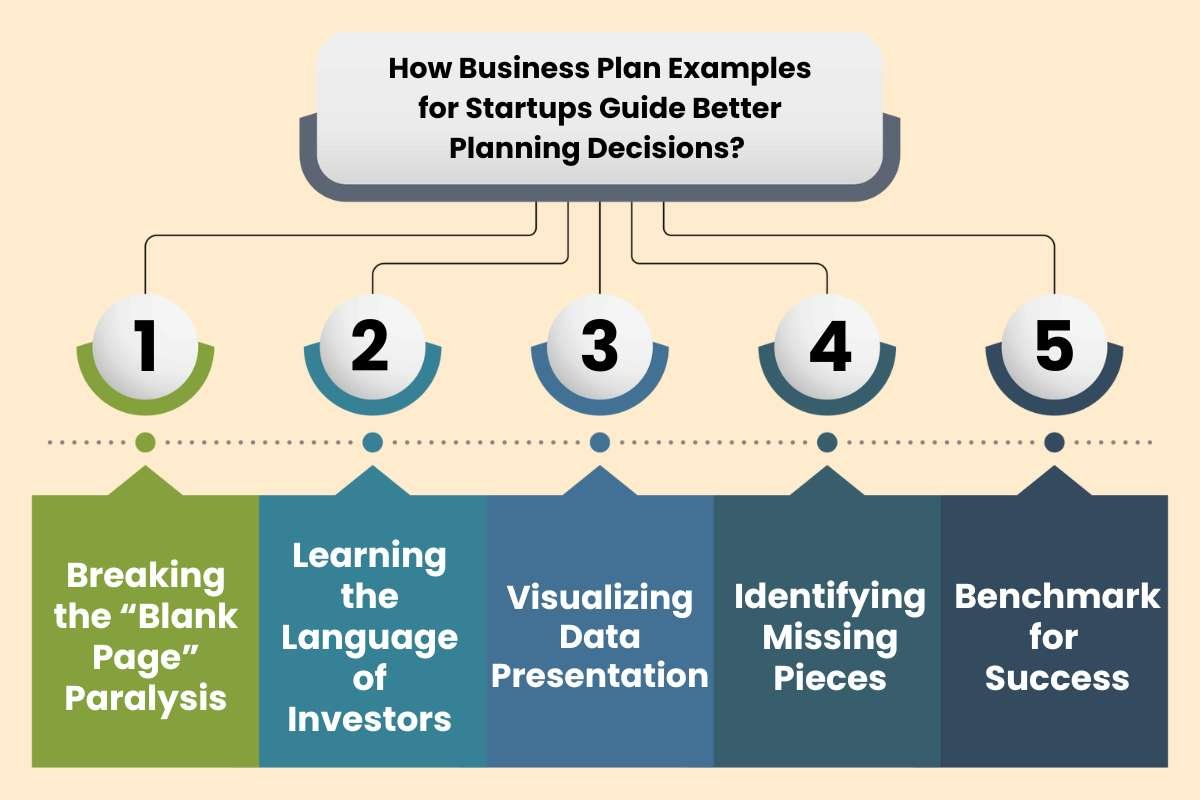
How Business Plan Examples for Startups Guide Better Planning Decisions?
Reading through business plan examples is like having a mentor look over your shoulder. It takes the mystery out of the process and provides a concrete “North Star” for your own writing.
Instead of guessing what a financial table should look like or how to phrase a marketing strategy, you get to see what has actually worked for others.
Here are the primary benefits of using these examples:
1. Breaking the “Blank Page” Paralysis
The hardest part of planning is starting. Seeing how other founders structured their thoughts gives you an immediate jumpstart. You can use their headers and flow as a skeleton, allowing you to focus on your unique ideas rather than formatting.
2. Learning the Language of Investors
Every industry has a specific rhythm and tone. By reviewing business plan examples for startups in your niche, you learn how to speak the language that investors expect. You’ll see how successful companies quantify their goals and how they turn technical features into “human-centric” benefits.
3. Visualizing Data Presentation
Numbers can be dry, but examples show you how to make them pop. You’ll learn how to use charts and tables to make complex financial projections easy to digest at a glance.
4. Identifying Missing Pieces
You might have a great handle on your product, but realize, after reading an example, that you completely forgot to explain your supply chain or your “exit strategy.” Examples act as a final checklist to ensure your plan has no “blind spots” that an investor might poke holes in.
5. Benchmark for Success
HBR working paper/research summary states: “Entrepreneurs who write formal plans are 16% more likely to achieve viability than the otherwise identical non-planning entrepreneurs.” It helps keep your goals ambitious but grounded in reality.
Mistakes When Choosing Business Plan Examples for Startups
A case-based study of 10 failed Indian startups using the MICE failure model (Market, Innovation, Capital, and Execution). It analyses primary data from journals/websites, stressing inadequate business plans as a core failure factor, e.g., poor market analysis leading to unfeasible models.
Business Plans, Lean Startup, or Both? Published in the New England Journal of Entrepreneurs, this empirical study surveyed 120 US entrepreneurs. It used hierarchical regression to compare business planning activities (e.g., writing full plans) with lean startup methods (e.g., customer interviews, pivots).
Findings show writing a business plan correlates with higher venture performance (both subjective and objective measures), alongside specific lean activities, challenging the either/or dichotomy.
Read More: Start-Up Struggle: 10 Common Mistakes Entrepreneurs Make
Main Takeaways:
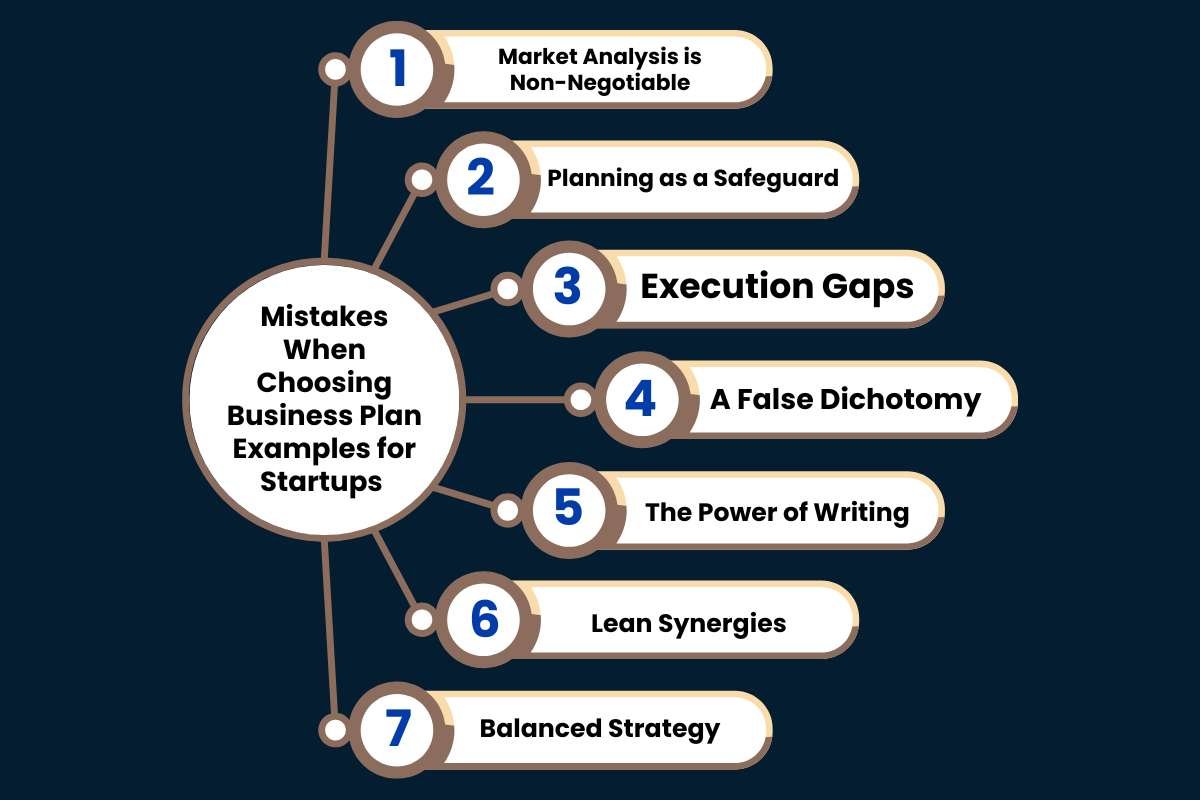
- Market Analysis is Non-Negotiable: Most of the 10 failed startups suffered from “poor market analysis.” They built products based on assumptions rather than data, leading to models that weren’t financially feasible.
- Planning as a Safeguard: Inadequate business plans weren’t just “missing documents”; they represented a fundamental failure to understand the customer segments and the capital required to sustain operations.
- Execution Gaps: Without a plan, startups struggled with “high burn rates” and an inability to pivot effectively when the initial idea didn’t stick.
- A False Dichotomy: The study proves that you don’t have to choose between a formal plan and lean methods (like customer interviews). In fact, the highest-performing ventures do both.
- The Power of Writing: Interestingly, of all the traditional planning activities, the act of writing a business plan was the single most consistent predictor of high performance (both in objective revenue and subjective founder satisfaction).
- Lean Synergies: While a plan provides the roadmap, lean activities, specifically talking to customers, collecting preorders, and pivoting, ensure the roadmap is pointed in the right direction.
- Balanced Strategy: The key takeaway is that planning provides the structure for growth, while lean methods provide the validation for the product.
Conclusion:
Building your startup is about more than just a spark of inspiration; it is about proving your idea can survive the real world. As we have seen, the most successful founders do not choose between being organized and being fast. Instead, they use business plan examples for startups to build a solid foundation that allows them to move with certainty.
By mapping out your journey, you stay grounded when things get moving quickly. Studying business plan examples for startups helps you learn from those who came before you. Now, it is time to turn your vision into a reality.
FAQs
1. Why do I need a business plan for a startup?
A plan clarifies your vision and identifies potential risks early. It acts as a roadmap for growth and is essential for convincing investors that your business is a safe, profitable investment.
2. Is a business plan better than the Lean Startup method?
Neither is better. Research shows that combining both leads to the best results. A formal plan provides structure, while lean methods allow you to test ideas and pivot based on real customer feedback.
3. How long should my business plan be?
Keep it concise. Most business plan examples for startups range from 15 to 25 pages. Focus on high-quality data and clear strategies rather than length to keep your audience engaged.
Thank You for Reading!
Read More
Meet the 10 Young Entrepreneurs of India who are quietly reshaping industries