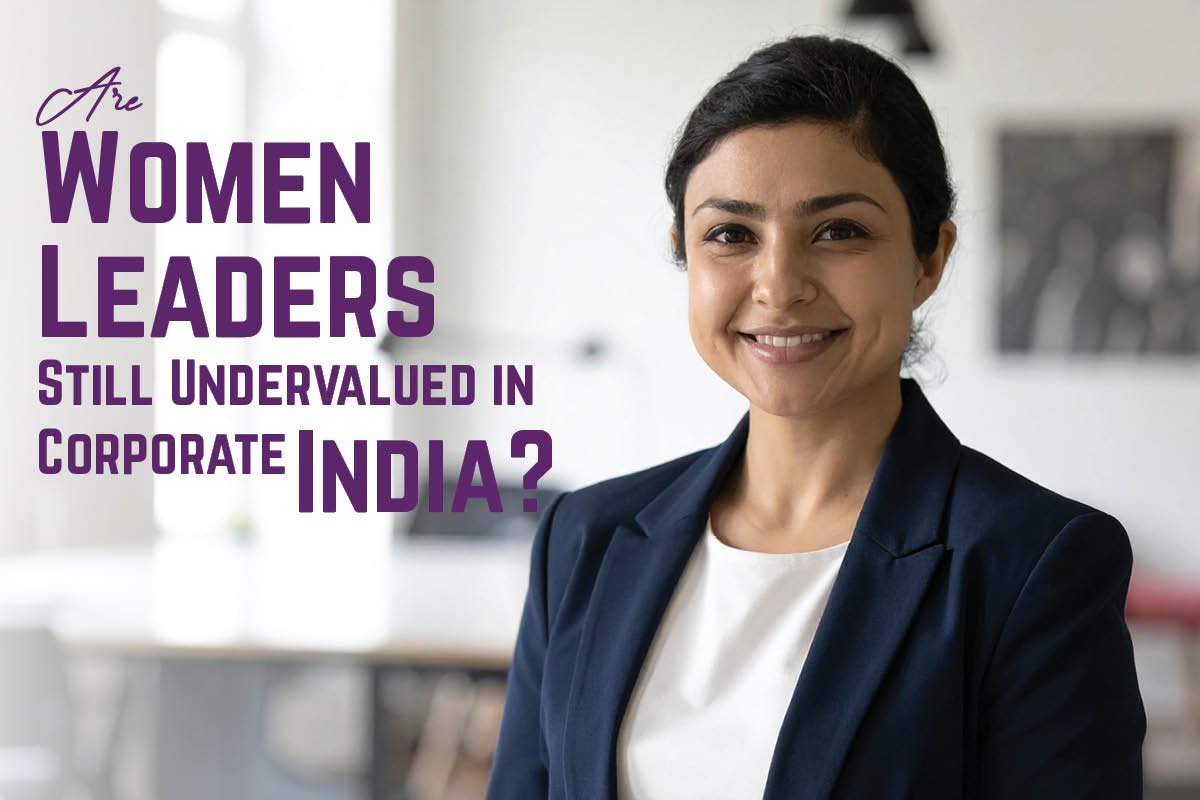

“The Paradox of Progress” reflects a reality where women step confidently into corporate spaces, yet often find their ambition measured within invisible limits. While their skills and commitment are evident, recognition frequently arrives in softer terms: empathy, cooperation, adaptability, rather than authority or leadership. In India’s professional sphere, visibility has increased, but access to decision-making power remains uneven, revealing a quiet contradiction within modern claims of equality.
These traits, though valuable, are rarely linked to power or decision-making. In India’s corporate environment, women are increasingly present across roles, yet their rise to senior leadership remains limited. This contrast raises a crucial question: have women leaders in corporate India been subtly undervalued, even in an age that claims progress?
Foundation of Women’s Leadership
The foundation of women’s leadership often begins long before formal authority is granted. It takes shape through early exposure to responsibility, access to decision-making spaces, and the freedom to question existing norms. For many women, leadership is built gradually, shaped by lived experience rather than inherited advantage. This groundwork becomes essential in environments where representation remains limited and expectations remain uneven.
A Case Study
“Sejal Jain’s entrepreneurial journey reflects this process clearly. Her professional path was shaped by an early understanding of responsibility, adaptability, and purpose. Rather than waiting for validation, she focused on building systems that reflected her values. Through the founding of Thoughtful PR, she created a workplace where women hold key roles and contribute meaningfully to strategic direction. Her approach prioritises accountability, trust, and balance, allowing leadership to emerge through practice rather than position. Sejal’s journey illustrates how strong foundations can reframe what leadership looks like in practice.”
Why Numbers Enter the Conversation?
Stories like Sejal Jain’s show how leadership often takes shape through intention, responsibility, and consistent effort rather than position alone. Yet individual journeys, however insightful, cannot fully explain the broader reality faced by women leaders in corporate India. To understand whether such experiences reflect a wider shift or remain isolated cases, it becomes necessary to look beyond personal narratives. This is where data enters the conversation.
Numbers provide a way to assess progress at scale, indicating whether opportunity is spreading across organisations or remaining limited to a few. While lived experience adds depth to the discussion, measurable patterns help clarify whether increased visibility is translating into real authority or stopping short of meaningful leadership inclusion.
News Lens: What Recent Reports Reveal

Recent reporting offers a clearer view of gender representation across Indian workplaces. Key findings highlight both progress and persistent gaps:
- 48% rise in entry-level hiring for women, indicating wider access at the start of corporate careers.
- 63% of companies continue to operate without women in senior leadership roles, pointing to limited upward mobility.
- Organisations with women in leadership often show stronger financial performance, yet this trend has not translated into broader leadership inclusion.
- The KPMG Women in Leadership report notes that many women aspire to senior roles but face barriers such as restricted mentorship, uneven promotion systems, and unequal caregiving expectations.
- Global studies echo these concerns, identifying the first leadership transition as a critical point where progress often slows.
Together, these findings show that while entry points have widened, advancement remains constrained, confirming that the leadership gap is both measurable and deeply incorporated
Beneath the Numbers: Why the Gap Persists
Behind the statistics lies a quieter reality shaped by everyday expectations and unspoken rules. Many women continue to shoulder a greater share of caregiving responsibilities, a factor that often influences how availability and commitment are perceived at work. Informal networks, where decisions and opportunities quietly circulate, frequently remain out of reach, limiting access to influence long before formal evaluations begin.
Performance is often measured through visibility rather than impact, rewarding constant presence over thoughtful contribution. As a result, women leaders in corporate India may be assessed through standards that overlook context and constraint. The idea of a clear glass ceiling has shifted into something more complex: a maze of subtle barriers that require constant negotiation. Progress is possible, yet uneven, shaped by systems that appear neutral while quietly favouring familiar patterns. These conditions do not block ambition outright, but they slow its movement, turning advancement into a prolonged negotiation rather than a clear path forward.
The Cost of Undervaluation

The impact of sidelining women leaders in Corporate India extends beyond fairness; it reaches the very performance of organisations. Studies indicate that leadership teams with greater gender balance often show stronger oversight, steadier planning, and more consistent decision-making, pointing to the wider value of inclusion beyond financial results. Yet when women are undervalued, potential innovation is limited, and strategic resilience is weakened. Teams miss out on insights that could challenge assumptions and open new avenues for growth.
The gap between presence and authority becomes a cost for the business, not just for individuals. Undervaluation is therefore more than a social concern; it is a strategic misstep. Organisations that overlook women limit their ability to adapt and compete. They also miss the chance to fully utilise the talent already within their workforce.
Rethinking Leadership for the Future
True progress in corporate leadership requires more than symbolic gestures. Organisations must implement structural reforms that create clear pathways for advancement, including mentorship, sponsorship, and transparent promotion practices. Leadership should be reshaped beyond traditional, male-centric expectations, recognising qualities like collaboration, empathy, and strategic insight as equally valuable.
Policies alone are not enough; the workplace culture must support women in visible and meaningful roles. Inclusion must be intentional, built into everyday decisions rather than treated as an afterthought. When organisations commit to these changes, opportunities for women expand, and leadership becomes a reflection of diverse perspectives. The future of women leaders in Corporate India depends on recognising that progress is achievable, but only if equity is built into the system itself.
Women at the Helm: Leadership in Action

These women showcase how vision, resilience, and strategic thinking can redefine leadership in India.
- Falguni Nayar: Founder & CEO, Nykaa
- Falguni Nayar built Nykaa into a leading beauty and wellness brand, marked by a successful ₹5,352 crore IPO and strong market presence.
- Roshni Nadar Malhotra: Chairperson, HCL Technologies
- Roshni Nadar became the first woman to lead a major listed Indian IT firm, shaping HCL Technologies’ global direction.
- Kiran Mazumdar-Shaw: Founder & Chairperson, Biocon
- Kiran Mazumdar-Shaw established Biocon as a major biopharmaceutical company, earning global recognition for industry leadership.
- Vaishali Nigam Sinha: Chairperson, Sustainability, ReNew Energy Global
- Vaishali Nigam Sinha has advanced women’s leadership within sustainability and corporate governance.
Conclusion
The question of whether women leaders remain undervalued in corporate India reveals a complex truth. Progress is visible, yet uneven. While more women are entering leadership spaces, recognition, authority, and influence often lag behind presence. Structural gaps, cultural expectations, and limited access to decision-making continue to shape outcomes.
The examples of successful women leaders in corporate India show what is possible when opportunity aligns with capability. Moving forward, lasting change depends on consistent action, fair systems, and a commitment to recognising leadership in all its forms. Only then can inclusion move beyond intention and become standard practice.