

Key Points:
- Japan seeks rare earths in Rajasthan after China’s export ban.
- India found 1.29 million tons of deposits and is boosting processing.
- A Japan-India partnership could secure supply chains amid tensions.
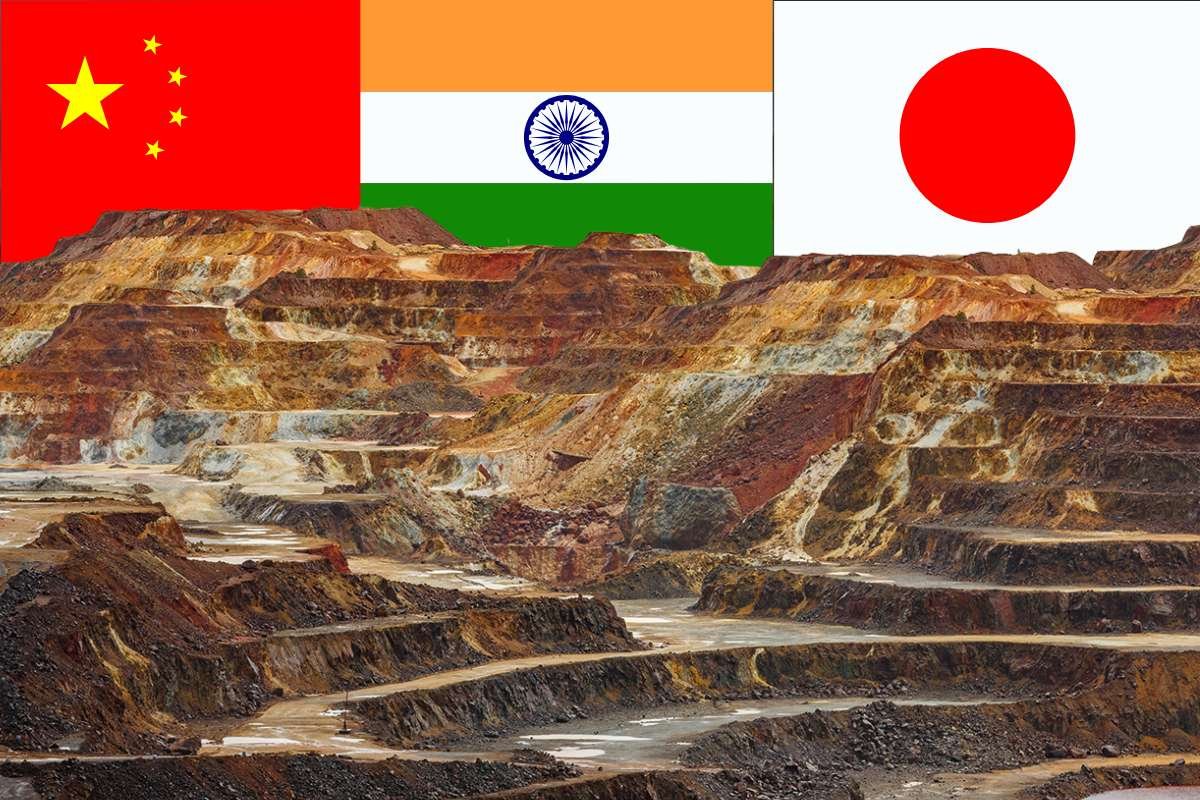
Japan is negotiating with India to jointly explore china Rare Earth deposits in Rajasthan after China restricted exports to Japanese entities, aiming to secure stable supplies of critical minerals used in magnets and defense technologies.
Japan Eyes Rajasthan Deposits After China Export Curbs
Japan is in talks with India to explore rare earth deposits in the western state of Rajasthan, according to a report published Monday. The move follows China’s recent ban on exports of dual-use items to 20 Japanese entities.
China says the affected companies supply Japan’s military. The restrictions cut off access to seven rare earth elements and related materials on China’s dual-use control list.
India’s Mines Minister G. Kishan Reddy said last month that three hard rock rare earth deposits have been identified in Rajasthan and neighboring Gujarat. The sites contain an estimated 1.29 million metric tons of China Rare Earth Ban oxides.
Japan has shown interest in the Rajasthan deposits under a preliminary agreement on critical minerals signed last year, according to sources. Tokyo plans to dispatch experts to assess the site.
China Rare Earth elements are essential for manufacturing permanent magnets used in electric vehicle motors, wind turbines, fighter jets, and drones.
Technology, Investment, and Offtake Under Discussion
Japanese officials are considering a strategic partnership with the Rajasthan state government that would combine technology transfer and financial investment in exchange for a guaranteed supply.
The deposits in Rajasthan are hard rock formations that require specialized extraction techniques. India currently lacks large-scale capabilities to process such materials into high-purity rare earth products.
Naoki Kobayashi, deputy director at Japan’s Ministry of Economy, Trade and Industry, said Japan is working to diversify its mineral supply chains globally.
“Japan is actively seeking to secure critical minerals from various projects around the world to reduce reliance on single sources,” Kobayashi said in response to queries.
He denied that there are confirmed discussions on corporate partnerships or technology sharing specific to Rajasthan.
Japan has been seeking to reduce its dependence on China for rare earth supplies since the previous export disruptions more than a decade ago.
India Pushes Processing Capacity as Geopolitical Tensions Rise
India is also moving to build industrial-scale facilities to process rare earth elements domestically. The effort aims to reduce reliance on Chinese imports and secure high-purity materials for strategic industries.
A potential partnership with Japan could help India gain advanced processing expertise. Such collaboration would strengthen supply chains for technologies central to economic growth and national security.
India is the world’s fastest-growing major economy and is expanding its electric vehicle, renewable energy, and defense sectors. Each relies heavily on rare-earth-based magnets.
The talks come as geopolitical tensions rise between Beijing and Tokyo. China’s export restrictions have heightened concerns in Japan about supply security for materials that have both civilian and military uses.
In addition to rare earths, Japan is reportedly exploring partnerships with Indian firms to search for lithium, copper, and cobalt in Africa as part of its broader strategy to diversify mineral supplies.
Neither the Japanese nor the Indian governments has announced a finalized agreement. Discussions remain ongoing.
Visit Business Viewpoint Magazine for the latest information.