

Key Points:
- Micron Technology’s semiconductor ATMP plant in Gujarat marks India’s formal entry into global chip manufacturing.
- India joined the US-led Pax Silica alliance, with Micron’s semiconductor facility symbolizing secure and diversified technology supply chains.
- Prime Minister Modi highlighted Micron’s semiconductor project as proof that microchips are the “regulator of the 21st century,” positioning India as a reliable partner in advanced manufacturing.
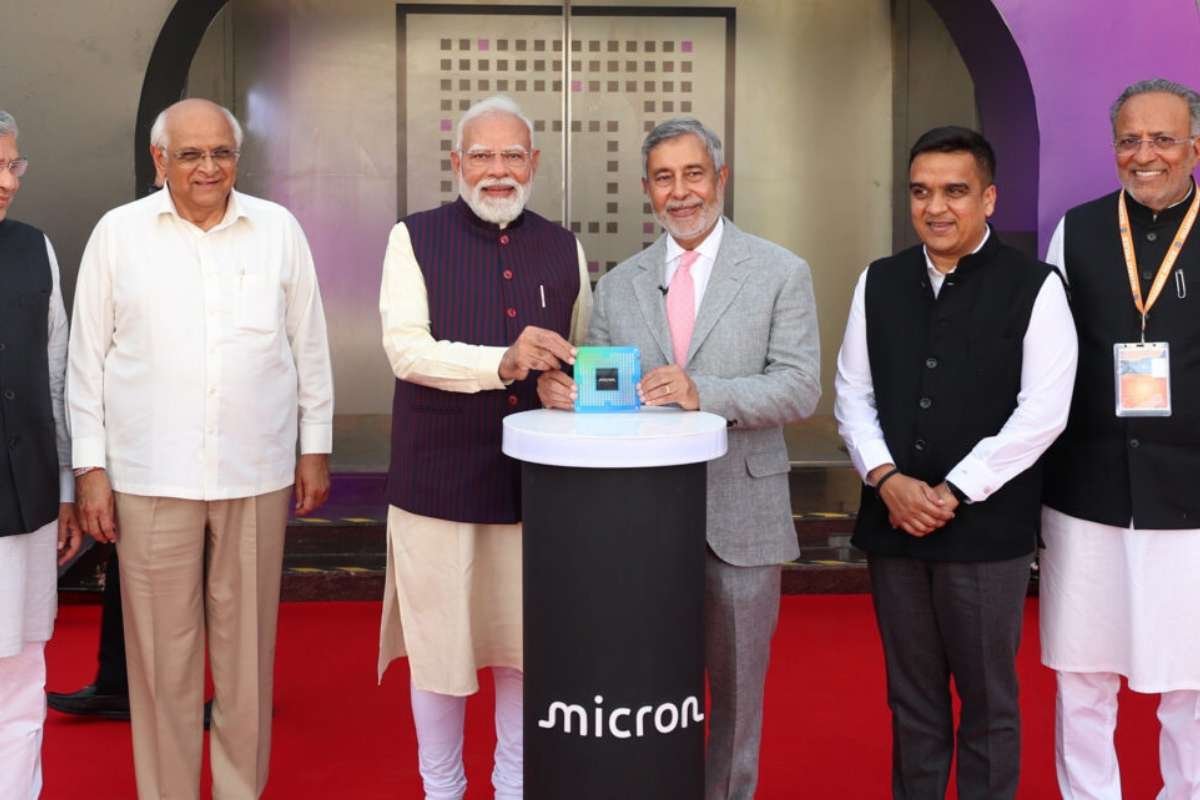
Prime Minister Narendra Modi and US Ambassador Sergio Gor on Feb. 28 inaugurated Micron Technology’s semiconductor ATMP plant in Gujarat, marking India’s formal entry into global chip manufacturing and deepening cooperation under the US-led Pax Silica alliance.
India on Saturday launched commercial production at Micron Technology’s assembly, test, marking, and packaging facility in Sanand, Gujarat, in a move officials said strengthens trusted semiconductor supply chains and reduces reliance on geopolitical rivals.
The inauguration, attended by Modi and Gor, underscores closer US-India collaboration in advanced technology manufacturing. The Trump administration describes the partnership as central to economic security and technological leadership.
Pax Silica Seeks Secure Technology Supply Chains
Pax Silica, launched by the United States in December 2025, is a geopolitical and economic initiative aimed at ensuring trusted nations control critical technology infrastructure. The name combines the Latin word for peace with silica, a core material in semiconductor production.
According to US officials, the alliance seeks to reduce “weaponized dependencies” and limit reliance on rivals such as China. The framework spans the entire technology lifecycle, from mineral sourcing and fabrication to artificial intelligence research.
A core doctrine of Pax Silica is maintaining an “18-month moving gap,” intended to keep member nations at least a year and a half ahead in research and development. Members align subsidies, export controls, and capital flows to build what officials describe as a resilient “silicon curtain.”
India formally joined the coalition in February, alongside Japan, South Korea, the United Kingdom, and Australia.
“Ambassador Gor was honored to join Prime Minister Narendra Modi for the grand opening of Micron Technology’s semiconductor assembly and test facility in Gujarat,” the US Embassy in India said in a post on X. “As Pax Silica members, we recognize that a reliable supply chain is indispensable to our mutual economic security.”
Gujarat Emerges as Semiconductor Hub
During his visit, Gor met Gujarat Chief Minister Bhupendra Patel to discuss expanding trade, technology, and manufacturing ties.
Speaking at the inauguration, Gor said there are 10 semiconductor projects worth $19 billion under development across India. He called Gujarat’s growth potential “incredible” and said American companies are closely watching opportunities in the state.
“The United States stands ready to participate in this growth,” Gor said, adding that the administration plans to use the next three years to deepen bilateral cooperation.
Micron Technology’s semiconductor facility represents the fusion of American technology and Indian manufacturing capabilities, US officials said. Micron has also announced expansions in both the United States and India in recent months.
Modi Calls Microchips ‘Regulator’ of 21st Century
Narendra Modi described the start of commercial production as a milestone for what he called a “New India.” He drew a parallel between oil’s role in the 20th century and microchips in the 21st.
“If oil was the regulator of the 20th century, the microchip is the regulator of the 21st century,” Modi said, calling semiconductors the bridge between the industrial and artificial intelligence revolutions.
He noted that the project moved from a memorandum of understanding signed in June 2023 to commercial production in February 2026. Modi attributed the pace to transparent policies and clear national intent.
Under the India Semiconductor Mission 2.0, the government is building an ecosystem that includes chip design, research institutions, and skilled technicians, he said.
“India is ready. India is reliable. India delivers,” Modi said.
The plant’s launch signals India’s formal entry into the international semiconductor manufacturing market, positioning the country as a key partner in global supply chain diversification efforts led by the United States and its allies.
Explore Business Viewpoint Magazine for the latest updates.